Custom SlimSAS and MCIO Cable Assemblies
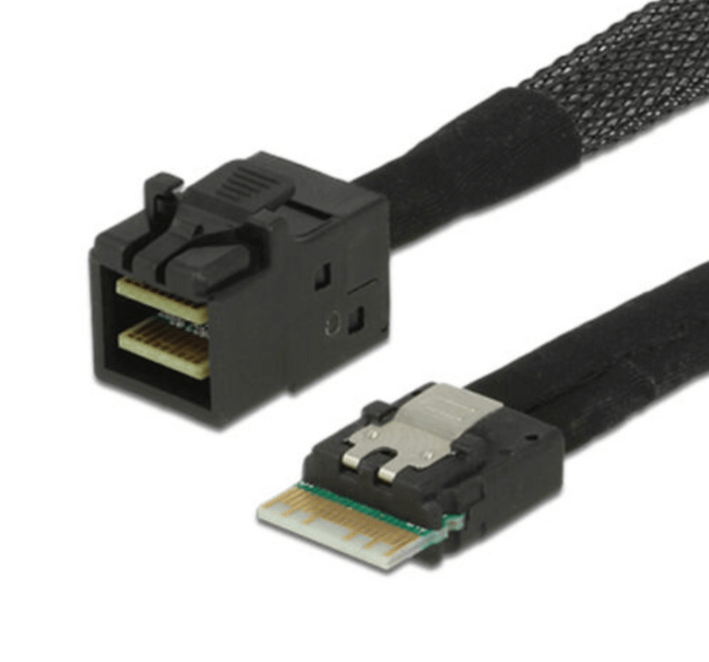
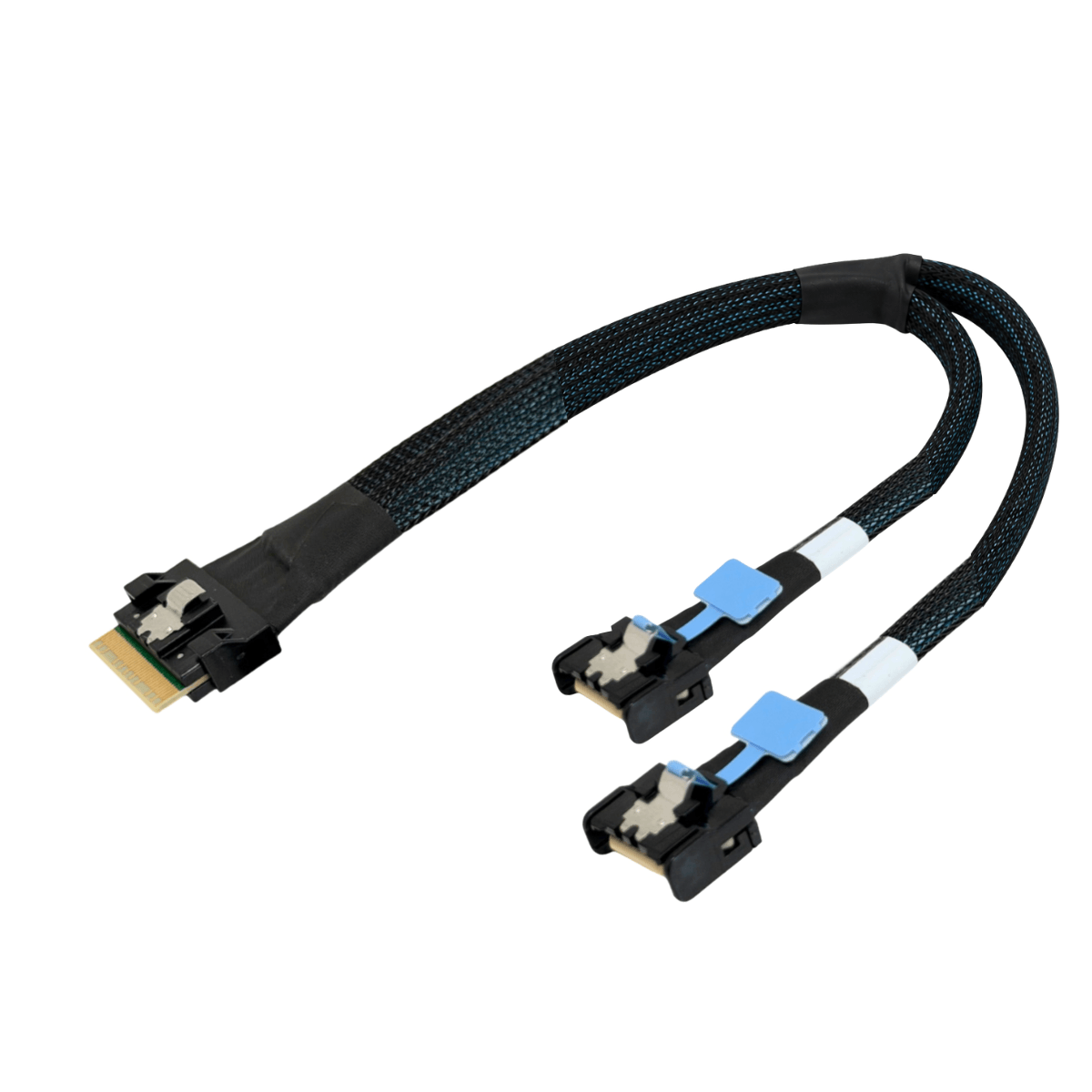
When system-specific pinouts, connector orientations, or routing constraints require a custom SlimSAS or MCIO cable assembly, the specification must address both electrical compatibility and mechanical integration.
Pinouts and Lane Mapping
Matching connector types doesn’t establish electrical compatibility. Signal assignments depend on the system architecture, particularly in mixed-connector assemblies.
Custom specifications should identify:
- Required lane mapping and signal assignments.
- Sideband and control-signal connections.
- Crossover, breakout, or nonstandard wiring arrangements.
- Host and endpoint connector part numbers.
These details help prevent assemblies that physically connect but don’t support the intended electrical configuration.
Connector Orientation and Routing
Dense chassis layouts may require nonstandard connector orientations, exit directions, or breakout configurations.
Assembly drawings should define:
- Connector exit direction and orientation.
- Cable length measurement points.
- Routing clearances and bend requirements.
- Breakout locations and branch lengths, where applicable.
- Cable retention and strain relief.
Mechanical requirements should be established alongside electrical specifications to avoid installation conflicts.
High-Speed Channel Requirements
Custom cable length and construction must account for the system’s electrical performance requirements.
For PCIe and other high-speed interfaces, relevant considerations include insertion loss, return loss, impedance discontinuities, and differential-pair skew.
The signaling standard alone doesn’t establish acceptable cable lengths or construction. Specifications should identify the intended interface, signaling generation, and applicable performance or verification criteria.
Configuration Control
Custom assemblies should be clearly distinguishable from standard configurations and other variations used within the same system.
Documentation should identify:
- Approved assembly part numbers and revisions.
- Connector and cable specifications.
- Pinout and orientation drawings.
- Authorized substitutions.
- Inspection and acceptance requirements.
This is particularly relevant when multiple assembly variations are used across hardware revisions.
Custom Data Cable Assemblies at TMC
TMC–The Mate Company manufactures custom cable assemblies for OEM, server, and data storage applications.
Explore TMC’s telecom and data cable capabilities.
Need a cable assembly manufactured to a custom configuration? Request a quote from TMC with your drawings, connector specifications, quantities, and delivery requirements.