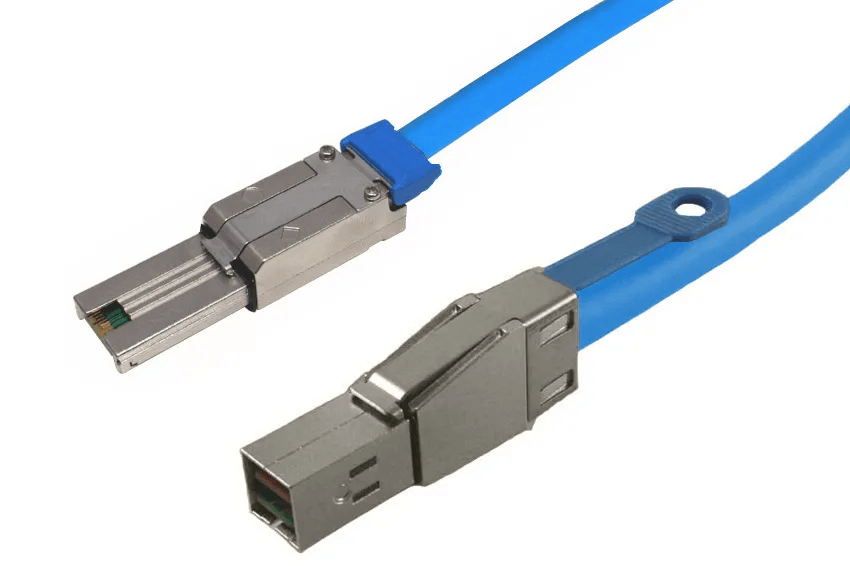
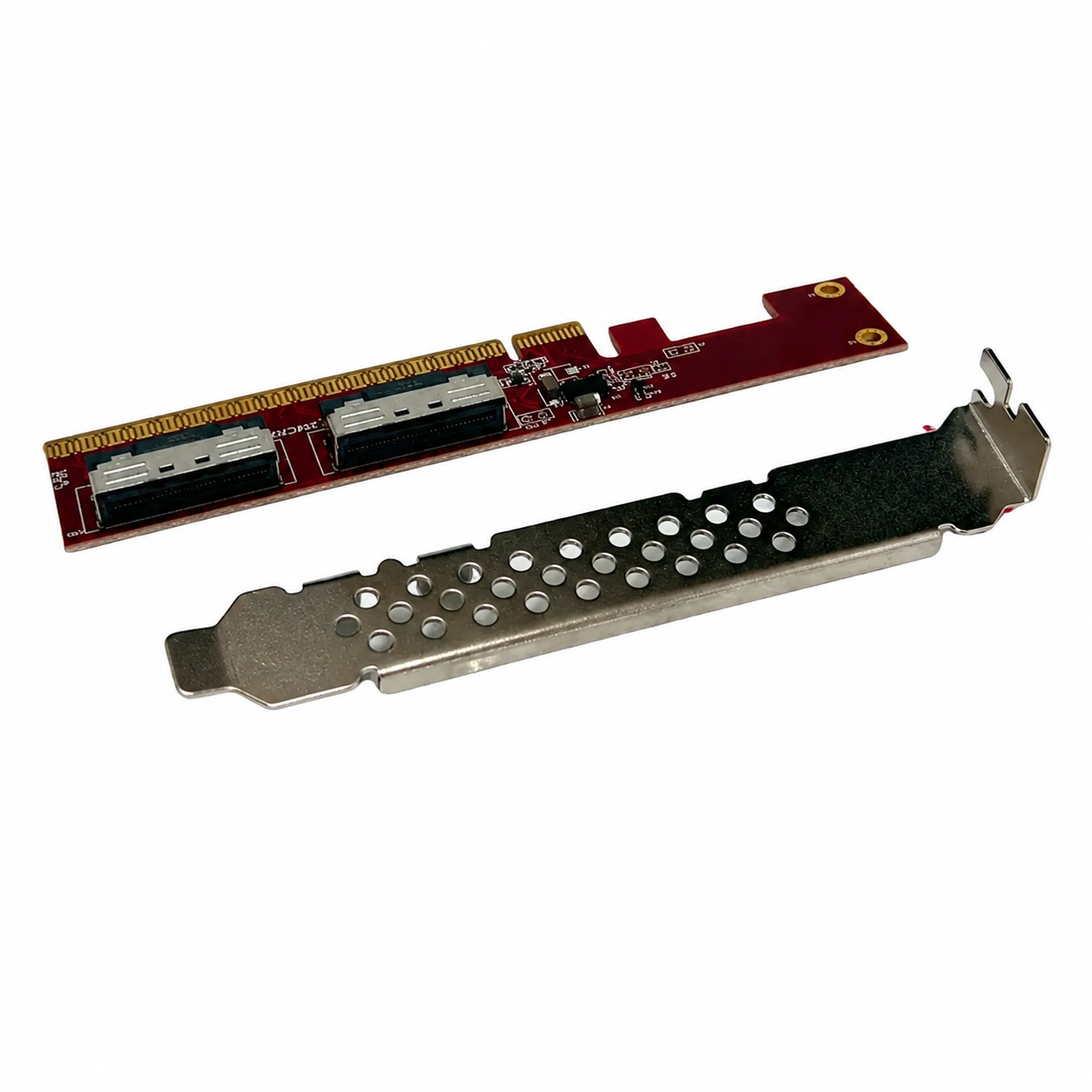
PCIe X16 To Dual MCIO 8i Connectivity For PCIe Gen5
Modern enterprise servers and storage platforms demand high bandwidth internal interconnects that can support PCIe Gen5 performance while maximizing available board space. PCIe x16 to dual MCIO 8i adapter boards provide an efficient method of distributing PCIe lanes through compact MCIO interfaces, enabling high speed communication between host systems, NVMe storage devices, accelerators, and other PCIe peripherals. Their compact design supports cleaner cable routing and simplifies internal expansion in dense computing environments.
Understanding PCIe X16 To Dual MCIO 8i Adapter Boards
A PCIe x16 to dual MCIO 8i adapter board installs into a standard PCIe x16 expansion slot and routes PCIe lanes to two MCIO 8i connectors. Instead of occupying additional motherboard space with multiple onboard connectors, the adapter centralizes internal connectivity through a compact expansion card.
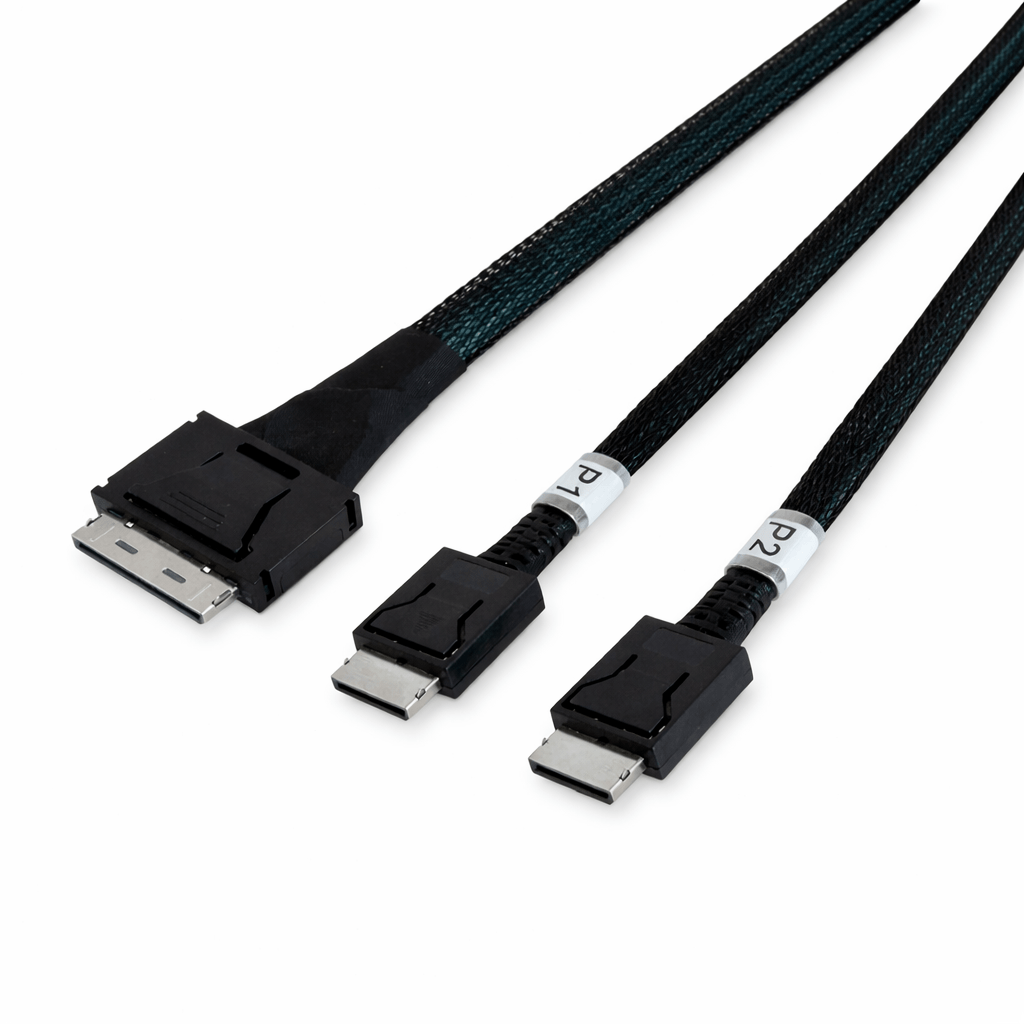
MCIO, or Mini Cool Edge IO, was developed to support modern PCIe and NVMe applications that require high lane density while reducing connector size. The compact interface is particularly beneficial in rack servers where processors, memory, cooling hardware, and storage devices compete for limited internal space.
The adapter functions as a signal routing device and does not perform protocol conversion. Compatible PCIe devices communicate directly through the routed lanes provided by the adapter board.
Supporting High Bandwidth PCIe Gen5 Links
PCIe Gen5 operates at 32 GT/s per lane, doubling the signaling rate of PCIe Gen4. A PCIe x16 slot therefore provides substantial bandwidth for storage arrays, networking hardware, graphics accelerators, and artificial intelligence workloads.
The adapter board preserves these high speed connections by routing PCIe lanes to dual MCIO 8i interfaces. Maintaining signal quality across the complete channel requires careful PCB design, controlled impedance, and high quality connector construction.
Reliable operation depends on the complete electrical path, including motherboard traces, adapter routing, cable assemblies, and endpoint devices. Every component contributes to overall signal integrity.
Advantages Of MCIO 8i Connectivity
MCIO 8i connectors provide eight high speed lanes within a compact footprint. Using two MCIO 8i interfaces on a single adapter allows multiple internal PCIe connections while minimizing PCB space and simplifying cable management.
Compared to larger connector formats, MCIO interfaces improve routing flexibility inside compact chassis. Their smaller size helps system designers position storage devices, expansion cards, and cooling components without excessive cable congestion.
The standardized connector design also supports scalable server architectures where multiple PCIe devices must be interconnected efficiently.
Signal Integrity Considerations
As PCIe signaling speeds continue to increase, maintaining signal integrity becomes increasingly important. At PCIe Gen5 data rates, insertion loss, return loss, impedance discontinuities, and crosstalk can all affect link stability.
Adapter board layout, connector quality, and cable construction work together to maintain reliable communication. Excessive cable length or poor routing practices can reduce signal margin and negatively impact negotiated link speed.
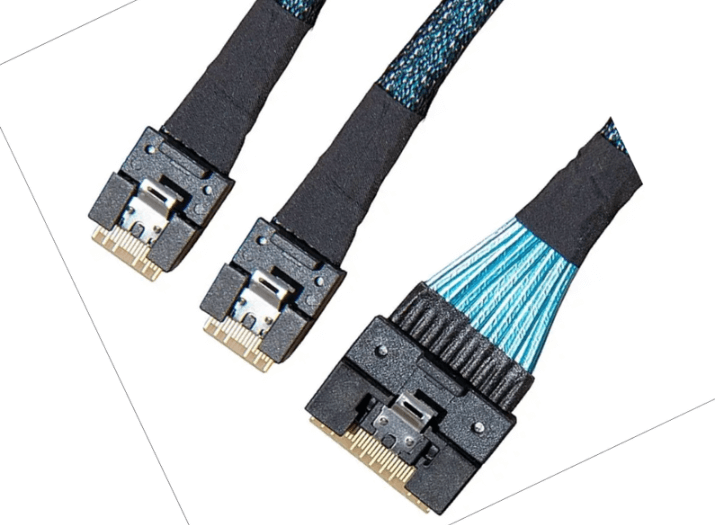
Selecting qualified MCIO cable assemblies and following platform design recommendations help maintain stable performance throughout the communication channel.
Compatibility And System Integration
Although MCIO connectors may appear physically identical, compatibility depends on more than connector size. System designers should verify PCIe lane allocation, cable pinout, firmware support, and endpoint compatibility before deployment.
The motherboard BIOS, processor, and PCIe controller must all support the intended lane configuration. Installing a PCIe Gen5 capable adapter alone will not increase system performance unless every component within the communication path also supports PCIe Gen5 operation.
Careful compatibility verification reduces installation issues and ensures stable operation after deployment.
Mechanical Design And Airflow
The compact layout of MCIO connectors contributes to improved airflow within server chassis. Smaller connectors reduce cable congestion around expansion slots, allowing cooling air to circulate more efficiently around processors, memory modules, and storage devices.
Proper cable routing remains essential. Cables should avoid excessive bending, sharp edges, and mechanical stress that could affect long term reliability. Maintaining recommended bend radius also helps preserve electrical performance.
The included PCIe bracket provides secure mounting and improves mechanical stability during installation and operation.
Common Applications
- Enterprise Rack Servers
- PCIe Gen5 Storage Platforms
- NVMe Drive Backplanes
- High Performance Computing Systems
- Artificial Intelligence Servers
- Data Center Infrastructure
- Internal PCIe Expansion
- Enterprise Storage Appliances
Best Practices For Deployment
Verify motherboard compatibility, PCIe lane configuration, and firmware support before installation. Select MCIO cable assemblies that match both the adapter board and endpoint devices.
Route cables carefully to maintain airflow and avoid unnecessary strain. After installation, confirm negotiated PCIe link speed and lane width to ensure the system is operating as expected.
Periodic inspection of cable connections and firmware updates can further improve long term reliability.
FAQ (Frequently Asked Questions)
1. What Is A PCIe X16 To Dual MCIO 8i Adapter Used For?
It routes PCIe lanes from a PCIe x16 slot to two MCIO 8i connectors for compatible internal devices.
2. Does This Adapter Support PCIe Gen5?
Yes. It is designed for PCIe Gen5 platforms when installed in compatible systems.
3. Can It Be Used With NVMe Storage Devices?
Yes. It is commonly deployed in servers and storage platforms that utilize MCIO based NVMe connectivity.
4. Does The Adapter Convert PCIe Signals?
No. It routes PCIe lanes through MCIO connectors without converting communication protocols.