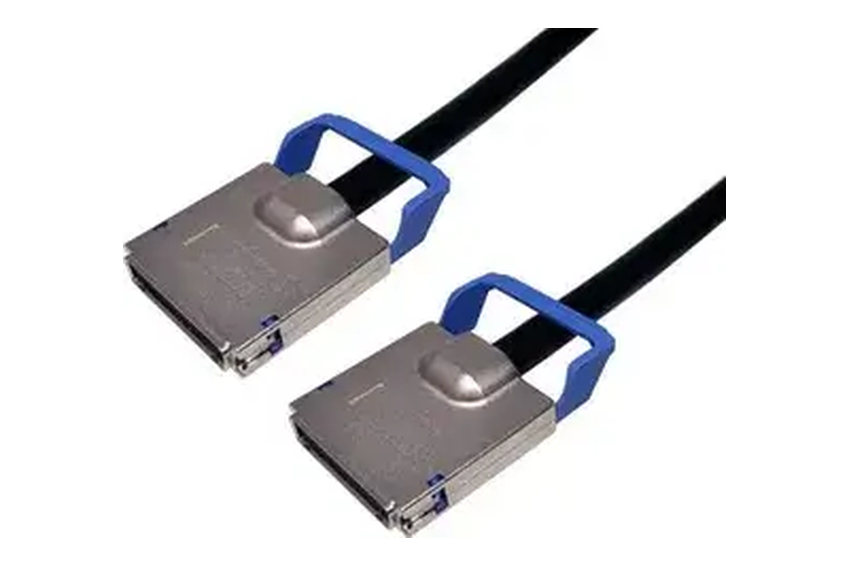
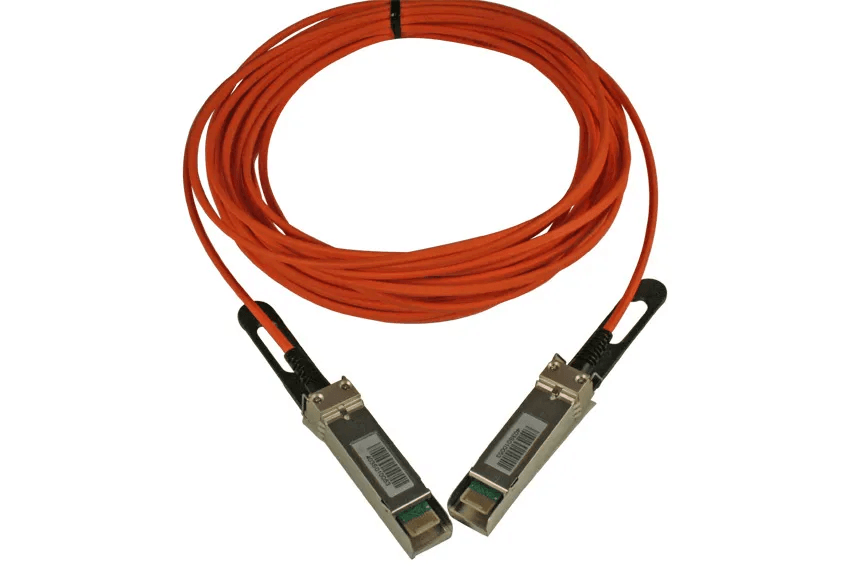
Active Optical Interconnect Architecture
Active Optical Cables, or AOCs, are integrated interconnect assemblies designed to support high-speed optical communication between networking and storage devices. These cables combine embedded signal conversion electronics with optical fiber transmission to deliver reliable data transfer across extended distances. Their compact structure and high bandwidth capability make them widely used in enterprise networking, storage fabrics, and modern data center architectures.
Embedded Optical Conversion Technology
Unlike passive cabling solutions, active optical cables contain integrated electronic components within the connector housings. These circuits convert electrical signals from switches, servers, or storage systems into optical signals for transmission through internal fiber strands.
At the receiving end, the optical signals are converted back into electrical form for processing by the connected device. This integrated conversion process enables stable communication at data rates that would be difficult to maintain using traditional copper interconnects over similar distances.
High-Speed Interface Standards
AOCs are available in multiple interface formats including SFP+, QSFP, QSFP28, and related high-density connector standards. These interfaces support Ethernet, InfiniBand, Fibre Channel, and storage communication protocols across a wide range of network architectures.
As networking speeds continue to increase, active optical technology supports scalable bandwidth expansion while maintaining compact cable dimensions and consistent signal behavior.
Optical Signal Integrity And Stability
Optical transmission significantly reduces susceptibility to electromagnetic interference compared to copper-based communication. This improves reliability in environments containing large concentrations of high-speed networking equipment.
Signal integrity within AOCs depends on optical alignment precision, internal conversion circuitry, and controlled transmission characteristics. These factors help maintain low error rates and stable data communication across long-distance links.
Cable Density And Thermal Efficiency
One advantage of active optical architecture is reduced cable bulk compared to thicker copper assemblies supporting similar bandwidth. Lightweight cable construction improves airflow inside racks and simplifies routing through dense infrastructure layouts.
Although active optical cables contain embedded electronics, they often provide improved thermal efficiency and reduced physical congestion within high-density networking environments.
Long-Distance Connectivity And Infrastructure Scaling
AOCs are commonly deployed where longer cable distances are required without introducing separate transceiver modules and fiber patch assemblies. The integrated structure simplifies deployment by combining optical transmission and interface functionality into a single assembly.
This architecture supports scalable infrastructure growth in environments such as top-of-rack networking, storage fabrics, and inter-rack communication systems.
Mechanical Reliability And Environmental Stability
Because active optical cables include embedded electronic and optical components, maintaining stable operating conditions is important for long-term reliability. Proper airflow, careful cable handling, and clean connector interfaces help preserve performance consistency.
Their reduced sensitivity to external electrical interference also contributes to stable operation in dense switching and compute environments.
FAQ (Frequently Asked Questions)
What Makes An Active Optical Cable Different From A Passive Cable?
AOCs contain integrated electronics that convert electrical signals into optical transmission.
Why Are AOCs Used In Data Centers?
They support high bandwidth, longer distances, and reduced signal interference.
Do Active Optical Cables Use Internal Fiber Optics?
Yes, optical fiber strands are integrated within the cable assembly.
What Interfaces Are Commonly Used With AOCs?
Common interfaces include SFP+, QSFP, and QSFP28 formats.