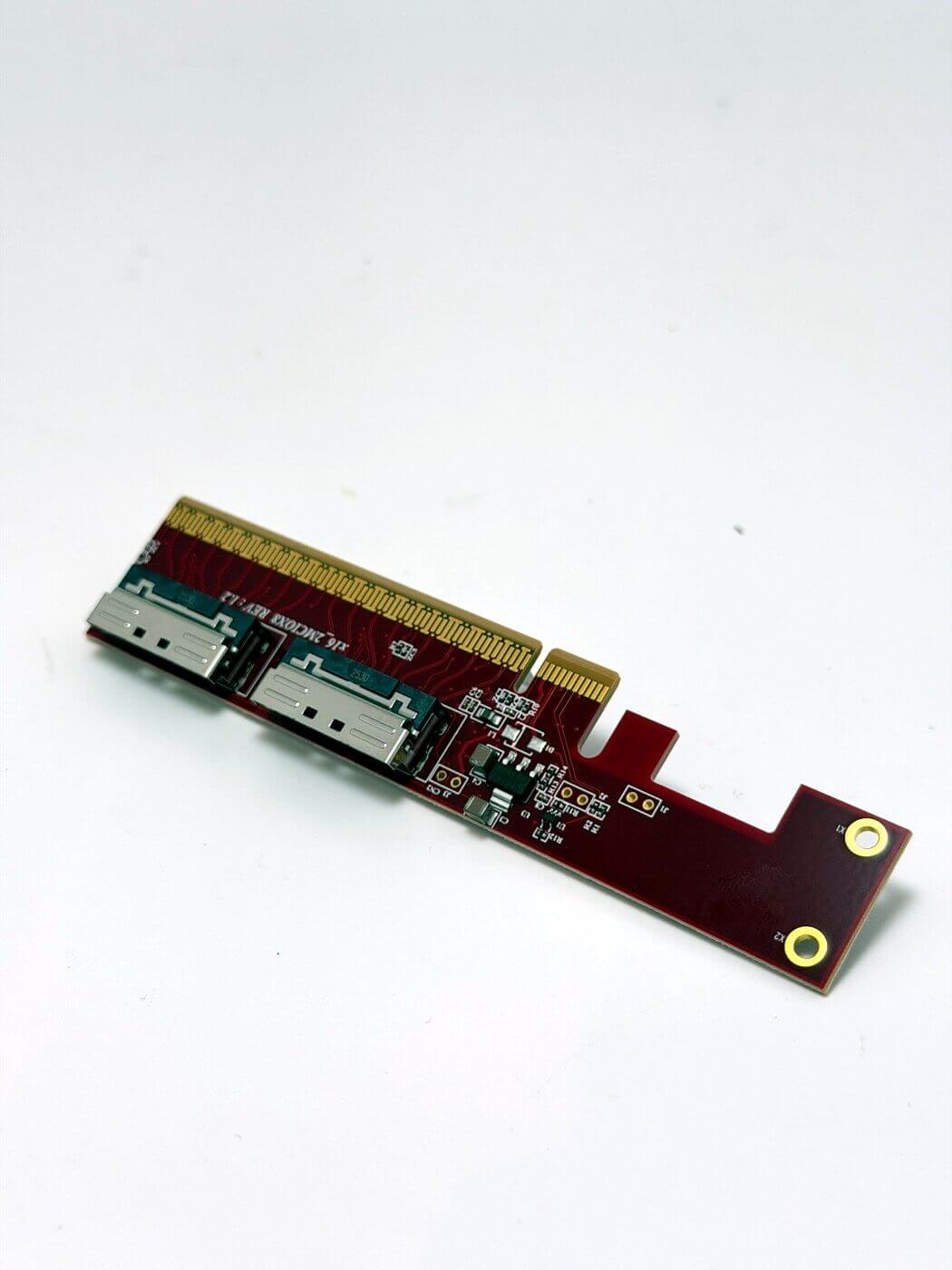
Is HD MiniSAS Still Relevant In Modern Storage And Server Designs?
HD MiniSAS remains relevant in modern storage and server designs, even as SlimSAS and MCIO gain traction in next generation platforms. While it is no longer the leading option for ultra high density or PCIe Gen 5 systems, HD MiniSAS continues to offer practical advantages in compatibility, reliability, cost efficiency, and external connectivity. Its value depends less on trends and more on the specific requirements of the system being built or maintained.
A Mature and Widely Deployed Standard
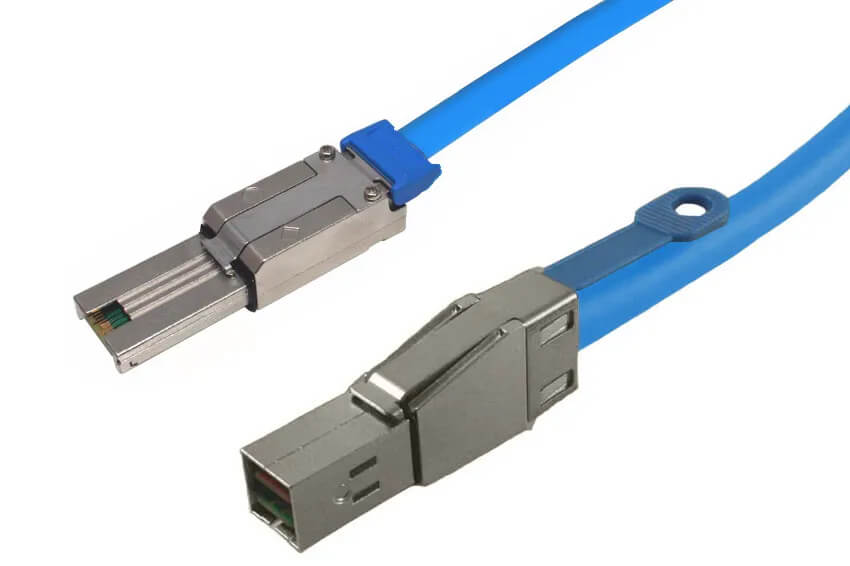
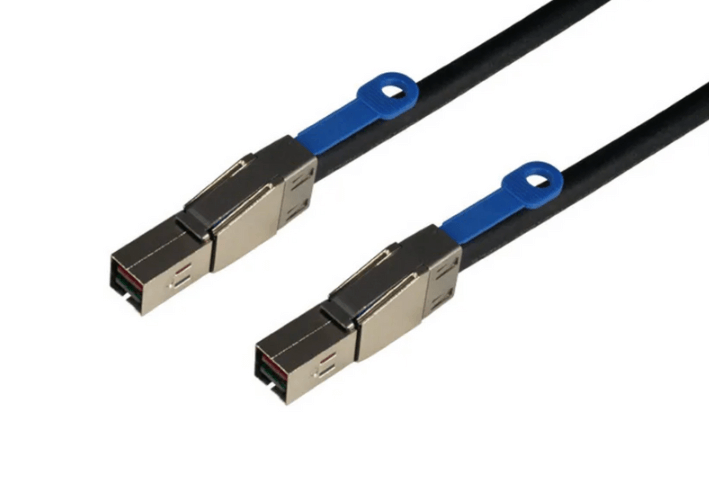
HD MiniSAS, defined by SFF-8643 for internal use and SFF-8644 for external use, has been deployed across enterprise servers, JBODs, RAID controllers, and storage shelves for many years.
This long deployment history matters. The electrical behavior of HD MiniSAS is well understood, tooling and validation processes are mature, and interoperability across vendors is generally excellent. For organizations operating large fleets of existing systems, this maturity translates directly into lower risk and predictable behavior.
Strong Fit for SAS Based Architectures
HD MiniSAS remains a natural choice for SAS centric designs.
SAS 3.0 at 12 Gb per second per lane continues to meet the needs of many enterprise workloads, including bulk storage, backup targets, and transactional systems that prioritize reliability over raw throughput. HD MiniSAS integrates cleanly with SAS expanders, dual port drives, and established backplane designs.
In these architectures, moving to a newer connector standard often provides little practical benefit.
Still the Preferred Option for External Cabling
One area where HD MiniSAS remains especially relevant is external connectivity.
The SFF-8644 external connector offers robust mechanical retention, strong EMI shielding, and durability suited for rack to rack or chassis to shelf connections. Many external storage enclosures and JBODs continue to rely on HD MiniSAS because it performs reliably in environments with vibration, frequent handling, and longer cable runs.
SlimSAS and MCIO are primarily internal interfaces and do not replace HD MiniSAS in this role.
Cost and Availability Advantages
Because HD MiniSAS is a mature standard, cables and connectors are widely available and typically lower cost than newer alternatives.
For large scale deployments or cost sensitive builds, this matters. Choosing HD MiniSAS can reduce total system cost without sacrificing stability, especially when performance requirements are already met by SAS 3.0 or PCIe Gen 3.
Supply chains for HD MiniSAS are also well established, reducing procurement risk.
Transition Friendly for Mixed Environments
Many modern systems operate in mixed environments where not all components are upgraded at the same pace.
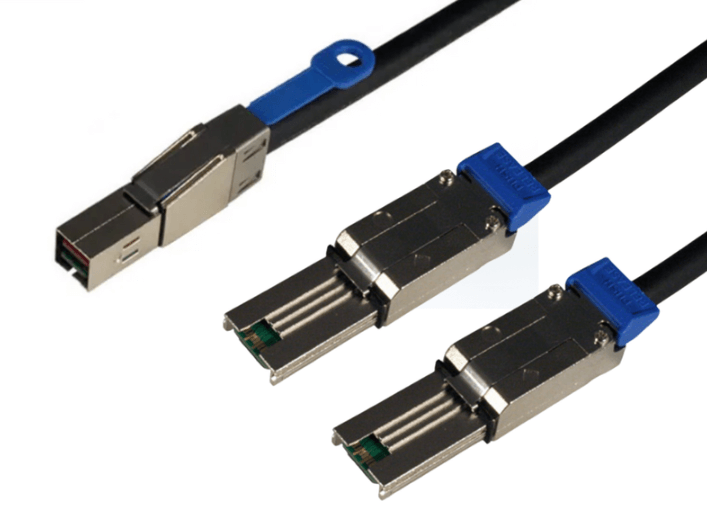
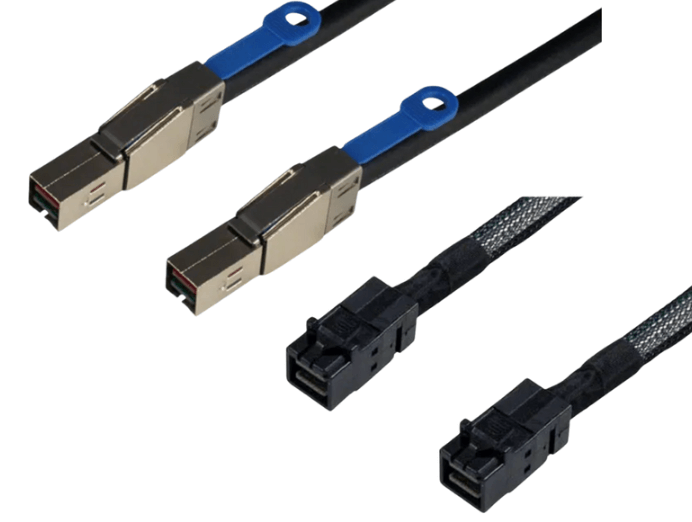
HD MiniSAS is often used in breakout and adapter configurations to bridge newer controllers to existing backplanes or storage shelves. This allows phased upgrades rather than disruptive full system replacements.
In this role, HD MiniSAS serves as a practical transition interface rather than a limitation.
Where HD MiniSAS Falls Short
Despite its strengths, HD MiniSAS is not ideal for every use case.
It is not optimized for PCIe Gen 4 or Gen 5 signaling and does not offer the connector density required for very high drive count NVMe platforms. New designs targeting extreme bandwidth, compact layouts, or long term PCIe scalability are better served by SlimSAS or MCIO.
Using HD MiniSAS in those scenarios can restrict future growth and complicate validation.
When HD MiniSAS is Still the Right Choice
HD MiniSAS remains relevant and often preferable when:
-
Maintaining or expanding existing enterprise infrastructure
-
Building SAS based storage systems
-
Connecting to external storage enclosures
-
Prioritizing mechanical robustness and reliability
-
Managing cost and supply chain stability
In these contexts, it continues to deliver dependable performance.
When to Move On to Newer Standards
New connector standards make sense when:
-
Designing PCIe Gen 4 or Gen 5 platforms
-
Building dense NVMe backplanes
-
Maximizing internal port density
-
Planning for long lifecycle scalability
In these cases, HD MiniSAS is not obsolete, but it is no longer optimal.
The Practical Conclusion
HD MiniSAS is no longer the cutting edge of high speed interconnect design, but it is far from obsolete. It remains a dependable, cost effective, and widely supported solution for many modern storage and server systems.
The key is alignment. When the system requirements match what HD MiniSAS does well, it remains a smart engineering choice rather than a legacy compromise.
FAQ (Frequently Asked Questions)
Is HD MiniSAS being phased out?
No. It continues to be manufactured and widely supported.
Does HD MiniSAS support NVMe?
Only in limited PCIe Gen 3 use cases. It is not ideal for modern NVMe platforms.
Is HD MiniSAS less reliable than newer connectors?
No. Its mechanical and electrical reliability are well proven.
Should new designs avoid HD MiniSAS entirely?
Not necessarily. It depends on performance goals, density needs, and system lifecycle.