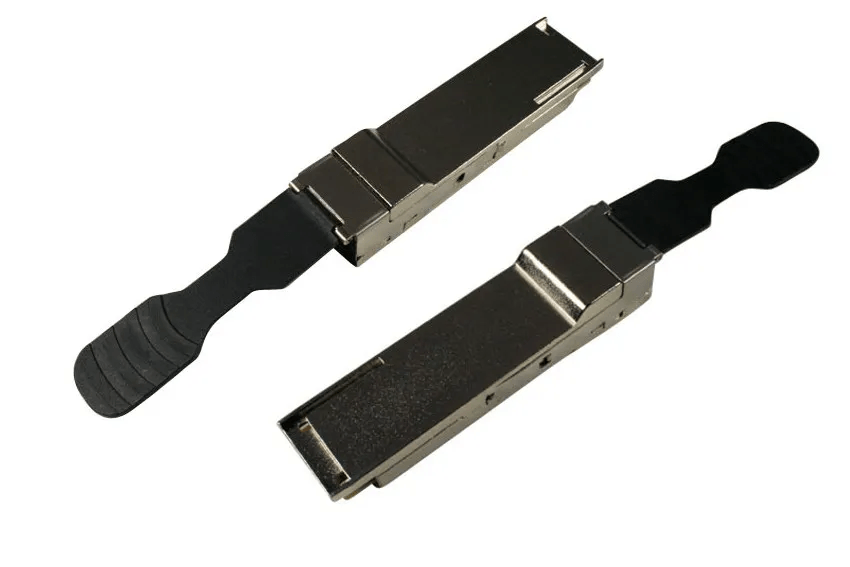
QSFP+ 40GBASE SR4 Module For Data Center Connectivity
QSFP+ 40GBASE SR4 modules are optical transceivers designed to deliver 40 Gigabit Ethernet connectivity over multimode fiber using parallel optics. These modules operate at an 850 nm wavelength and are commonly deployed in data centers to support high bandwidth communication between switches, servers, and storage platforms. Their compact QSFP+ form factor allows high port density, making them suitable for modern network architectures.
Understanding 40GBASE SR4 Technology
40GBASE SR4 is defined under the IEEE 802.3ba standard and uses four parallel transmission channels to achieve 40 Gb/s throughput. Each channel operates at 10 Gb/s, combining to form a high speed link optimized for short distance communication.
This parallel optical approach improves signal stability and reduces latency within structured cabling environments. It is particularly effective in data centers where consistent performance and predictable link behavior are required.
QSFP+ Form Factor And Design
The QSFP+ module integrates multiple data lanes into a compact, hot swappable interface. It is designed to fit high density switch ports and network interface cards, enabling scalable deployment across large infrastructures.
Its small footprint allows multiple transceivers to operate within a single device without excessive power consumption or thermal impact. This makes it ideal for spine leaf topologies and aggregation layers.
MTP MPO Connectivity And Fiber Interface
QSFP+ SR4 modules use MTP MPO connectors to support parallel fiber transmission. These connectors typically contain 12 fiber strands, with four used for transmitting data and four for receiving. The remaining fibers are unused or reserved depending on the configuration.
Proper polarity and alignment are critical for ensuring accurate signal transmission. Structured cabling systems often incorporate pre terminated MTP MPO trunks to simplify installation and reduce deployment time.
Performance And Optical Characteristics
Operating at 850 nm, QSFP+ SR4 modules are optimized for short reach communication over multimode fiber. They support distances up to 100 meters with OM3 fiber and may achieve longer distances with OM4 fiber under ideal conditions.
These transceivers offer low latency and consistent throughput, making them suitable for high performance environments. Compliance with QSFP+ MSA standards ensures interoperability across a wide range of networking equipment.
Compatibility And Deployment Considerations
QSFP+ SR4 modules are compatible with switches, routers, and network adapters that support 40G Ethernet. They are commonly used in data center interconnects, aggregation networks, and high performance computing clusters.
When deploying these modules, it is important to use compatible multimode fiber types such as OM3 or OM4. Cable length, connector cleanliness, and proper handling all influence link performance and reliability.
Signal Integrity And Reliability
Signal integrity in optical systems depends on proper fiber handling and connector maintenance. Contamination on fiber end faces can significantly degrade performance. Regular inspection and cleaning are essential for maintaining optimal operation.
Parallel optics reduce the risk of signal loss over short distances, but correct cable routing and minimal bending are still necessary to avoid attenuation and reflection issues.
Thermal And Mechanical Considerations
In high density networking equipment, thermal management is critical. QSFP+ modules are designed to operate within defined temperature ranges, and adequate airflow must be maintained to prevent overheating.
Mechanical stability is also important. Ensuring that modules are securely seated and cables are properly supported helps prevent disconnections and maintains consistent performance.
Use Cases
- Data Center Switch To Switch Interconnects
- Spine Leaf Network Architectures
- High Performance Computing Clusters
- Storage Area Network Connectivity
- Server To Switch High Bandwidth Links
Best Practices For Installation
Always inspect and clean MTP MPO connectors before installation to prevent signal degradation. Use structured cable management to avoid excessive bending and stress on fiber cables.
Ensure compatibility between transceivers and host devices, including firmware support. Maintain proper airflow within network equipment to support thermal stability during operation.
FAQ (Frequently Asked Questions)
1. What Is The Maximum Distance Supported By QSFP+ SR4 Modules?
Typically up to 100 meters using OM3 multimode fiber, with potential for longer distances using OM4 fiber.
2. What Type Of Connector Is Used In QSFP+ SR4 Modules?
They use MTP MPO connectors designed for parallel fiber transmission.
3. Can QSFP+ SR4 Modules Work With Single Mode Fiber?
No. They are designed specifically for multimode fiber operating at 850 nm.
4. Are QSFP+ SR4 Transceivers Hot Swappable?
Yes. They can be inserted or removed without shutting down the host device.