SFP+ To SFP+ 10Gb Passive DAC Cables
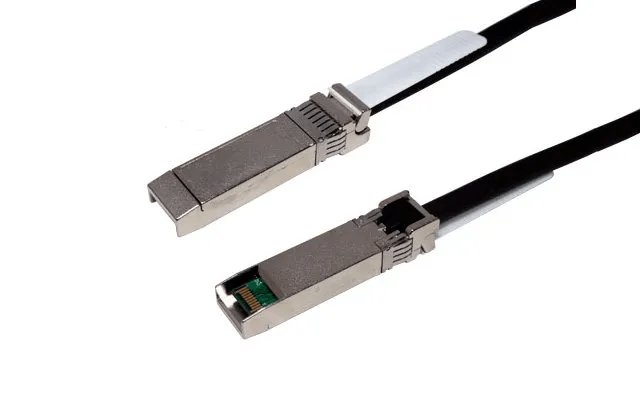
SFP+ to SFP+ 10Gb passive direct attach copper (DAC) cables provide a direct electrical connection between compatible SFP+ ports in network and data center equipment. Using copper conductors and integrated SFP+ connectors, these cable assemblies are commonly used for short-range 10Gb Ethernet links between switches, routers, servers, and network interface cards.
Understanding SFP+ To SFP+ DAC Cables
An SFP+ to SFP+ DAC cable combines the cable and transceiver interfaces into a single assembly. Each end terminates in an SFP+ connector that plugs directly into a compatible SFP+ port.
Unlike optical transceiver and fiber combinations, passive DAC cables carry electrical signals through copper conductors. This makes them useful for short-distance connections where a direct copper interconnect can meet the required link specifications.
The passive design does not contain active signal regeneration or optical conversion circuitry. As a result, the cable relies on the connected equipment and the electrical characteristics of the cable assembly to maintain signal quality.
10Gb Ethernet Connectivity
SFP+ interfaces are widely used for 10Gb Ethernet connections in servers, switches, storage systems, and other network equipment. An SFP+ to SFP+ DAC provides a direct point-to-point connection between two compatible ports.
These cables can simplify short connections within a rack by eliminating separate optical transceivers and fiber patch cables. This can also reduce the number of connection points in the physical link.
Actual network performance depends on the capabilities of the connected devices, cable specifications, supported distance, and host system configuration.
Passive Copper Construction
The cable shown uses 30AWG copper conductors. A smaller wire gauge can support a compact and flexible cable assembly, which is useful when multiple connections must be routed through a confined rack space.
Because the cable is passive, there are no active components required along the copper transmission path. The cable therefore depends on appropriate conductor construction, impedance characteristics, shielding, and connector design to maintain reliable signal transmission.
Cable selection should take the required link distance and equipment specifications into account.
Signal Integrity At 10Gb/s
At 10Gb/s, signal integrity is affected by electrical characteristics throughout the connection. Factors such as insertion loss, impedance variation, crosstalk, and connector transitions can influence link performance.
Cable length is also important because attenuation increases as the electrical transmission path becomes longer. Passive DAC assemblies are therefore generally intended for shorter connections within equipment racks or nearby network infrastructure.
Avoiding excessive bending and mechanical stress can help preserve the physical characteristics of the cable and reduce unnecessary strain on the SFP+ connectors.
Compatibility With Network Equipment
SFP+ to SFP+ DAC cables require compatible SFP+ ports on both connected devices. Typical equipment can include Ethernet switches, servers, storage systems, routers, and network interface cards.
Connector compatibility alone does not guarantee successful operation. The host equipment may have specific requirements related to supported DAC cables, cable length, coding, firmware, or vendor compatibility.
Before deployment, verify the SFP+ port specifications and the cable requirements defined by the equipment manufacturer.
Cable Routing In Dense Systems
DAC cables are commonly used in environments where equipment is installed close together. Their direct copper connection can help simplify rack-level interconnects between adjacent devices.
Proper routing is important when many cables are installed in the same area. Cables should not be sharply bent, compressed, or pulled excessively around equipment.
Cable management should also maintain access to SFP+ ports and avoid interfering with ventilation paths. Organized routing can make future maintenance and troubleshooting easier.
Common Applications
- 10Gb Ethernet Switch Connections
- Server To Switch Links
- Storage Network Connections
- Network Interface Card Interconnects
- Rack-Level Data Center Connections
- Enterprise Network Equipment
- Short-Distance SFP+ Links
Best Practices For Deployment
Confirm that both devices support SFP+ connectivity and the intended 10Gb Ethernet application. Check the supported cable type and maximum distance before installation.
Select an appropriate cable length to avoid unnecessary slack while allowing enough flexibility for equipment servicing. Avoid sharp bends and excessive tension around the SFP+ connectors.
When deploying multiple DAC cables in a rack, use organized cable routing to maintain airflow and provide clear access to network ports.
FAQ (Frequently Asked Questions)
1. What Is An SFP+ To SFP+ Passive DAC Cable Used For?
It provides a direct copper connection between compatible SFP+ ports for short-distance 10Gb Ethernet and other supported networking applications.
2. What Does Passive DAC Mean?
Passive DAC means the cable carries electrical signals through copper conductors without active signal processing or optical conversion within the cable.
3. What Equipment Can Use SFP+ DAC Cables?
Compatible switches, servers, storage systems, routers, and network interface cards with supported SFP+ ports can use these cables.
4. Why Is Cable Length Important For Passive DAC Connections?
Longer copper transmission paths introduce greater signal attenuation, so the cable length must remain within the supported electrical and system specifications.