OCuLink 8x Cables For PCIe Gen5 Storage Systems
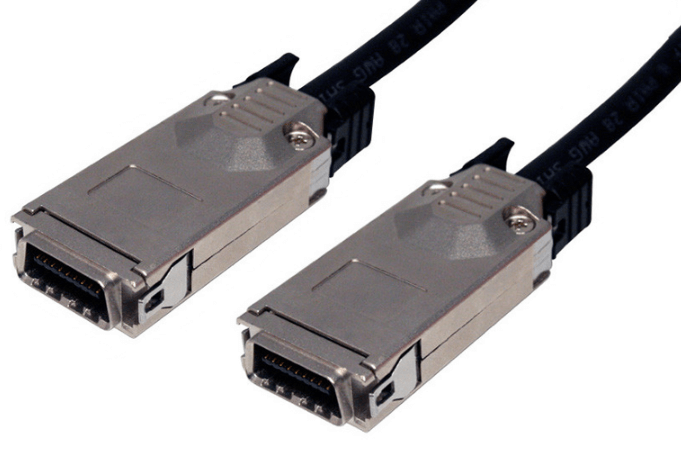
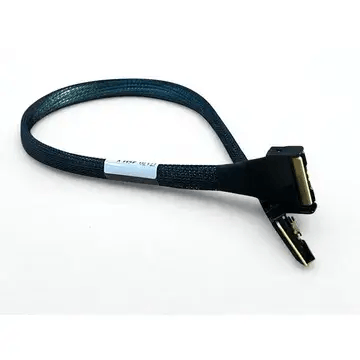
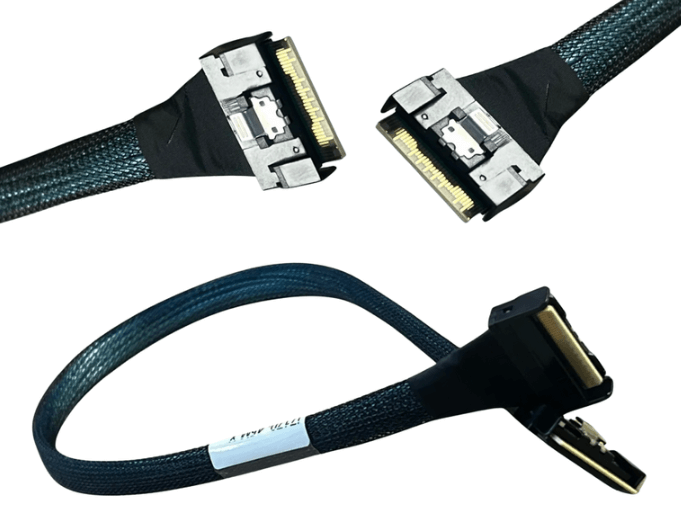
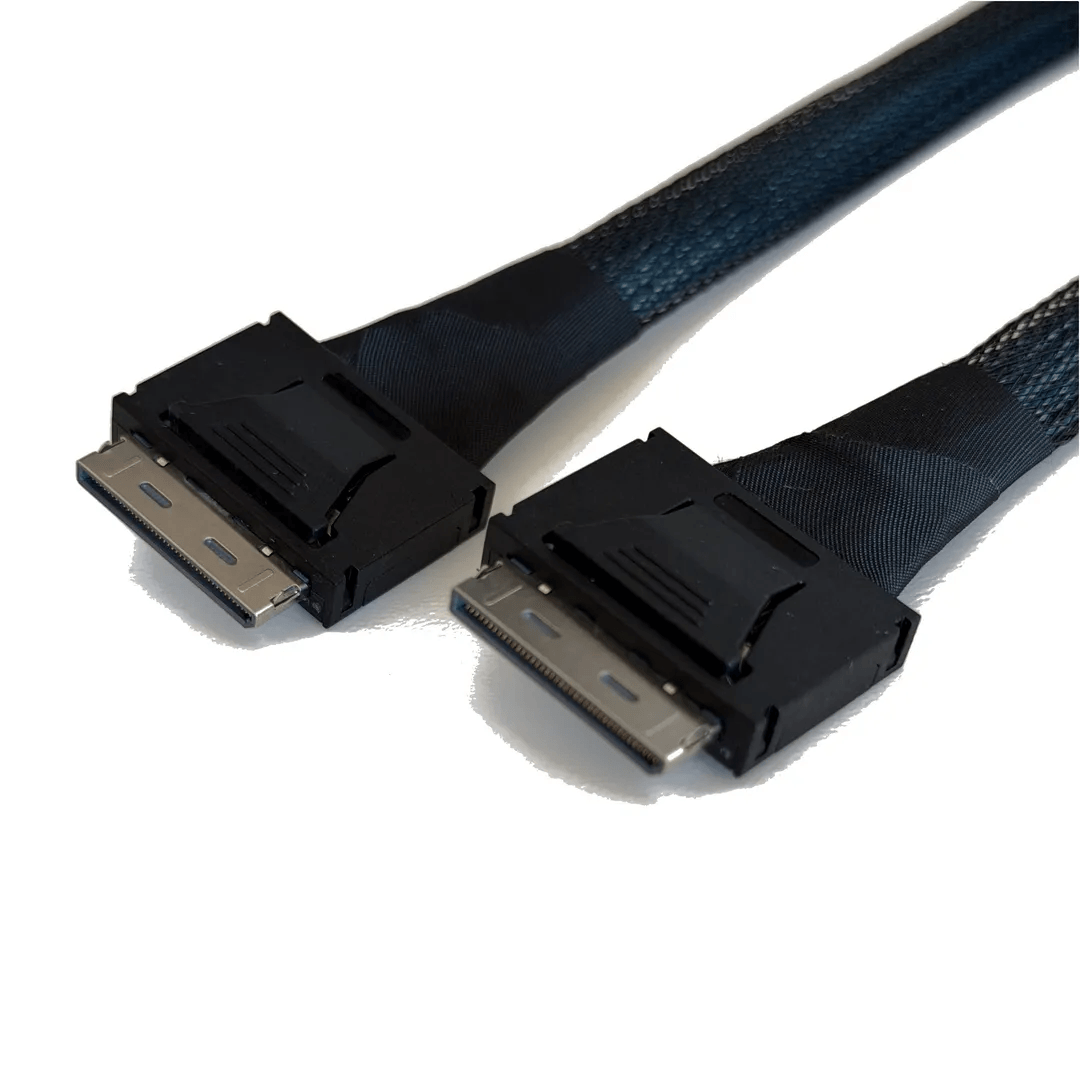
OCuLink 8x to OCuLink 8x cables provide a compact, high bandwidth interconnect for PCIe Gen5 environments. They are designed to connect compatible OCuLink 8x interfaces in enterprise servers, storage systems, and PCIe expansion platforms where reliable signal transmission and efficient cable routing are essential. Their compact design helps maximize internal space while supporting demanding data transfer requirements across modern computing infrastructure.
Understanding OCuLink 8x Interfaces
OCuLink 8x is a high speed PCIe interconnect designed to carry eight PCIe lanes through a compact connector. Compared to larger internal cabling solutions, OCuLink reduces connector size while maintaining the bandwidth required by enterprise storage and computing applications.
OCuLink 8x to OCuLink 8x cables create direct point to point connections between compatible devices. They are commonly used to connect host adapters, storage controllers, PCIe expansion boards, and backplanes without requiring protocol conversion.
PCIe Gen5 Performance
PCIe Gen5 significantly increases available bandwidth compared to earlier PCIe generations, making it suitable for high performance storage, artificial intelligence workloads, and enterprise computing platforms.
An OCuLink 8x cable allows compatible hardware to take advantage of PCIe Gen5 signaling while maintaining reliable communication across short internal cable runs. Stable electrical performance depends on the complete communication path, including the cable, connectors, PCB layout, and connected devices.
Signal Integrity And Cable Construction
High speed PCIe communication requires careful control of electrical characteristics throughout the transmission channel. OCuLink 8x cable assemblies are designed with controlled impedance conductors, shielding, and precision connectors to reduce insertion loss, crosstalk, and electromagnetic interference.
Proper cable construction helps maintain signal quality during continuous operation in dense server environments where multiple high speed interfaces operate simultaneously.
Compatibility With Enterprise Hardware
OCuLink 8x cables are commonly deployed in enterprise servers, storage appliances, PCIe expansion systems, and workstation platforms equipped with compatible OCuLink 8x interfaces.
Before installation, compatibility should be verified for connector type, PCIe generation, lane configuration, firmware support, and cable length. Matching connectors alone do not guarantee successful operation.
Mechanical Design And Internal Routing
Compact cable assemblies simplify installation inside high density chassis by reducing cable congestion around processors, storage devices, expansion cards, and cooling components.
Maintaining the recommended bend radius and avoiding excessive cable tension helps preserve electrical performance and connector reliability. Organized cable routing also improves airflow within the system enclosure.
Common Applications
- Enterprise Servers
- PCIe Gen5 Storage Systems
- NVMe Storage Platforms
- PCIe Expansion Chassis
- AI Computing Platforms
- High Performance Computing Clusters
- Data Center Infrastructure
- Enterprise Workstations
Best Practices For Deployment
Select a cable length appropriate for the chassis layout to minimize unnecessary slack while maintaining proper routing. Verify compatibility between all connected hardware before installation.
Route cables away from excessive heat and moving components. After installation, confirm negotiated PCIe link speed and lane width to verify proper operation.
FAQ (Frequently Asked Questions)
1. What Is An OCuLink 8x To OCuLink 8x Cable Used For?
It connects compatible OCuLink 8x interfaces in servers, storage systems, and PCIe expansion platforms.
2. Does This Cable Support PCIe Gen5?
Yes. It is designed for PCIe Gen5 connectivity when used with compatible hardware.
3. Can It Be Used With NVMe Storage Systems?
Yes. OCuLink 8x cables are commonly used in NVMe storage platforms and enterprise server environments.
4. Why Is Cable Routing Important?
Proper routing helps maintain signal integrity, reduces mechanical stress, and supports reliable PCIe communication.