Understanding 40GBASE-SR4 QSFP+ Modules
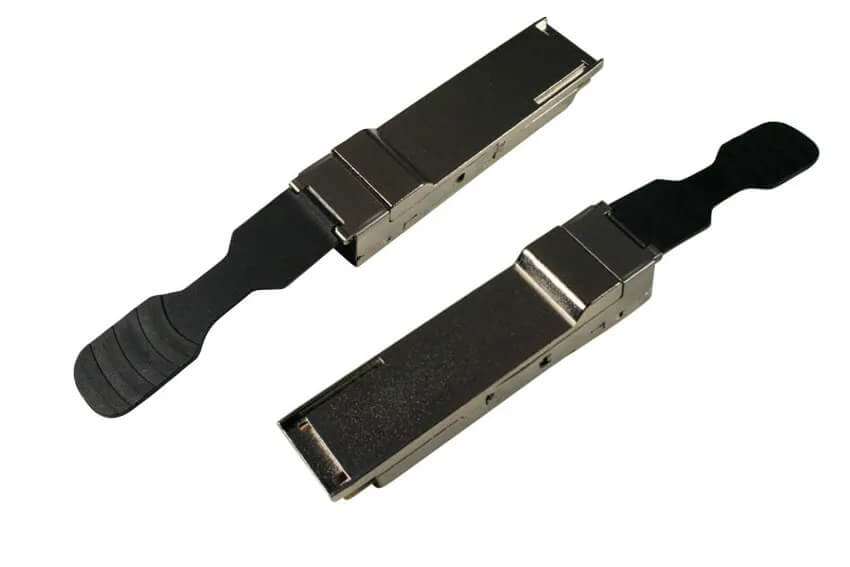
40GBASE-SR4 QSFP+ modules are compact, hot-swappable optical transceivers designed to provide high-speed 40 Gigabit Ethernet connectivity over multimode fiber. Using an MTP/MPO optical interface, these modules transmit data across four parallel optical lanes, making them a common choice for enterprise networks, data centers, storage systems, and cloud computing environments where high bandwidth and low latency are essential.
How 40GBASE-SR4 QSFP+ modules work
A 40GBASE-SR4 QSFP+ transceiver operates by dividing a 40 Gbps data stream into four independent 10 Gbps channels. Each channel is transmitted and received over a dedicated optical lane, creating a total throughput of 40 Gbps through parallel optical technology.
This architecture improves transmission efficiency while reducing the complexity associated with multiple individual optical links. The integrated MTP/MPO connector combines these lanes into a single interface, simplifying cable management and supporting high-density network deployments.
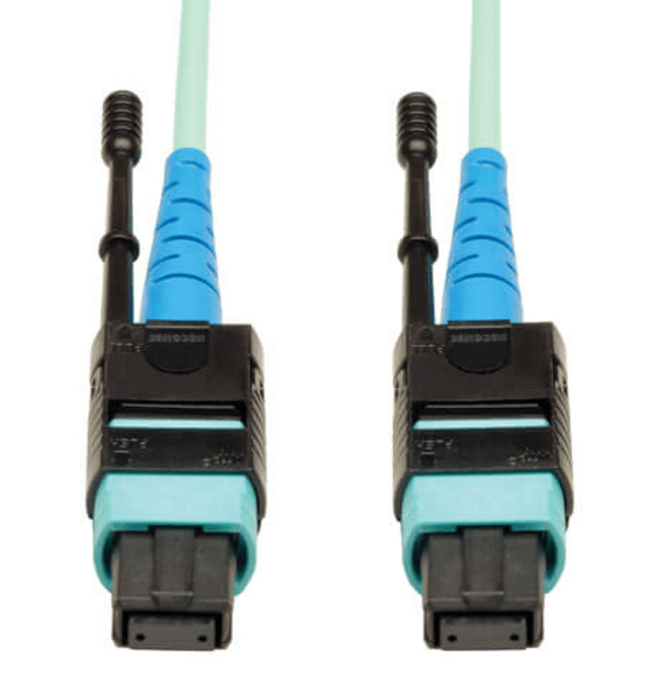
MTP/MPO connectivity and cabling
The 40GBASE-SR4 standard is designed for use with multimode fiber and MTP/MPO cabling systems. These multi-fiber connectors allow several optical channels to be consolidated into one cable assembly, reducing rack congestion and improving installation efficiency.
Common cabling options include:
- OM3 multimode fiber for standard short-range links
- OM4 multimode fiber for extended reach and improved performance
- Structured MTP/MPO cabling systems for scalable data center deployments
Proper fiber polarity and connector cleanliness are important to ensure reliable optical performance.
Common applications
40GBASE-SR4 QSFP+ modules are widely deployed in environments that require reliable high-speed network connectivity. Typical applications include:
- Data center switch interconnects
- Spine and leaf network architectures
- Enterprise backbone networks
- Cloud computing infrastructure
- High-performance computing clusters
- Storage area networks and storage switches
- Virtualized and hyper-converged platforms
Their compact form factor and support for high port density make them well suited for modern network designs.
Compatibility and deployment considerations
Most 40GBASE-SR4 QSFP+ modules comply with the QSFP+ Multi-Source Agreement (MSA) and IEEE 802.3ba specifications, promoting interoperability across compatible networking equipment.
Before deployment, administrators should verify:
- Switch and router compatibility
- Support for the 40GBASE-SR4 optical standard
- MTP/MPO polarity configuration
- OM3 or OM4 fiber requirements
- Maximum supported transmission distance
Validating these factors helps ensure stable operation and reduces the risk of installation issues.
Advantages of 40GBASE-SR4 technology
40GBASE-SR4 provides an efficient migration path for organizations expanding beyond 10 Gigabit Ethernet infrastructure. By using parallel optical transmission, these modules deliver significantly higher bandwidth while leveraging established multimode fiber cabling systems.
Additional benefits include:
- High-density network connectivity
- Low-latency optical communication
- Simplified cable management
- Hot-swappable module replacement
- Scalable architecture for future network growth
These characteristics make 40GBASE-SR4 a practical solution for enterprise and cloud networking environments.
Best practices for installation
To achieve optimal performance, network administrators should:
- Inspect and clean optical connectors before installation
- Verify MTP/MPO polarity and lane mapping
- Use the correct multimode fiber type
- Avoid excessive cable bending or physical stress
- Confirm transceiver compatibility with installed hardware
Following these practices helps maximize reliability and maintain consistent link performance.
FAQ (Frequently Asked Questions)
1. What is a 40GBASE-SR4 QSFP+ module?
A 40GBASE-SR4 QSFP+ module is a hot-swappable optical transceiver that delivers 40 Gigabit Ethernet connectivity over multimode fiber using four parallel optical lanes.
2. What type of cable does a 40GBASE-SR4 module use?
These modules typically use MTP/MPO multimode fiber cables, including OM3 and OM4 fiber assemblies.
3. Where are 40GBASE-SR4 QSFP+ modules commonly deployed?
They are widely used in enterprise data centers, cloud computing platforms, storage networks, and high-performance computing environments.
4. Are 40GBASE-SR4 QSFP+ modules hot-swappable?
Yes. QSFP+ modules are designed for hot-swappable operation, allowing installation or replacement without shutting down compatible network equipment.