MCIO PCIe Signal Routing Architecture
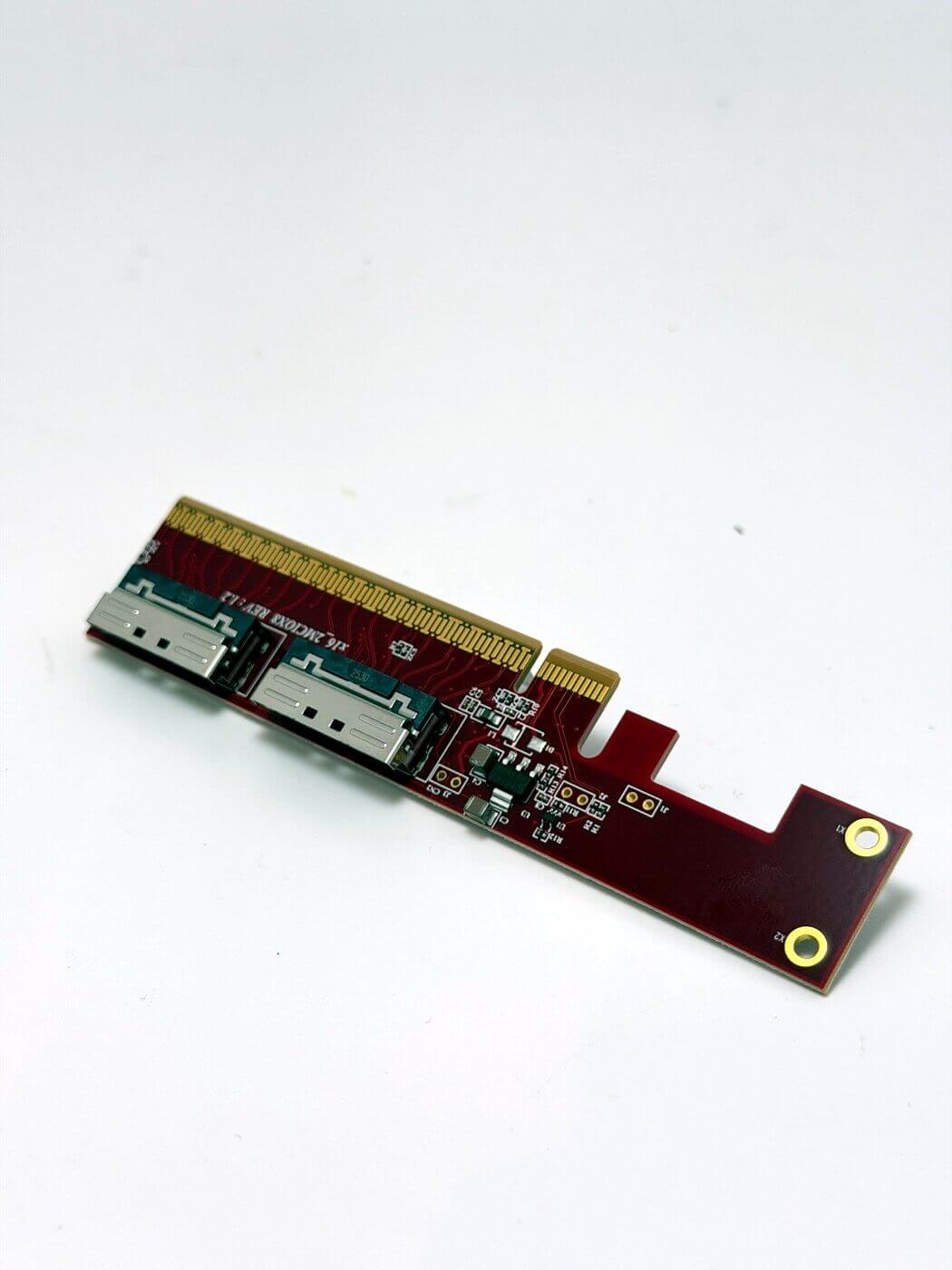
MCIO adapter boards are engineered to support high-speed PCIe communication within compact enterprise and data center platforms. These assemblies provide structured signal routing between MCIO cable interfaces, expansion hardware, and system motherboards while maintaining stable electrical performance across multi-lane PCIe pathways. Their compact architecture supports scalable infrastructure deployment in environments where bandwidth density and routing efficiency are critical.
MCIO Interface Architecture
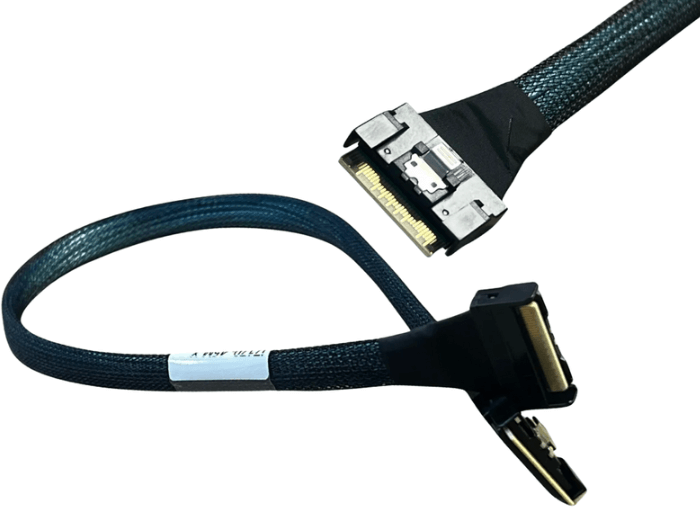
Mini Cool Edge IO, commonly known as MCIO, is a compact interconnect standard developed for modern PCIe communication systems. MCIO adapter boards integrate these interfaces into servers, storage platforms, and accelerator environments by linking internal PCIe lanes through dense connector structures.
The compact physical footprint allows multiple high-speed lanes to be routed efficiently within systems where motherboard space and airflow management are limited.
Multi-Lane PCIe Signal Distribution
PCIe communication depends on stable transmission across multiple synchronized lanes operating at high signaling frequencies. MCIO adapter boards are designed to distribute these signals while preserving impedance consistency and minimizing electrical discontinuities.
Balanced lane routing helps maintain communication stability between processors, accelerators, storage devices, and expansion hardware connected through the interconnect pathway.
PCB Layout And Electrical Characteristics
The PCB structure of MCIO adapter boards plays a critical role in maintaining signal integrity. High-frequency PCIe communication requires controlled impedance traces, optimized grounding structures, and carefully engineered layer stack configurations.
Factors such as insertion loss, return loss, and crosstalk become increasingly sensitive at higher PCIe generations. Precise trace geometry and connector transitions help preserve stable electrical behavior throughout the communication pathway.
Connector Integration And Mechanical Stability
MCIO adapter boards rely on stable mechanical engagement between PCB connectors, cable assemblies, and attached hardware modules. Reinforced mounting structures and secure retention mechanisms help maintain reliable operation during continuous workloads and servicing activity.
Compact board dimensions simplify integration into rackmount servers, modular compute systems, and enterprise storage infrastructure where efficient space utilization is important.
Thermal Density And Airflow Management
High-density PCIe environments frequently contain accelerators, processors, and storage systems operating under sustained workloads that generate significant heat output. Adapter board placement and cable routing influence airflow distribution and thermal stability inside the chassis.
MCIO interconnect structures help reduce cable congestion compared to larger legacy expansion architectures, supporting improved airflow efficiency within compact systems.
Infrastructure Scalability And Expansion Flexibility
MCIO adapter boards support modular PCIe infrastructure growth by enabling flexible integration of GPUs, storage devices, FPGA accelerators, and expansion modules. Their structured routing architecture allows systems to scale compute and storage capacity without major redesign of the core platform.
This flexibility is valuable in enterprise environments where infrastructure requirements continue evolving alongside workload demands.
Reliability And Long-Term Operational Stability
Reliable PCIe communication depends on durable electrical pathways and consistent connector engagement. High-quality MCIO adapter boards are designed to maintain stable signaling performance under continuous operation and repeated maintenance cycles.
Proper installation practices and organized cable management contribute to preserving long-term communication reliability and connector stability.
FAQ (Frequently Asked Questions)
What Is An MCIO Adapter Board Used For?
It is used to route PCIe communication between MCIO interfaces and expansion hardware.
Why Is Signal Integrity Important In MCIO Systems?
Stable signaling is required for reliable high-speed PCIe communication.
Where Are MCIO Adapter Boards Commonly Used?
They are widely used in servers, storage platforms, accelerator systems, and enterprise infrastructure.
Do MCIO Adapter Boards Support PCIe Expansion?
Yes, they are commonly integrated into scalable PCIe expansion architectures.