MCIO x8 Breakout Cables for Dual x4 PCIe Device Integration
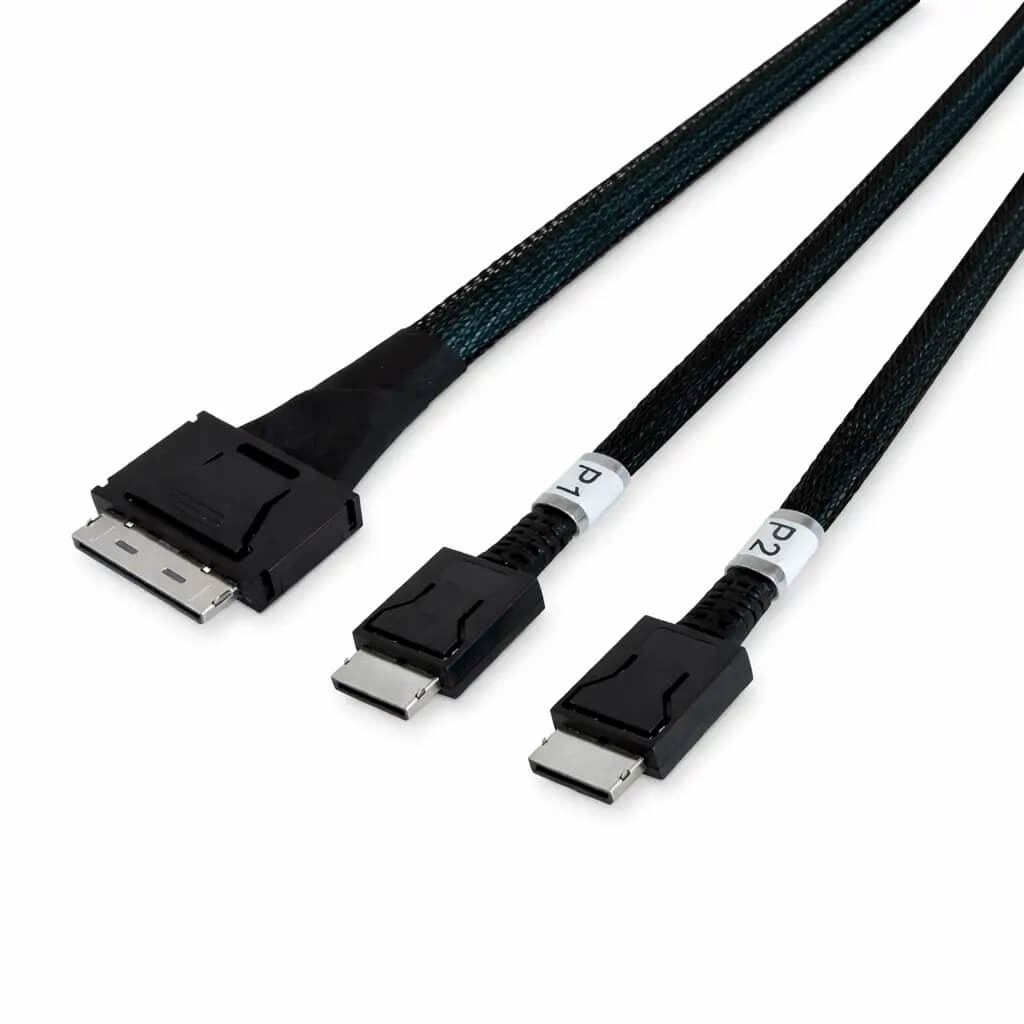
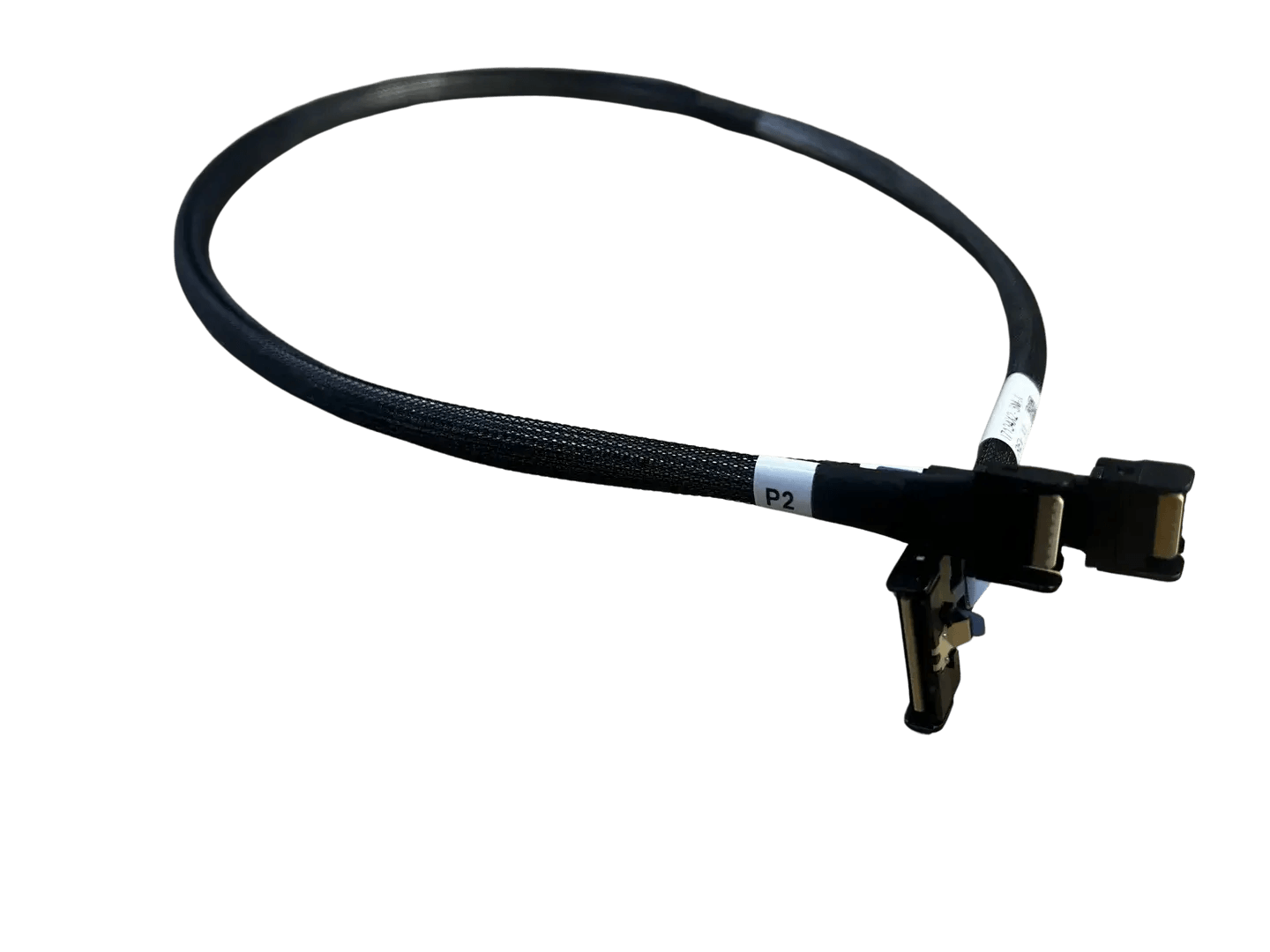
MCIO x8 breakout cables are designed to distribute PCIe connectivity from a single x8 interface into two independent x4 links. These assemblies enable multiple devices to connect directly to a host system without additional switching hardware. They are commonly used in servers, AI platforms, and enterprise systems where efficient lane utilization and high density connectivity are required.
MCIO Interface and Lane Distribution
The MCIO connector supports high speed PCIe signaling in compact system designs. An x8 interface carries eight differential lane pairs, which can be divided into two x4 groups when breakout configurations are supported by the host.
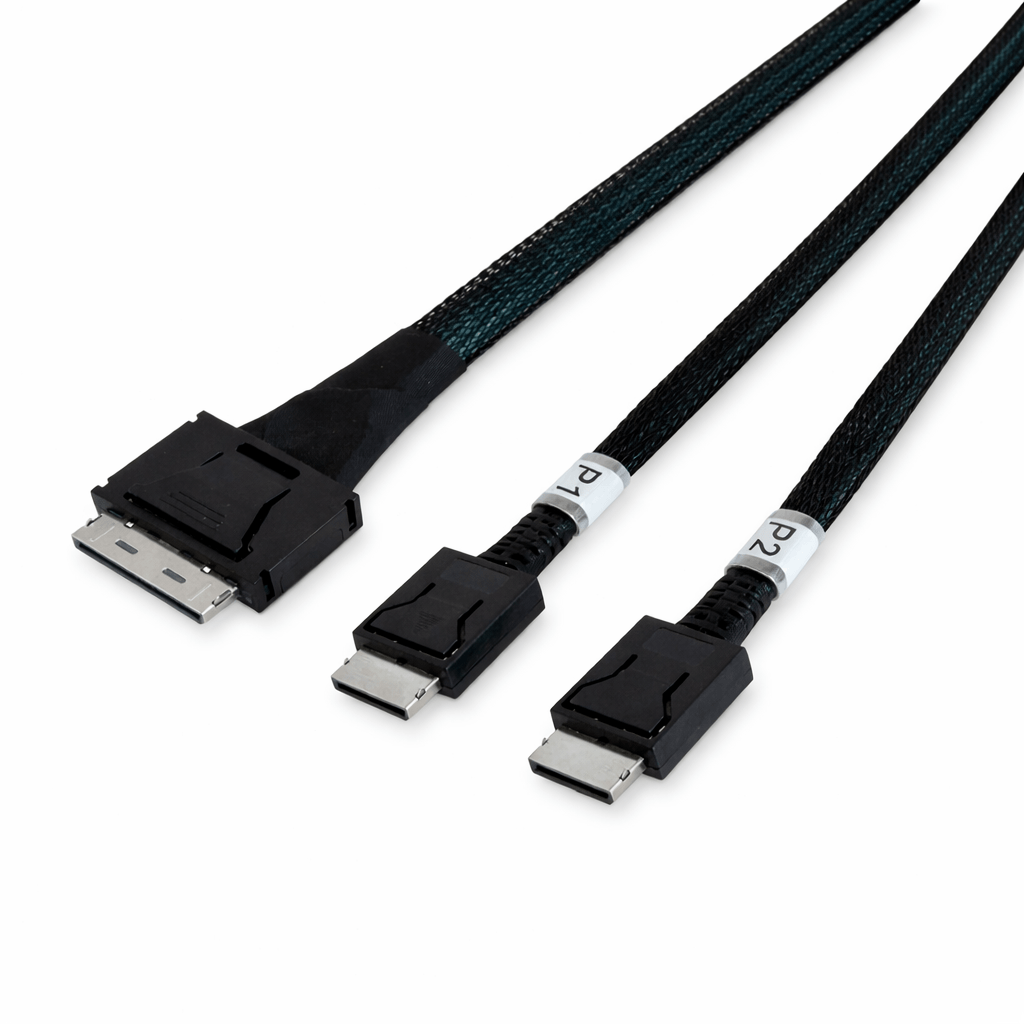
In breakout cable assemblies, the eight lanes from the host are physically separated and routed into two independent x4 connectors. Each branch operates as a complete PCIe link, allowing separate devices to communicate with the host simultaneously.
This direct lane mapping preserves point to point communication without introducing additional latency.
PCIe Gen 5 Performance Characteristics
PCIe Gen 5 increases data transfer rates per lane, placing greater emphasis on signal integrity and electrical precision. Each x4 branch must meet strict performance requirements to ensure stable link initialization and sustained throughput.
Devices connected through breakout cables negotiate link parameters independently. This allows flexible configurations where different devices operate at varying speeds or bandwidth requirements.
Signal Integrity and Crosstalk Management
Maintaining signal quality across split lane configurations requires careful cable design. Breakout cables must ensure consistent electrical performance across both branches.
Key considerations include:
- Controlled impedance across all differential pairs
- Isolation between lane groups to reduce crosstalk
- Consistent conductor geometry to minimize skew
- Effective shielding to prevent external interference
These factors ensure reliable PCIe communication even in dense system environments.
Mechanical Density and System Integration
MCIO connectors enable high port density on modern server motherboards and accelerator platforms. Breakout cables allow system designers to expand connectivity without increasing connector count.
Proper cable routing is essential to prevent strain on connectors and maintain airflow. Managing cable branches effectively helps avoid congestion and supports long term system reliability.
Deployment in Server and AI Platforms
MCIO x8 breakout cables are widely used in environments requiring flexible PCIe connectivity and high bandwidth distribution.
Typical deployment scenarios include:
- GPU interconnects in AI systems
- NVMe storage expansion across multiple drives
- Backplane connectivity in modular server architectures
- High density enterprise compute platforms
- Development and validation systems for PCIe devices
These applications benefit from efficient lane allocation and direct device connectivity.
Installation and Design Best Practices
Ensure the host system supports PCIe bifurcation before using breakout cables. Without this capability, the x8 interface cannot be divided into separate x4 links.
Select cable lengths that match system layout to minimize signal loss and excess slack. Maintain proper bend radius and avoid excessive mechanical stress on connectors. Organized cable routing improves airflow and simplifies maintenance.
FAQ (Frequently Asked Questions)
What is the function of an MCIO x8 breakout cable?
It splits a single PCIe x8 connection into two independent x4 links for connecting multiple devices.
Does splitting lanes reduce bandwidth?
Each x4 link provides its own bandwidth, so performance depends on the requirements of each connected device.
Is PCIe bifurcation required?
Yes, the host system must support lane bifurcation for breakout functionality.
Are these cables limited to storage applications?
No, they are also used for GPUs, accelerators, and other PCIe devices.