SlimSAS 8i Breakout Architecture for Multi-Drive SATA Connectivity
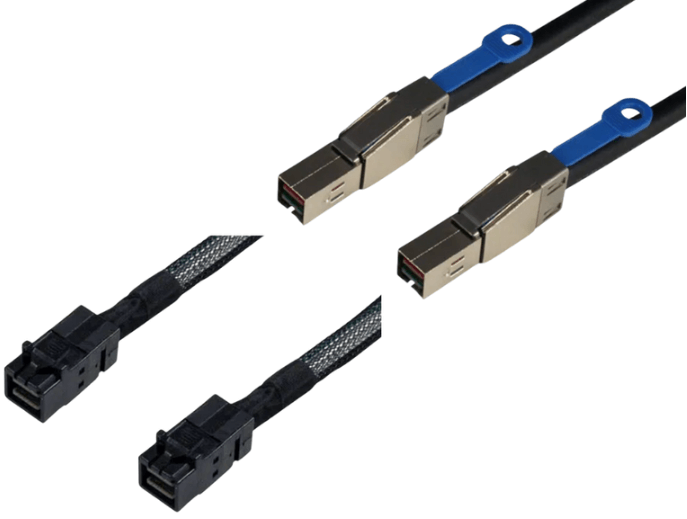
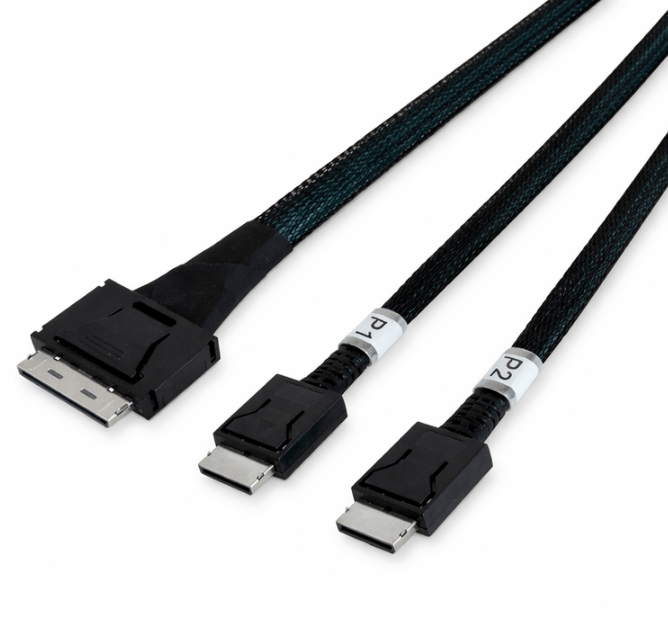
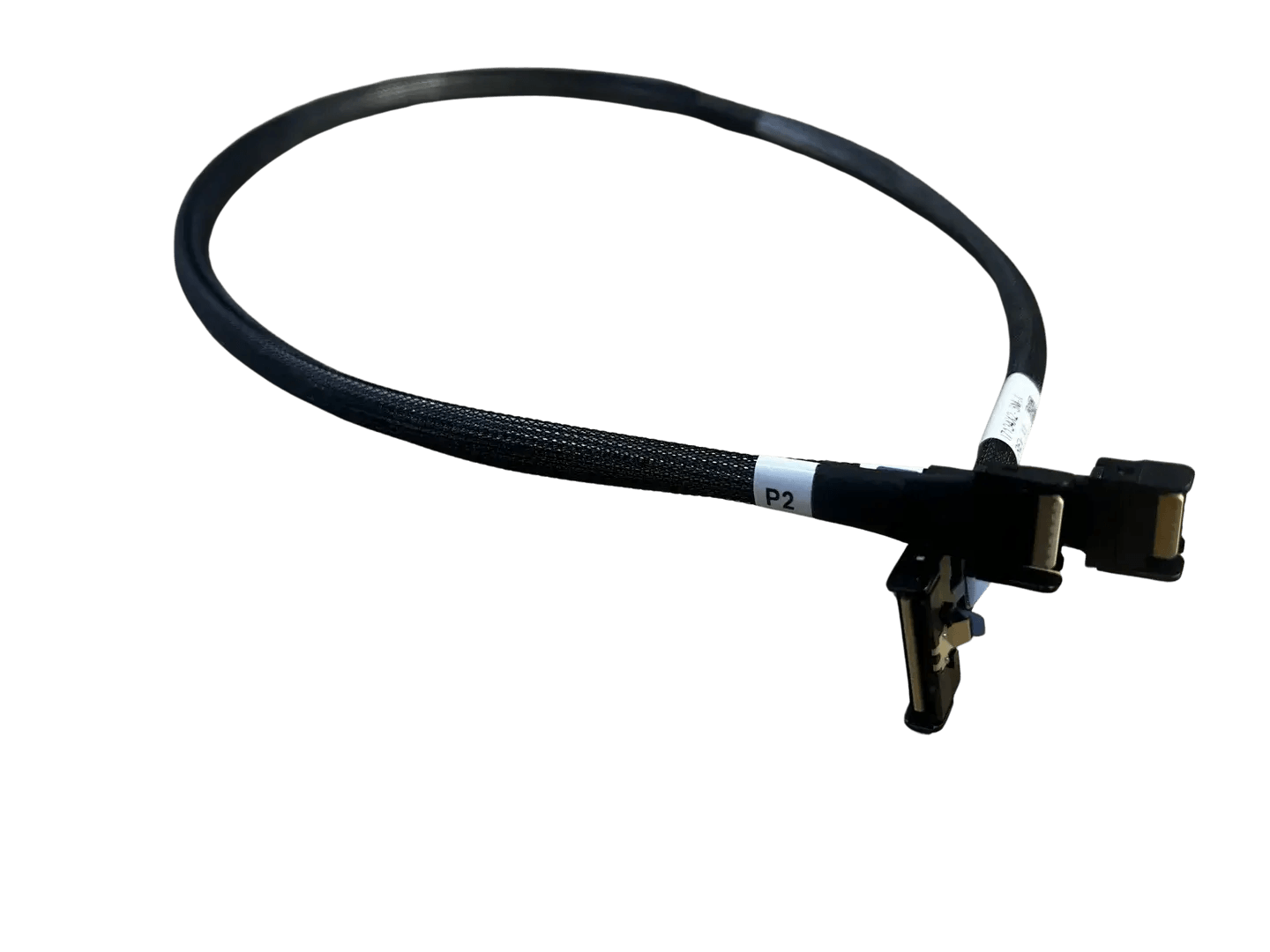
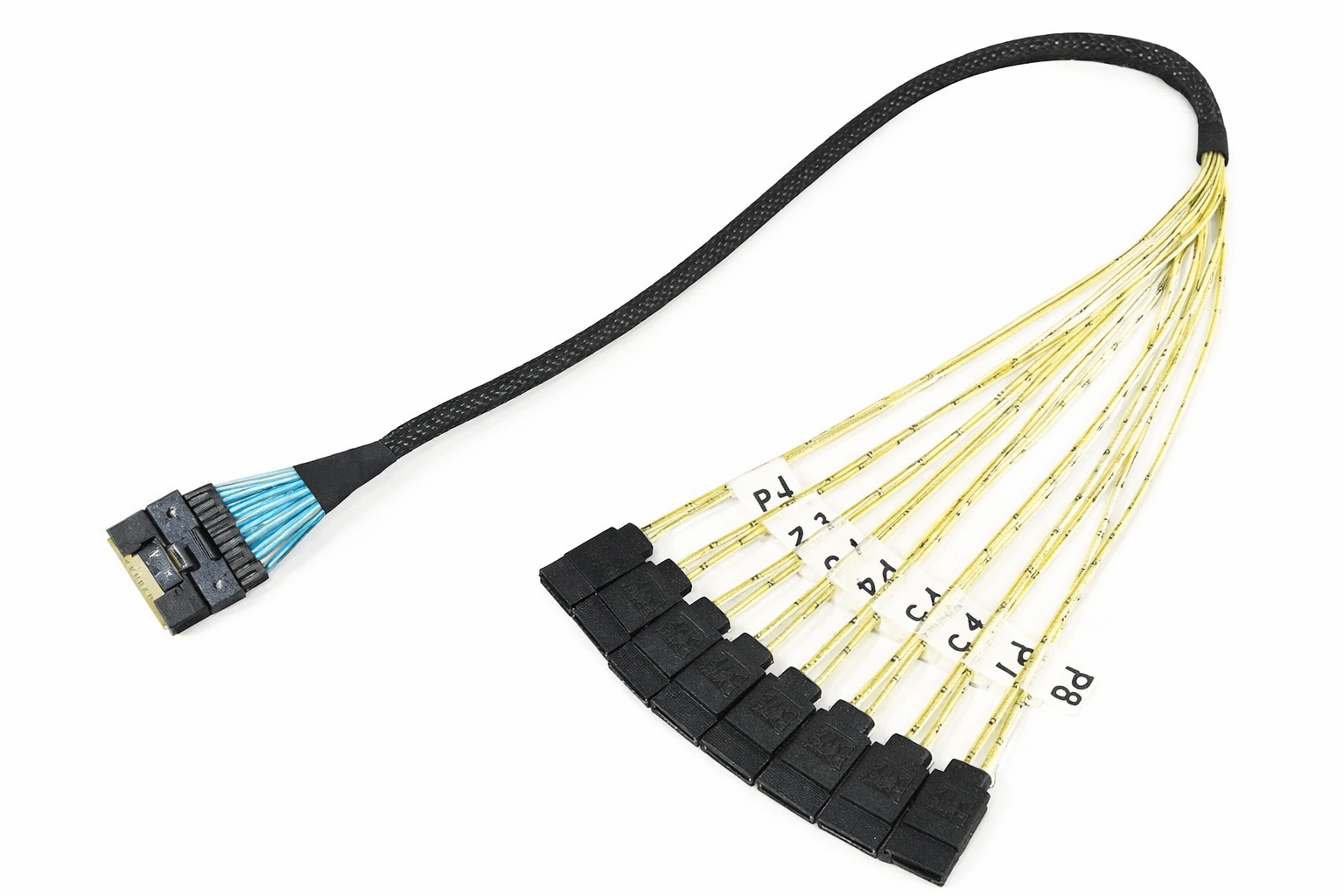
SlimSAS 8i breakout cable assemblies provide a compact method for connecting multiple SATA drives to a single high-density controller interface. Built around the SFF-8654 8i connector standard, these assemblies allow a single host port to support multiple independent SATA links. This architecture is commonly used in servers, storage appliances, and expansion chassis, where maximizing drive density while preserving reliable signaling is essential.
SlimSAS 8i Interface Structure and Lane Allocation
The SlimSAS 8i connector provides eight differential lanes that can transport SAS or SATA traffic from a host controller. In breakout configurations, each pair of differential conductors is routed to an individual SATA device connector.
Since SATA operates using a point-to-point communication model, each drive requires its own transmit and receive pair. The breakout cable distributes these lane pairs across multiple SATA connectors while maintaining independent data channels for each drive.
Correct lane mapping ensures that the SATA connectors receive properly routed signal pairs without altering the underlying protocol behavior. Each drive communicates directly with the controller through its assigned channel.
Electrical Performance Considerations
SATA signaling at 6 Gb/s requires stable impedance and consistent electrical characteristics across the entire transmission path. Breakout cable assemblies must maintain controlled impedance to prevent signal reflections and transmission errors.
Typical SlimSAS breakout cable designs use controlled impedance twinax or high-quality internal cabling to maintain electrical stability. Important factors that influence signal quality include:
-
Differential pair impedance stability
-
Crosstalk suppression between adjacent pairs
-
Length matching across differential channels
-
Connector insertion loss
-
Cable routing within the system chassis
Maintaining these electrical characteristics across all breakout branches helps ensure reliable communication between the controller and connected drives.
Controller Compatibility and Protocol Handling
Many SlimSAS host interfaces support both SAS and SATA devices. When a SlimSAS 8i port is used with a SATA breakout cable, the controller negotiates SATA signaling independently on each lane pair.
This design allows SATA drives to operate within systems that use SAS infrastructure at the controller level. In mixed storage environments, controllers may support both direct SATA connections and SAS expanders using the same interface.
Link speed is automatically negotiated during initialization, allowing compatibility with earlier SATA revisions while operating at the highest mutually supported speed.
Mechanical Advantages in High-Density Platforms
SlimSAS connectors provide a significant reduction in motherboard connector footprint compared with traditional SATA headers. A single high-density SlimSAS connector can replace several individual SATA ports, simplifying PCB layout and trace routing.
In rack-mounted systems, cable organization and airflow management are also important considerations. Slim profile breakout cables reduce obstruction within the chassis compared with bundles of individual SATA cables.
Effective deployment typically involves:
-
Avoiding tight cable bundles near drive cages
-
Maintaining separation from high-temperature components
-
Securing cable branches to prevent connector strain
-
Preserving recommended bend radius limits
Proper cable routing helps maintain airflow while protecting signal integrity.
Typical Deployment Environments
SlimSAS 8i to SATA breakout architectures are commonly used in systems requiring high drive density with limited controller ports, including:
-
1U and 2U rack servers
-
JBOD storage expansion enclosures
-
Entry and midrange RAID storage systems
-
Edge servers with compact storage requirements
-
Hardware validation and multi-drive testing platforms
These environments benefit from consolidating multiple drive connections through a single high-density interface.
Best Practices For Integration
When integrating SlimSAS breakout cabling into storage systems, both electrical and mechanical factors should be considered.
Recommended practices include:
-
Confirming controller support for SATA breakout configurations
-
Selecting cable lengths appropriate for chassis depth
-
Verifying secure connector seating during installation
-
Maintaining consistent cable routing paths
-
Confirming firmware compatibility for multi-drive SATA operation
Careful integration helps maintain stable operation across all connected drives.
FAQ (Frequently Asked Questions)
Can a SlimSAS 8i port connect eight SATA drives at the same time?
Yes. Each differential lane pair in the SlimSAS 8i connector can connect to an individual SATA drive through a breakout cable.
Are SlimSAS 8i breakout cables compatible with SAS drives?
No. SATA breakout cables are designed specifically for SATA devices. SAS drives require SAS-compatible cabling or backplane interfaces.
Does cable length affect SATA signal quality?
Yes. Excessive cable length can increase insertion loss and reduce signal quality, potentially affecting link stability.
Can SlimSAS 8i breakout cables support NVMe drives?
No. NVMe drives rely on PCIe signaling and require connectors designed for PCIe interfaces rather than SATA protocols.