What Role Do SlimSAS 8i To HD MiniSAS Breakouts Play In Enterprise Servers
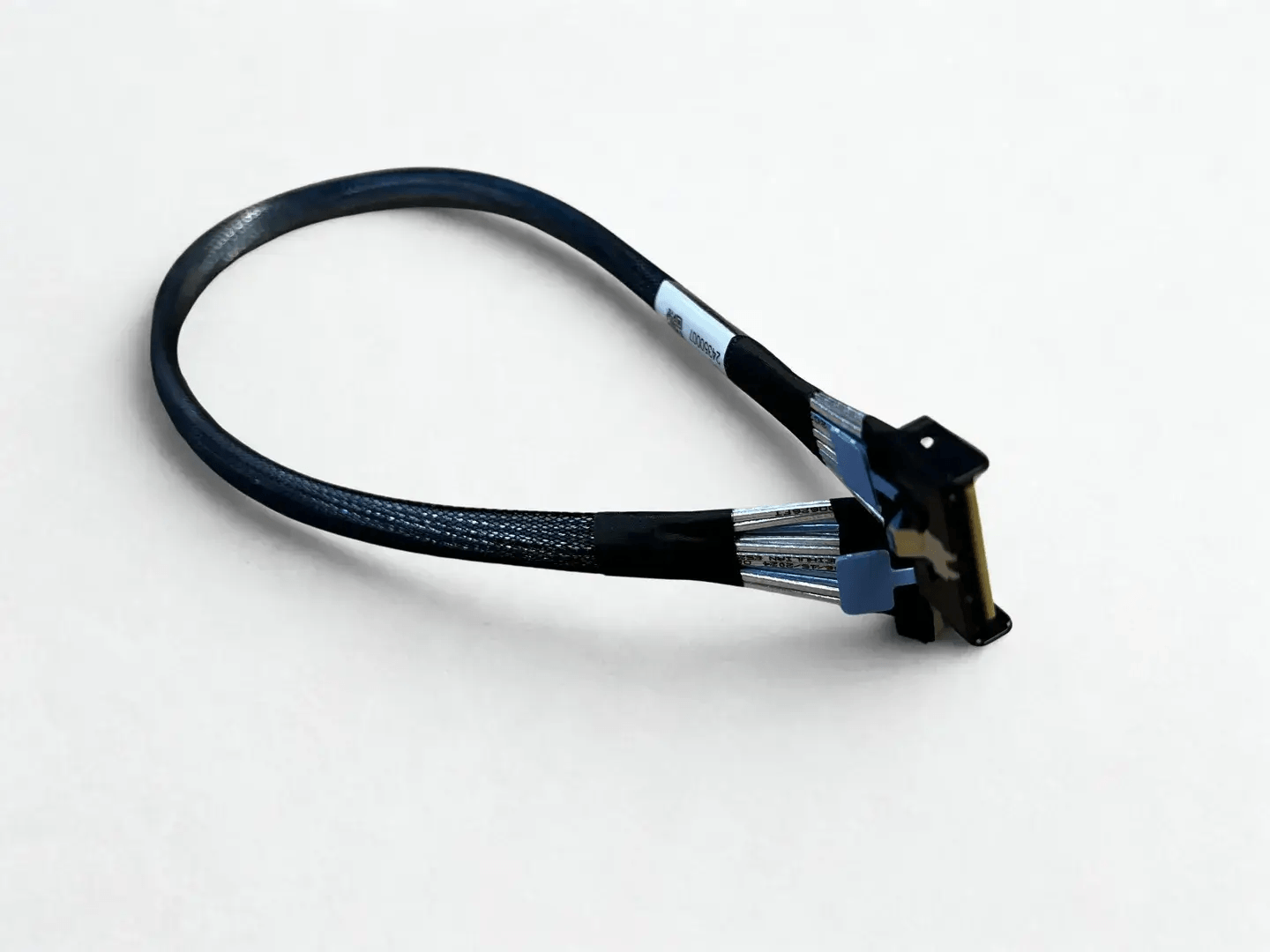
SlimSAS 8i to HD MiniSAS breakout cables play a key transitional and architectural role in enterprise servers by bridging modern high-density host interfaces with widely deployed internal backplanes and storage components. They allow system designers and operators to adopt newer SlimSAS-based controllers while preserving compatibility with existing HD MiniSAS infrastructure, all without sacrificing bandwidth, signal integrity, or serviceability.
Bridging New Host Interfaces with Existing Infrastructure
Enterprise servers rarely undergo full internal redesigns in a single generation. SlimSAS 8i to HD MiniSAS breakout cables exist specifically to support phased upgrades.
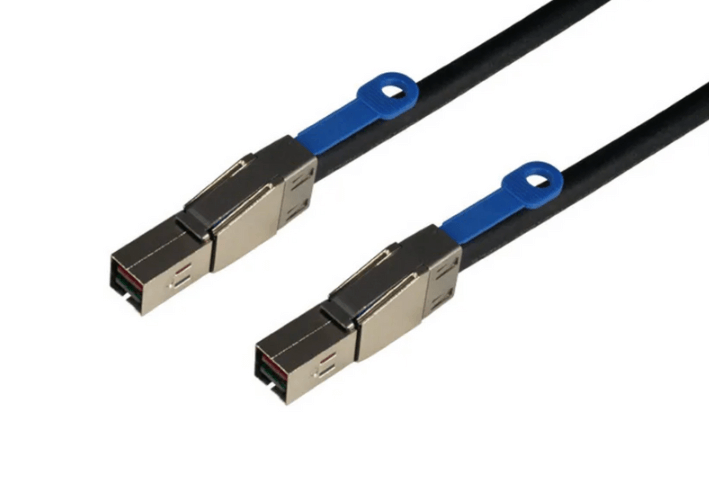
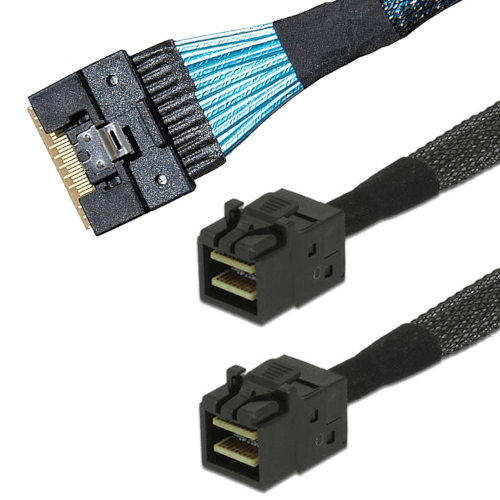
A single SlimSAS 8i host port can be split into two HD MiniSAS internal connections, allowing:
-
New SlimSAS-based HBAs or RAID controllers to connect to legacy HD MiniSAS backplanes
-
Incremental platform upgrades without replacing drive cages or midplanes
-
Continued use of validated enterprise storage hardware
This compatibility layer reduces cost, risk, and deployment complexity in large server fleets.
Preserving Bandwidth while Increasing Flexibility
SlimSAS 8i supports eight high-speed lanes. When broken out into two HD MiniSAS ports, each downstream connector typically carries four lanes.
This mapping enables:
-
Full utilization of available host bandwidth
-
Balanced lane distribution across multiple backplanes or storage zones
-
Flexible internal topology design
In enterprise environments, this flexibility is critical for tailoring storage bandwidth to workload requirements without redesigning the entire chassis.
Supporting SAS 3.0 and Select PCIe Configurations
SlimSAS 8i to HD MiniSAS breakout cables are most commonly used for SAS-based architectures, supporting SAS 3.0 data rates up to 24 Gb per second per lane.
In supported platforms, these assemblies may also be used for PCIe signaling, provided that:
-
The host controller supports PCIe over SlimSAS
-
The backplane is designed for PCIe lane routing
-
Cable length and quality meet Gen 4 requirements
This dual-protocol potential adds versatility but requires careful platform validation.
Enabling High-Density Internal Layouts
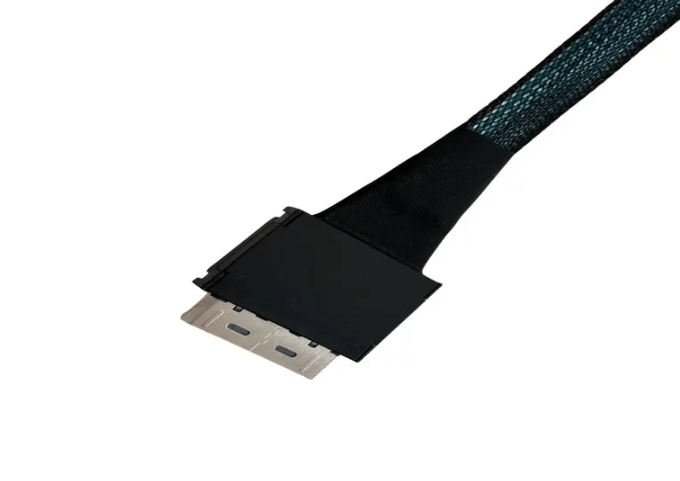
SlimSAS connectors are significantly smaller than legacy MiniSAS interfaces. By consolidating eight lanes into a single compact port, SlimSAS reduces connector footprint on controllers and motherboards.
Breakout to HD MiniSAS then allows:
-
Cleaner internal cable routing
-
Improved airflow within the chassis
-
Better service access to drives and backplanes
These physical benefits matter in dense enterprise servers where thermal management and maintainability are constant concerns.
Maintaining Signal Integrity in Demanding Environments
Enterprise servers operate continuously under heavy load, making signal integrity non-negotiable.
High-quality SlimSAS 8i to HD MiniSAS breakout cables are engineered with:
-
Controlled differential impedance
-
Precise lane-to-lane alignment
-
Robust shielding against EMI
-
Tight manufacturing tolerances
These characteristics help ensure low bit error rates and stable operation across long service lifecycles.
Supporting Modular and Scalable Server Designs
Many enterprise platforms are built around modular storage zones, expandable backplanes, or multi-controller architectures.
SlimSAS 8i breakouts support these designs by:
-
Allowing a single host port to feed multiple internal targets
-
Simplifying storage expansion paths
-
Supporting mixed drive populations across different bays
This modularity aligns well with enterprise requirements for scalability and configurability.
Important Deployment Considerations
To achieve reliable performance, integrators must account for several practical factors:
-
Use the shortest feasible cable length to minimize insertion loss
-
Respect minimum bend radius limits
-
Ensure connectors are fully seated and strain relieved
-
Verify protocol compatibility end to end
Neglecting these details is a common cause of intermittent storage issues.
Why these breakouts remain relevant
Even as MCIO and newer connector standards gain adoption, SlimSAS 8i to HD MiniSAS breakout cables remain highly relevant in enterprise servers because they enable continuity.
They allow organizations to modernize controllers and platforms while leveraging existing investments in proven storage infrastructure.
FAQ (Frequently Asked Questions)
Are SlimSAS 8i to HD MiniSAS breakouts only for legacy systems?
No. They are commonly used in modern servers to connect new SlimSAS controllers to validated HD MiniSAS backplanes.
Do these breakouts reduce performance?
No, as long as lane counts and protocols are properly matched and cable quality is high.
Can they support NVMe?
Only in platforms explicitly designed for PCIe signaling over both SlimSAS and HD MiniSAS.
Why not replace HD MiniSAS backplanes entirely?
Cost, validation effort, and reliability often make phased upgrades more practical in enterprise environments.