Retention Performance of Latch-Based CX4 Copper Interconnects
CX4 copper interconnects were widely deployed in early 10 Gigabit Ethernet and InfiniBand environments to provide high speed, short reach connectivity between servers, switches, and storage platforms. In rack dense installations where access is limited and port spacing is minimal, latch based retention systems were developed to improve mechanical consistency while simplifying service access. These designs remain relevant in legacy infrastructure that continues to operate in enterprise and laboratory environments.
Mechanical Retention Architecture
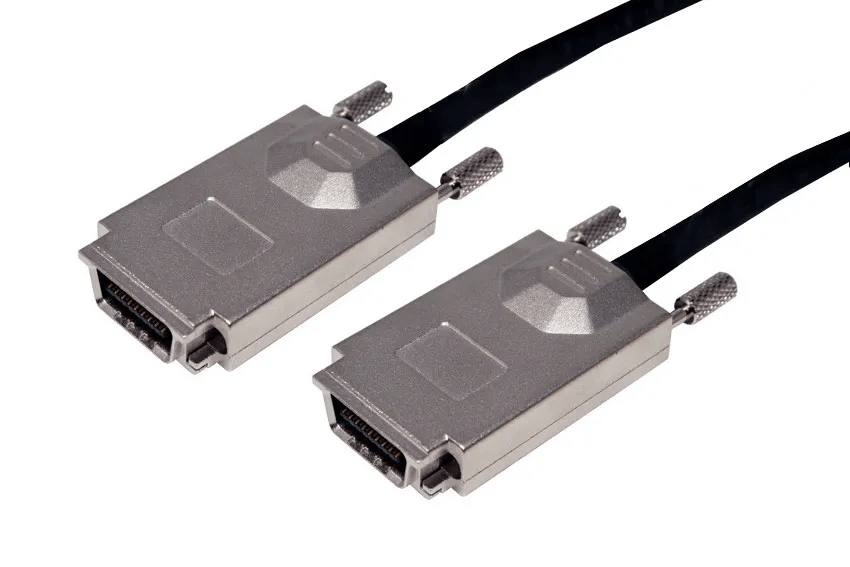
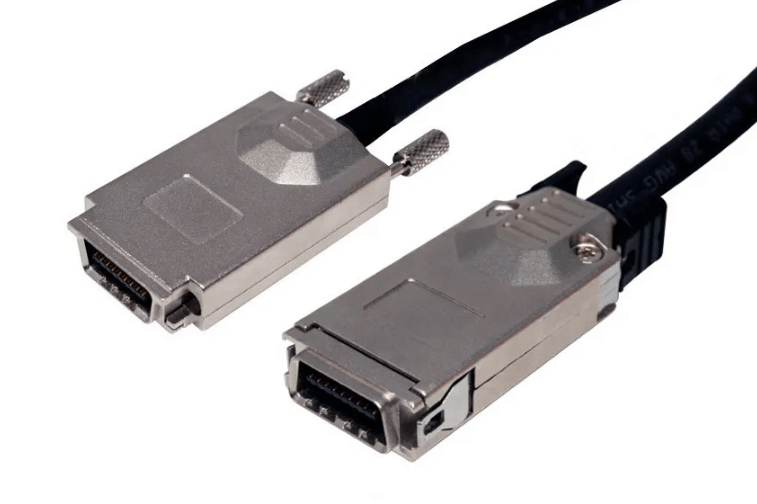
Traditional CX4 assemblies often relied on threaded thumbscrews to secure the connector to the receptacle. While effective in static installations, threaded hardware introduced variability in applied torque and required lateral clearance for engagement. In contrast, latch based CX4 connectors incorporate an integrated locking feature within the backshell.
When inserted into the receptacle, the latch engages an internal retention point that produces a defined holding force. This mechanism distributes load across the connector housing rather than concentrating it at threaded attachment points. As a result, engagement consistency improves, and the likelihood of partial insertion is reduced.
The latch release is typically positioned on the top surface of the connector, allowing direct access from the front of the equipment. This layout supports higher port density without increasing required service clearance.
Durability Under Repeated Service Cycles
In environments such as test labs or frequently reconfigured racks, connectors are subject to repeated mating cycles. Latch based CX4 designs are engineered to maintain retention force over multiple insertions and removals. Because the locking mechanism is spring actuated rather than torque dependent, it avoids uneven stress caused by over tightening.
Uniform retention pressure helps preserve alignment between the contact interface and the mating receptacle. This reduces localized mechanical wear and supports predictable long term behavior within the limits defined by the CX4 interface specification.
In standard rack mounted deployments, latch based connectors provide sufficient resistance to incidental movement resulting from cable management adjustments, airflow turbulence, or nearby maintenance activity.
Service Access in Dense Rack Layouts
High density switch and server chassis often position CX4 ports in close proximity. Threaded retention can become difficult to manipulate when adjacent connectors obstruct side access. Latch based assemblies eliminate the need for rotational fastening and reduce the physical space required for removal.
Front accessible release mechanisms allow technicians to disconnect individual links without disturbing neighboring cables. This is particularly beneficial during hardware replacement, port troubleshooting, or phased system upgrades. Reduced handling complexity lowers the risk of unintended disconnections in populated racks.
Electrical and Signal Integrity Considerations
The retention method does not alter the electrical performance of the CX4 cable. Signal integrity is determined by conductor geometry, shielding effectiveness, impedance control, and grounding continuity. The latch mechanism is isolated from the signal path and functions solely as a mechanical interface component.
When fully seated and properly engaged, latch based CX4 copper interconnects support stable multi-lane signaling for 10GbE and InfiniBand applications within defined distance limits. Proper insertion ensures that grounding contacts and signal pairs align as specified by the connector standard.
Typical Deployment Environments
Latch based CX4 copper interconnects are commonly found in:
-
Rack mounted switches and servers equipped with CX4 interfaces
-
Legacy InfiniBand clusters requiring periodic maintenance
-
Enterprise data centers are maintaining early generation 10GbE links
-
Validation and interoperability testing laboratories
These scenarios prioritize repeatable engagement and rapid service access over maximum vibration resistance.
Installation and Routing Considerations
During installation, the connector should be inserted until the latch audibly or tactually engages. Cable routing must maintain an appropriate bend radius to prevent stress on the backshell and connector interface. Continuous axial tension on the latch mechanism should be avoided, as cable weight or tight routing can introduce unnecessary mechanical load.
Clear labeling and organized cable management reduce the probability of accidental release during maintenance in densely populated racks. In environments subject to sustained vibration or where disconnection is infrequent, alternative retention strategies may be evaluated based on operational requirements.
FAQ (Frequently Asked Questions)
Do latch based CX4 cables provide the same holding strength as thumbscrew versions?
They are designed to provide sufficient retention for standard rack environments, though threaded designs may offer higher resistance in extreme vibration conditions.
Are latch CX4 connectors compatible with standard CX4 receptacles?
Yes. They are mechanically and electrically compatible with compliant CX4 ports.
Does the latch mechanism influence impedance or bandwidth?
No. Electrical characteristics are defined by the cable construction and connector contact design, not by the external retention system.
Where are latch based CX4 assemblies most beneficial?
They are most advantageous in dense racks or test environments where cables are frequently installed and removed.