Why Is SlimSAS Becoming The Preferred Connector For Dense Storage Platforms?
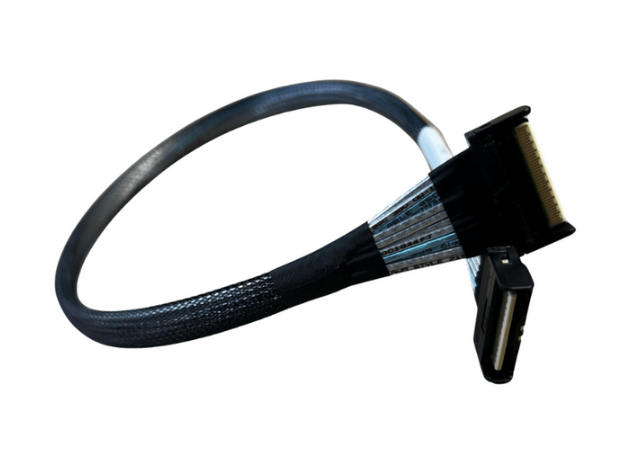
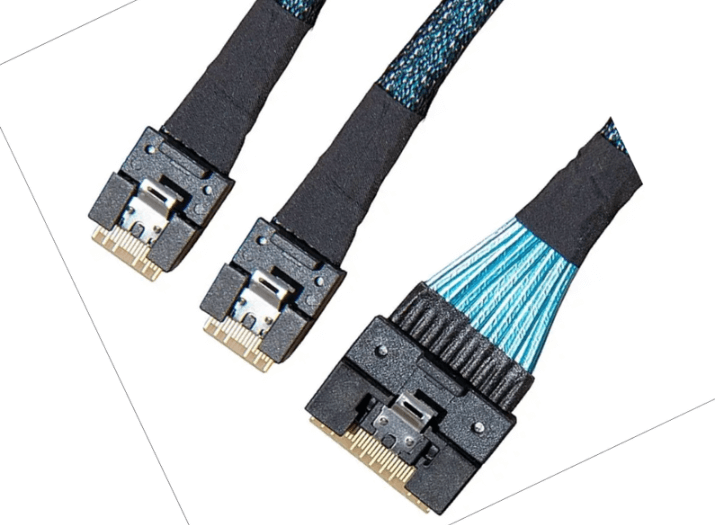
SlimSAS is becoming the preferred connector for dense storage platforms because it solves multiple constraints at once: bandwidth growth, space limitations, airflow challenges, and signal integrity at higher speeds. As storage architectures move toward NVMe, PCIe Gen 4, and PCIe Gen 5, legacy connectors struggle to deliver enough lanes in a compact, thermally efficient layout. SlimSAS was designed specifically to meet these modern requirements.
Density is Now a Primary Design Constraint
In modern storage systems, especially NVMe heavy platforms, physical density is often a harder limit than raw bandwidth. Designers must fit more drives, more lanes, and more interconnects into the same or smaller chassis sizes.
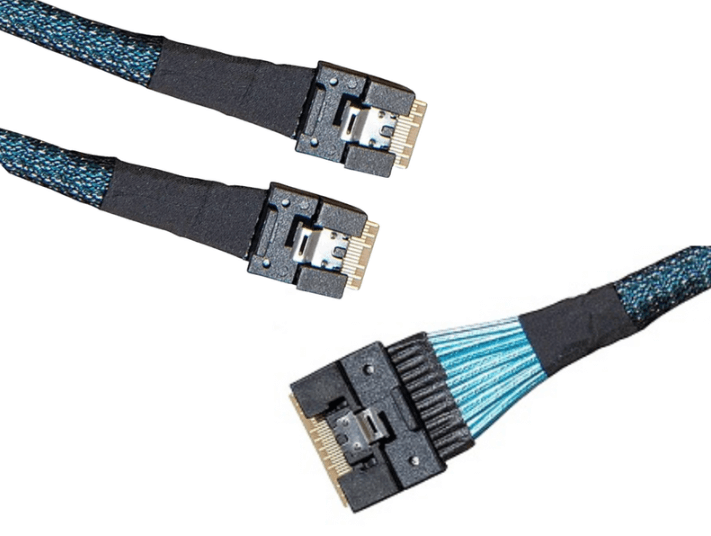
SlimSAS dramatically reduces connector footprint compared to older standards. Its compact housing allows significantly more ports to be placed on a motherboard or backplane without increasing board size. This directly enables higher drive counts and more PCIe lanes per system.
Higher Lane Aggregation in Less Space
SlimSAS supports multi-lane configurations that allow designers to aggregate bandwidth efficiently. A single SlimSAS connector can carry multiple PCIe or SAS lanes, reducing the total number of connectors and cables required.
Fewer connectors means fewer signal transitions, which improves reliability and simplifies routing. It also reduces mechanical congestion, which becomes critical in 1U and 2U storage platforms where every millimeter matters.
Designed for Modern PCIe and NVMe Architectures
Dense storage platforms today are increasingly PCIe centric rather than SAS centric. NVMe drives require direct PCIe connectivity, often with four lanes per drive.
SlimSAS aligns naturally with this model. It supports PCIe Gen 4 and Gen 5 signaling and integrates cleanly into NVMe backplanes and PCIe switch fabrics. This makes it a better long term fit for modern storage architectures than connectors originally designed around SAS.
Improved Signal Integrity at Higher Speeds
As signaling speeds increase, connector design becomes a major contributor to channel performance. SlimSAS was engineered with tighter impedance control and improved isolation between lanes compared to older interfaces.
This allows SlimSAS to operate more reliably at Gen 4 speeds and scale into Gen 5 environments with less margin pressure. In dense platforms where multiple high speed links run in close proximity, this signal integrity advantage is significant.
Better Airflow and Thermal Behavior
Thermal management is a growing challenge in dense storage systems. Cables and connectors that block airflow directly reduce cooling efficiency.
SlimSAS connectors and cables are smaller and lighter, which reduces cable congestion. Cleaner routing along chassis walls and backplanes improves airflow across drives and controllers, helping systems maintain performance under sustained load.
Cable Consolidation Simplifies System Design
By carrying more lanes per connector, SlimSAS reduces the total number of cables required in a system. This simplifies installation, reduces assembly time, and lowers the chance of routing errors.
In large scale deployments, fewer cables also mean fewer failure points and easier serviceability. Technicians can identify and replace cables more quickly without disturbing neighboring connections.
Flexibility Through Multiple Configurations
SlimSAS is available in different lane configurations, commonly 4 lane and 8 lane variants. This allows designers to tailor connectivity to specific needs rather than forcing a one size fits all approach.
Lower lane count connections can be used for modular or targeted links, while higher lane count connections support dense backplanes and aggregated bandwidth. This flexibility supports a wide range of storage designs using a single connector family.
Broad Industry Adoption Accelerates Standardization
Major server, storage, and backplane vendors are adopting SlimSAS as a default internal connector. As adoption increases, ecosystem support grows, including cables, breakouts, backplanes, and validation tooling.
This momentum reduces risk for system designers. Choosing SlimSAS aligns new platforms with industry direction rather than locking them into declining standards.
Reduced Need for Adapters and Transitions
Dense storage platforms benefit from direct connections. SlimSAS reduces reliance on interposers, adapters, and secondary connectors that add cost and signal loss.
Fewer transitions improve electrical performance and reduce validation complexity. This is especially valuable at higher PCIe generations where every connector hop consumes loss budget.
Where SlimSAS Delivers The Most Value
SlimSAS is especially advantageous in:
-
NVMe dense storage arrays
-
High drive count JBODs
-
PCIe switch based storage fabrics
-
1U and 2U storage servers
-
Systems planning for PCIe Gen 5 adoption
In these environments, the combination of density, bandwidth, and airflow improvements has a measurable impact.
When SlimSAS May Not Be Necessary
SlimSAS is not always required. Systems with lower drive counts, older SAS architectures, or generous physical space may continue to function well with legacy connectors.
However, for new designs targeting longevity and scalability, SlimSAS offers clear advantages that outweigh the transition effort.
FAQ (Frequently Asked Questions)
Is SlimSAS only for NVMe storage?
No. It supports both PCIe and SAS signaling, though it is especially well suited for NVMe architectures.
Does SlimSAS replace HD MiniSAS entirely?
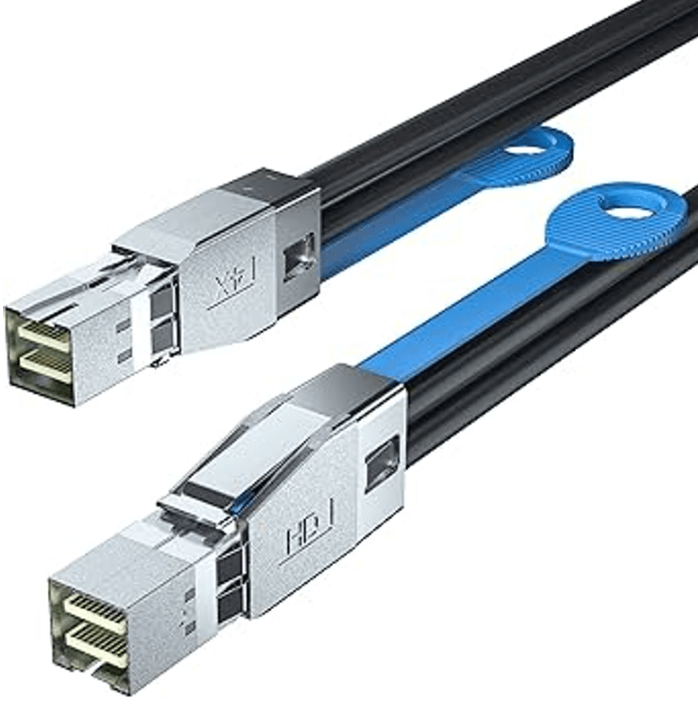
Not immediately. HD MiniSAS remains common in existing systems, but SlimSAS is favored for new dense designs.
Is SlimSAS harder to route due to higher lane counts?
It requires careful routing, but reduced cable count often makes overall layout simpler.
Will SlimSAS scale to future PCIe generations?
It was designed with higher speed signaling in mind and offers better scalability than older connectors.