How Do You Choose Between SlimSAS 4i And SlimSAS 8i For Your System?
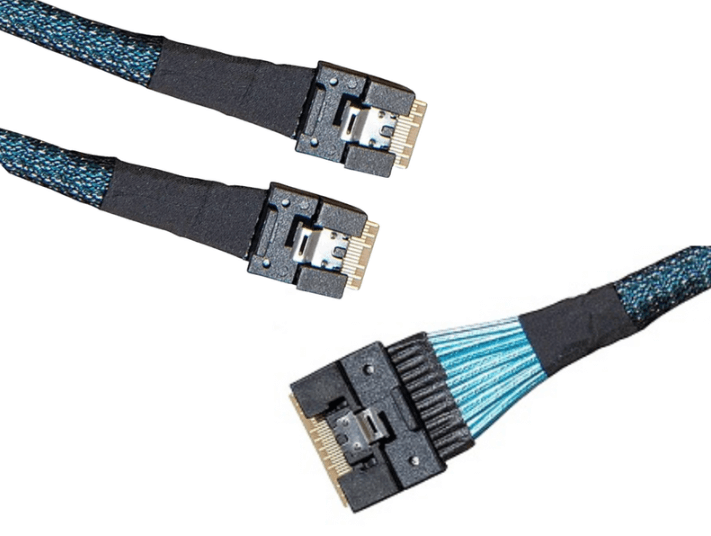
Choosing between SlimSAS 4i and SlimSAS 8i is a design decision that affects bandwidth, routing density, flexibility, and long term scalability. Both connectors follow the SFF-8654 standard and support modern SAS and PCIe signaling, but they serve different architectural goals. The correct choice depends on how many lanes your platform provides, how those lanes are allocated, and how dense and modular your system needs to be.
Start with Lane Availability on The Controller or Backplane
The most important factor is the number of lanes your hardware exposes per port.
SlimSAS 4i carries four lanes. SlimSAS 8i carries eight lanes. If a controller port is electrically x4, using an 8i cable provides no benefit. If a controller port is x8, using a 4i cable leaves half the available bandwidth unused or forces you to split the connection across multiple ports.
Always verify the electrical lane width of the port, not just the connector type printed on the board.
Match Bandwidth Needs to Workload Requirements
Lane count directly translates to bandwidth potential.
SlimSAS 4i is well suited for moderate throughput use cases such as individual drive groups, smaller backplanes, or SATA and SAS breakouts. It can fully support PCIe Gen 4 or SAS 4.0 speeds on four lanes, which is sufficient for many applications.
SlimSAS 8i is designed for higher aggregate bandwidth. It is commonly used for dense NVMe backplanes, PCIe switches, or expander based storage where multiple devices share a single high capacity link.
If the workload involves many NVMe drives or sustained high throughput, 8i is usually the better choice.
Consider Cable Consolidation Versus Modularity
SlimSAS 8i allows more bandwidth to be delivered through a single cable. This reduces cable count, simplifies routing, and can improve airflow in dense systems.
SlimSAS 4i offers greater modularity. Multiple 4i ports can be routed independently to different destinations, which is useful when connecting to separate drive bays, smaller backplanes, or mixed device types.
Systems that favor clean consolidation often choose 8i. Systems that favor flexible layout and incremental expansion often choose 4i.
Evaluate Breakout and Expansion Needs
Breakout usage is another key differentiator.
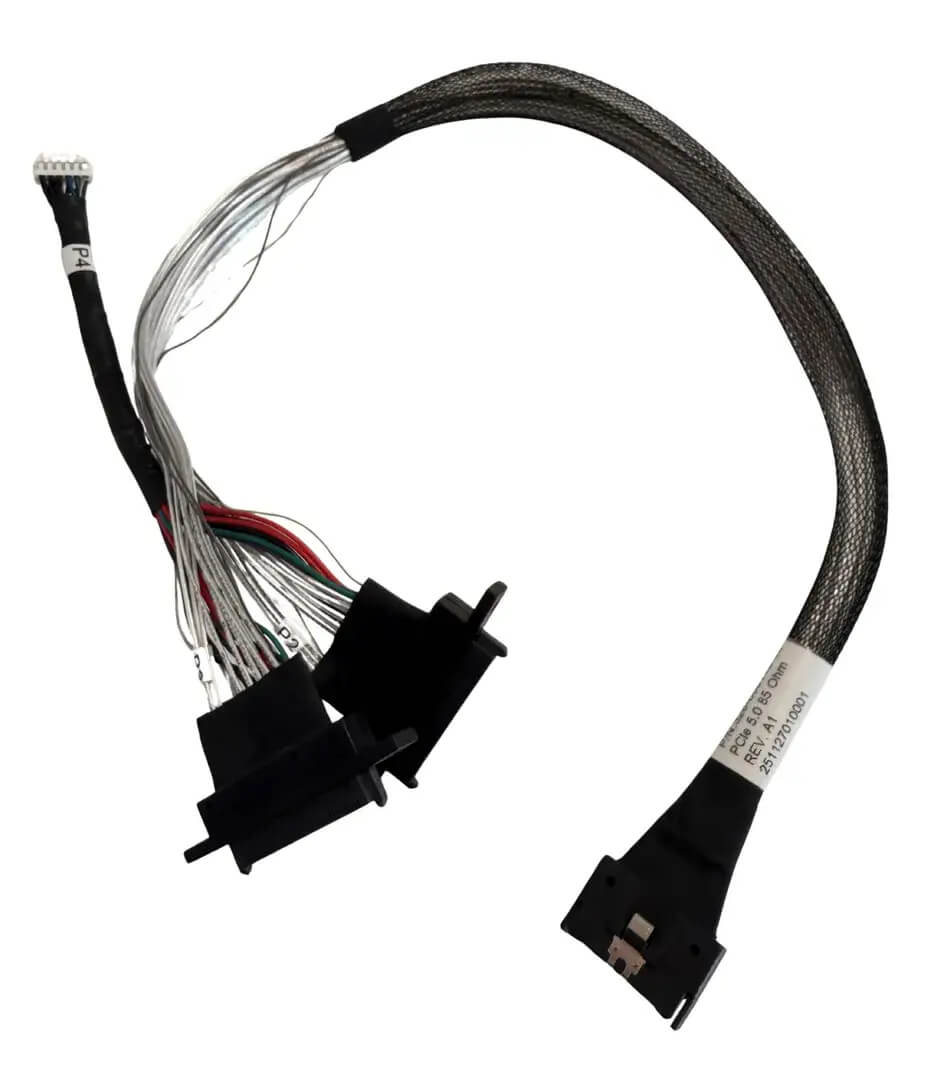
SlimSAS 8i is commonly used for breakouts such as:
-
8i to 2x U.2 NVMe, four lanes each
-
8i to 8x SATA
-
8i to 4x SAS drives
These configurations maximize port efficiency and are common in high density storage systems.
SlimSAS 4i breakouts are typically simpler, such as 4i to 4x SATA or 4i to a small drive group. They are useful when ports are already allocated in smaller increments.
Choose based on how you intend to fan out lanes to devices.
Account for Space and Routing Constraints
SlimSAS 4i and 8i connectors share a similar form factor, but cable routing density differs.
Using multiple 4i cables can increase cable count and routing complexity. Using fewer 8i cables can simplify cable paths and reduce clutter, especially in 1U and 2U chassis.
However, tightly packed 8 lane cables require careful routing to maintain signal integrity. In some layouts, multiple shorter 4i runs are easier to manage cleanly.
Plan for Signal Integrity Margin
At higher speeds, signal integrity margin matters more than raw bandwidth.
SlimSAS 8i aggregates more lanes into one assembly, which increases sensitivity to crosstalk and routing quality. This is not a drawback if cables are short, well built, and routed correctly, but it does demand discipline.
SlimSAS 4i provides more separation between links, which can offer slightly more margin in challenging layouts or longer internal runs.
In marginal environments, 4i can be easier to validate. In controlled layouts, 8i performs well and simplifies design.
Think About Future Scalability
Future expansion is often overlooked.
If the platform roadmap includes higher bandwidth devices, PCIe Gen 5 adoption, or denser backplanes, SlimSAS 8i provides more headroom without redesigning the cabling architecture.
If future expansion is expected to be incremental or device specific, SlimSAS 4i offers flexibility without committing lanes upfront.
Choosing based on the expected lifecycle of the system reduces future rework.
Typical Selection Scenarios
SlimSAS 4i is commonly chosen for:
-
Controllers with native x4 ports
-
Modular drive connections
-
Smaller backplanes or direct attach storage
-
Systems prioritizing flexibility
SlimSAS 8i is commonly chosen for:
-
Controllers or switches with x8 ports
-
Dense NVMe backplanes
-
High throughput storage or compute systems
-
Designs prioritizing cable consolidation
FAQ (Frequently Asked Questions)
Is SlimSAS 8i always better than 4i?
No. It offers more bandwidth, but only if the platform can use it.
Can SlimSAS 4i and 8i coexist in the same system?
Yes, if the controller and backplane support both configurations.
Does SlimSAS 4i support the same speeds as 8i?
Yes. Speed per lane is the same. The difference is total lane count.
Can you replace a 4i cable with an 8i cable later?
Only if the port and backplane are electrically x8 and support the connector.