Should SlimSAS Or MCIO Be Used For Modern PCIe Backplane Designs?
Choosing between SlimSAS and MCIO for a PCIe backplane depends on bandwidth targets, signal integrity margins, and long term platform strategy. As PCIe speeds advance from Gen 4 to Gen 5 and beyond, connector and cable limitations become a central design concern. SlimSAS remains widely deployed and versatile, while MCIO is engineered specifically to address the electrical challenges of next generation PCIe signaling.
The Role of Backplane Connectors in PCIe Systems
A PCIe backplane distributes high speed serial lanes between CPUs, switches, accelerators, and storage devices. At higher data rates, the connector and cable interface becomes one of the largest contributors to channel loss and signal distortion.
Backplane designs must balance connector density, mechanical robustness, cable routing, and electrical performance. The choice between SlimSAS and MCIO directly affects how well the system can scale to higher PCIe generations.
SlimSAS in PCIe Backplane Designs
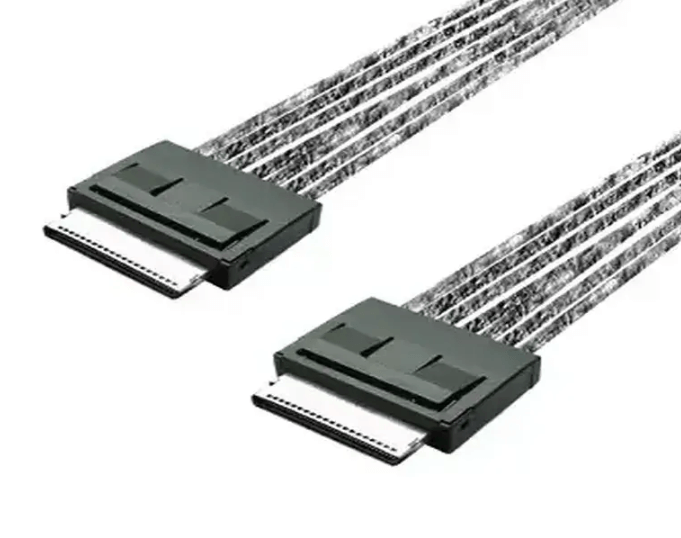
SlimSAS, defined by the SFF 8654 specification, was originally developed for high density SAS and PCIe Gen 4 environments. It supports 4 lane and 8 lane configurations and is widely available in many cable and breakout formats.
For PCIe Gen 4 backplanes, SlimSAS offers a mature and well understood solution. It provides good signal integrity within established length limits and supports flexible routing to NVMe drives, storage backplanes, and PCIe devices. Its broad ecosystem makes it easy to source compatible cables and adapters.
However, SlimSAS was not optimized specifically for PCIe Gen 5 signaling. As speeds increase, insertion loss and connector transition effects become more difficult to manage, especially in dense backplanes with multiple connector hops.
MCIO and its Design Focus on High Speed PCIe
MCIO, short for Mini Cool Edge IO, was designed with PCIe Gen 5 and future generations in mind. The connector geometry and electrical design focus on minimizing discontinuities, reducing crosstalk, and supporting higher signaling frequencies.
MCIO supports higher lane counts, including x8, x16, and larger aggregated links, within a compact footprint. This makes it particularly well suited for PCIe switch backplanes, accelerator fabrics, and composable architectures where large numbers of lanes must be routed cleanly.
In Gen 5 designs, MCIO provides more signal margin than SlimSAS, allowing longer internal channels or additional connector transitions without violating PCIe loss budgets.
Signal Integrity and Channel Budget Considerations
At PCIe Gen 4 speeds, both SlimSAS and MCIO can be viable when cable lengths and routing are controlled. At Gen 5 speeds, the reduced channel budget makes connector performance far more critical.
SlimSAS can be used in Gen 5 systems only under strict constraints, such as very short cable lengths and carefully validated layouts. MCIO is generally preferred because it provides greater headroom for loss, skew, and crosstalk.
For backplanes that must support Gen 5 across multiple slots or devices, MCIO simplifies compliance and reduces the risk of marginal links.
Density, Airflow, and Mechanical Tradeoffs
Both SlimSAS and MCIO offer compact footprints compared to older connector standards. MCIO connectors are typically smaller and designed for edge mounting, which can increase port density on backplanes.
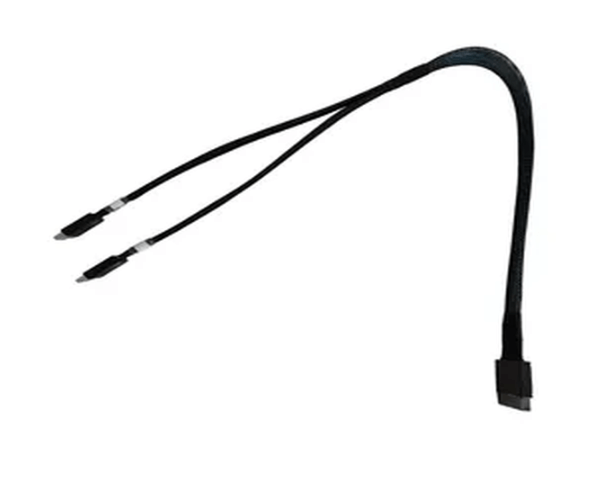
SlimSAS cables are widely available in flexible internal assemblies, which can simplify routing in some chassis designs. MCIO cables are optimized for high speed performance but may offer fewer breakout options depending on the platform.
Mechanical retention, serviceability, and assembly practices should also be considered, as backplane connectors are often accessed during system integration rather than field service.
Compatibility and Ecosystem Maturity
SlimSAS benefits from a large installed base and broad compatibility with existing SAS and PCIe infrastructure. It supports mixed protocol environments and is well suited for platforms that must accommodate SAS, SATA, and PCIe devices.
MCIO is more focused on PCIe only architectures. It is increasingly adopted in new designs but may require more careful coordination between silicon vendors, backplane designers, and cable suppliers.
When SlimSAS is The Better Choice
SlimSAS is typically preferred when:
-
PCIe Gen 4 performance is sufficient
-
Backward compatibility with SAS or SATA is required
-
Flexible breakout configurations are needed
-
Cost and supply chain simplicity are priorities
In these cases, SlimSAS provides a reliable and well supported solution.
When MCIO is The Better Choice
MCIO is typically preferred when:
-
PCIe Gen 5 or future Gen 6 support is required
-
Signal integrity margins are tight
-
High lane counts must be routed through the backplane
-
The platform is designed around PCIe native fabrics
For forward looking architectures, MCIO reduces risk and improves scalability.
FAQ (Frequently Asked Questions)
Can SlimSAS and MCIO be mixed on the same backplane?
They can be used in the same system, but not on the same link. Each interface must be matched end to end.
Is MCIO required for PCIe Gen 5 backplanes?
Not strictly, but it is often the safer choice due to tighter signal integrity margins at Gen 5 speeds.
Does SlimSAS support PCIe at all?
Yes. SlimSAS supports PCIe signaling, most commonly up to Gen 4 in production systems.
Are MCIO cables backward compatible with SlimSAS?
No. They are different connector standards and are not mechanically or electrically interchangeable.