Why Do Structured Networks Continue To Rely On Ethernet Cabling
Ethernet cabling remains a foundational element of structured network design, providing a standardized physical layer for data transmission across commercial, enterprise, and industrial environments. Despite advances in wireless and optical technologies, Ethernet persists due to its predictable performance, electrical stability, and universal compatibility with network hardware. Structured cabling systems depend on Ethernet to deliver consistent connectivity for access, distribution, and core network layers.
Ethernet As A Physical Layer Standard
Structured networks are built around clearly defined physical and logical layers. Ethernet cabling provides a uniform medium that supports these architectures across switches, patch panels, and endpoint devices. Its standardized connector types, pinouts, and electrical characteristics allow components from different vendors to interoperate reliably, which is essential in long lifecycle infrastructure deployments.
Ethernet categories such as CAT5e and CAT6 are engineered to meet specific bandwidth and distance requirements, allowing network designers to align cabling choices with performance targets while maintaining backward compatibility.
Signal Integrity And Electrical Performance
One of the primary reasons Ethernet remains central to structured networks is its controlled electrical behavior. Twisted pair construction, consistent impedance, and optional shielding reduce susceptibility to crosstalk and electromagnetic interference. These characteristics are especially important in environments with dense cabling, electrical equipment, or long horizontal runs.
Ethernet cabling is designed to maintain signal quality over defined distances, ensuring stable throughput and low error rates without reliance on adaptive radio conditions or optical transceivers.
Compatibility With Network Infrastructure
Structured networks prioritize long term maintainability. Ethernet supports this goal by offering seamless compatibility across generations of networking equipment. Access switches, routers, servers, and endpoint devices are universally designed with Ethernet interfaces, allowing incremental upgrades without replacing the entire physical cabling system.
This compatibility also simplifies troubleshooting and expansion, since installers and network engineers work with familiar standards and test methodologies.
Mechanical And Installation Advantages
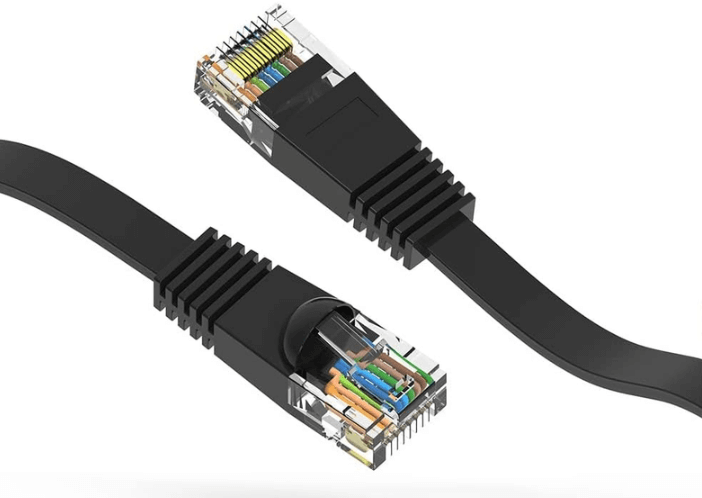
Ethernet cabling supports structured routing practices such as horizontal cabling, patch panel termination, and rack based organization. Round cables provide mechanical durability and strain resistance, while flat cables enable routing in space constrained pathways.
Low smoke zero halogen jacket options are commonly used in commercial buildings to meet safety and regulatory requirements, further reinforcing Ethernet’s suitability for permanent infrastructure installations.
Common Structured Network Use Cases
Ethernet cabling is widely deployed in the following environments:
-
Commercial office buildings
-
Data center access and aggregation layers
-
Educational and healthcare facilities
-
Industrial control and monitoring networks
-
Campus wide structured cabling systems
These use cases benefit from Ethernet’s balance of performance, reliability, and installation flexibility.
Best Practices For Ethernet In Structured Cabling
To ensure long term performance, Ethernet installations should follow established cabling standards. Maintaining proper bend radius, avoiding excessive tension, and using certified connectors help preserve electrical characteristics. Cable categories should be selected based on current bandwidth needs and future scalability, rather than minimum requirements.
Clear labeling, disciplined cable management, and consistent termination practices also contribute to easier maintenance and reduced downtime.
FAQ (Frequently Asked Questions)
Why is Ethernet preferred over wireless in structured networks?
Ethernet provides consistent throughput, low latency, and immunity to radio interference, making it more predictable for fixed infrastructure.
Do structured networks still use CAT5e cabling?
Yes, CAT5e is still widely deployed for Gigabit Ethernet, though newer installations often favor CAT6 for higher performance margins.
Is Ethernet compatible with modern network speeds?
Modern Ethernet standards support multigigabit and higher data rates while maintaining compatibility with existing cabling categories.
Why is LSZH Ethernet cable used in commercial buildings?
LSZH jackets reduce smoke density and toxic emissions during a fire, supporting safer indoor environments.