Why are HD Mini SAS External Cables Used in JBOD and Enterprise Storage Systems?
HD Mini SAS external cables are a core component of modern external SAS storage architectures. They are designed to interconnect host bus adapters, RAID controllers, and external storage enclosures where multi lane bandwidth, electrical stability, and predictable latency are required. These cables exist to support scalable storage designs that extend beyond a single chassis while maintaining protocol integrity across rack level and room level distances.
External HD Mini SAS Connectivity Fundamentals
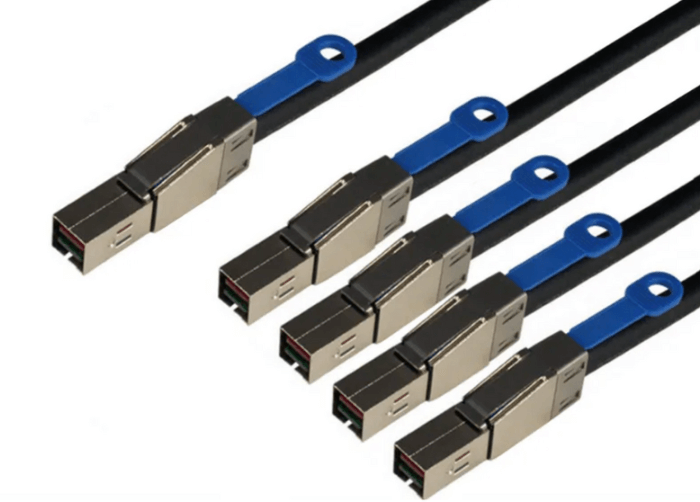
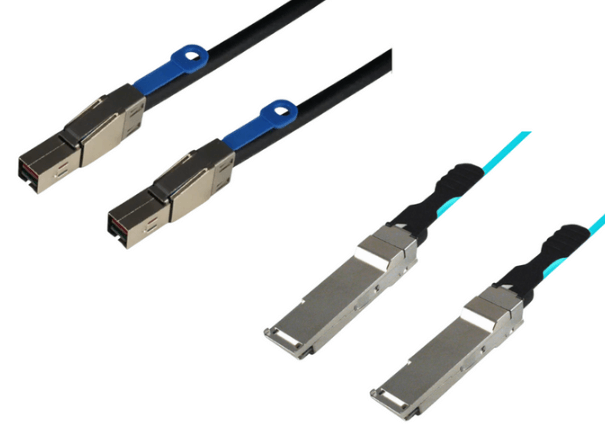
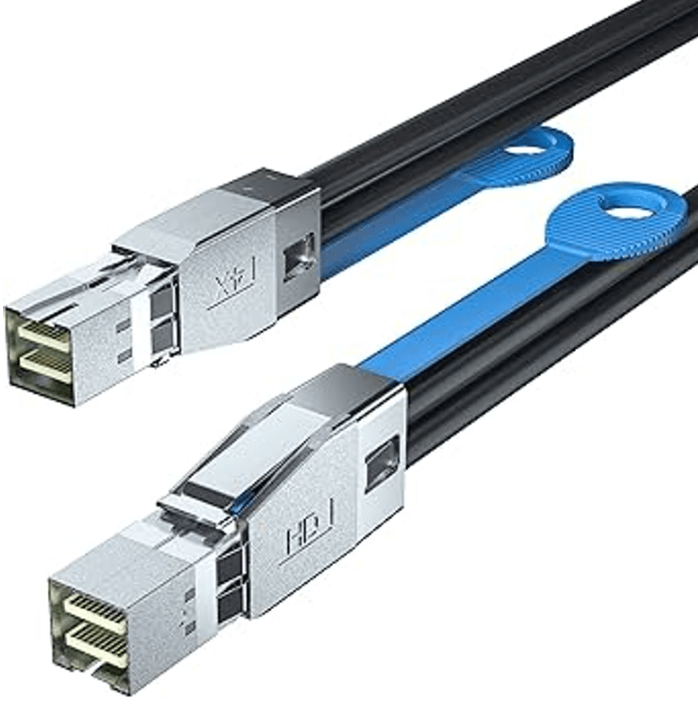
HD Mini SAS external cabling is built around the SFF-8644 interface, which consolidates multiple SAS lanes into a compact external connector. Each cable assembly carries four high speed differential lanes, allowing storage controllers to communicate with JBOD enclosures using standard SAS protocols. This approach enables storage expansion without requiring internal backplanes or additional switching layers.
Bandwidth and Protocol Support
External HD Mini SAS cables are commonly deployed with SAS 3.0 and SAS 4.0 systems. Depending on the generation, they support per lane speeds up to 12 Gb/s or 24 Gb/s. Aggregated across four lanes, this provides sufficient throughput for dense disk shelves, hybrid arrays, and flash assisted storage platforms. Backward compatibility with earlier SAS generations allows these cables to be integrated into mixed infrastructure environments.
Signal Integrity and Electrical Design
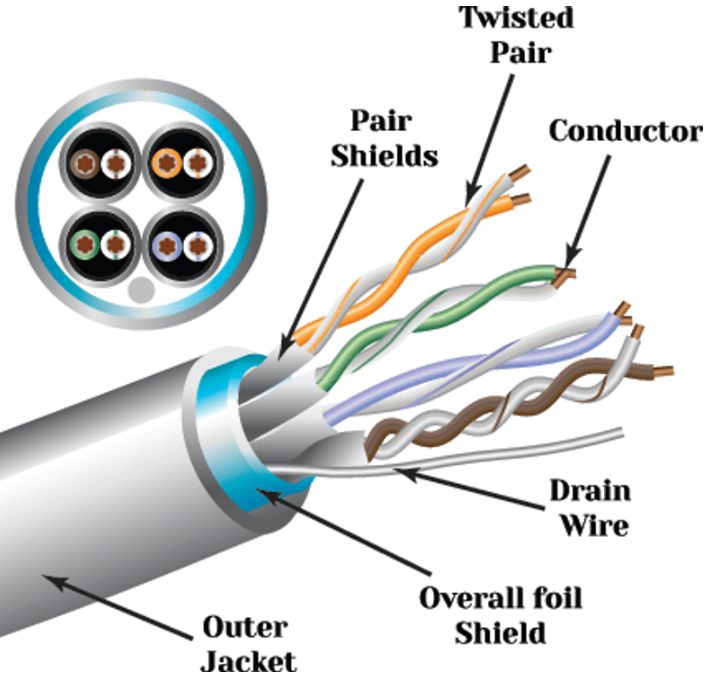
Maintaining signal quality over external distances is a primary reason these cables are used in enterprise storage. HD Mini SAS external assemblies are engineered with controlled impedance, precision shielding, and tight pair to pair skew tolerance. These characteristics reduce crosstalk, limit attenuation, and support stable signaling in electrically noisy data center racks populated with power supplies, network equipment, and compute nodes.
Mechanical Interface and Durability
The SFF-8644 connector is designed for repeated insertion cycles and secure engagement. A positive latching mechanism helps prevent accidental disconnects during maintenance or airflow management. The compact form factor supports high port density on controllers and enclosures, which is critical in environments where rack space and cable routing paths are limited.
Common Enterprise and JBOD Use Cases
HD Mini SAS external cables are widely used in the following scenarios:
-
JBOD expansion shelves attached to primary storage servers
-
External RAID enclosures connected to dedicated controllers
-
High density disk arrays in private cloud infrastructure
-
Performance oriented storage platforms requiring predictable latency
Installation and Design Considerations
When deploying external HD Mini SAS cabling, length selection and routing discipline are important. Shorter cable runs reduce insertion loss and improve signal margins. Observing minimum bend radius limits helps preserve conductor geometry over time. Proper strain relief and clear labeling simplify maintenance and reduce the risk of service interruption during hardware changes.
FAQ (Frequently Asked Questions)
Why are HD Mini SAS external cables preferred over internal cabling for JBOD expansion?
They allow storage capacity to be added outside the server chassis while preserving SAS protocol performance and manageability.
What connector type is used for HD Mini SAS external cables?
They use the SFF-8644 external HD Mini SAS interface.
Do these cables support newer SAS generations?
Yes, many assemblies are designed to support both SAS 3.0 and SAS 4.0 data rates, with backward compatibility.
Are HD Mini SAS external cables suitable for dense data center environments?
Yes, their shielding and mechanical design support reliable operation in high density racks with significant electrical noise.