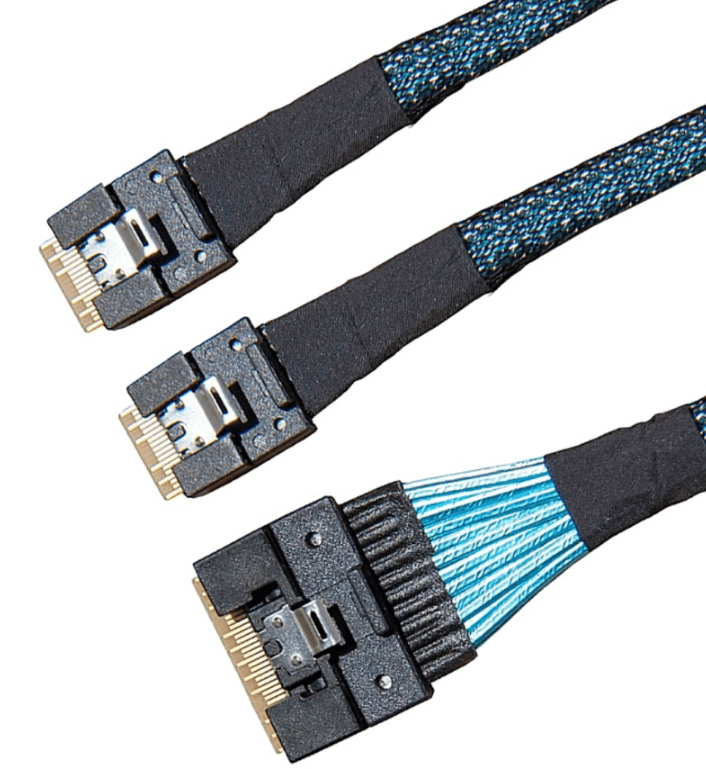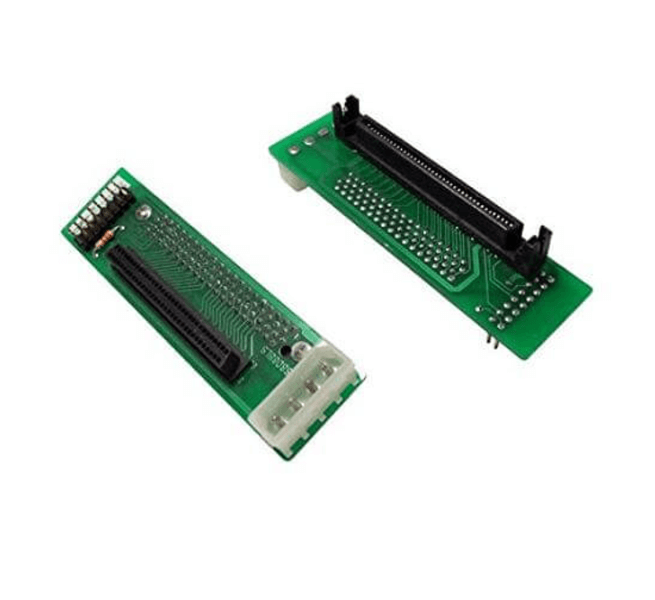
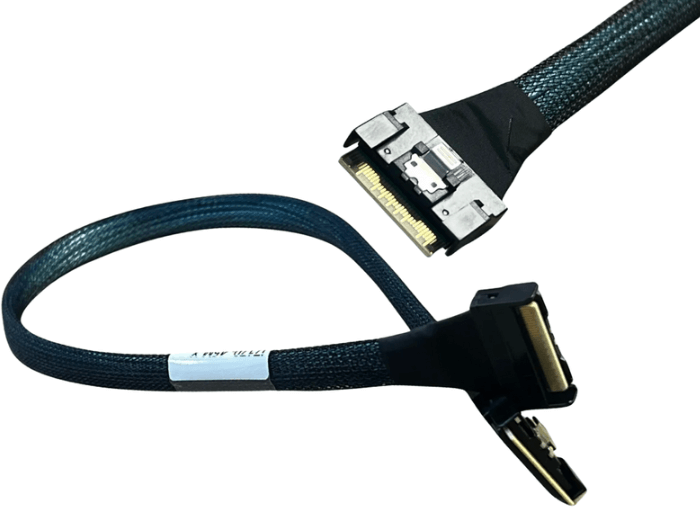
What Should OEMs And Integrators Consider When Designing With MCIO
MCIO is not just another internal connector choice. It represents a shift toward higher lane density, higher signaling speeds, and tighter physical integration in modern server and storage platforms. For OEMs and custom integrators, designing with MCIO requires system-level thinking that accounts for signal integrity, mechanical constraints, thermals, and future scalability from the earliest design stages.
Design for PCIe Gen 4 and Gen 5 Signal Integrity from Day One
MCIO is optimized for very high data rates, but that performance is only achievable if the entire channel is designed correctly.
Key electrical considerations include:
-
Tight differential impedance control across PCB traces, connectors, and cables
-
Minimizing the number of connector transitions
-
Keeping total channel length within realistic Gen 4 or Gen 5 budgets
-
Avoiding stubs, via discontinuities, and unnecessary routing complexity
MCIO reduces connector loss compared to older standards, but it does not eliminate the need for disciplined high-speed design practices.
Understand MCIO Pinouts and Protocol Mapping
MCIO supports multiple lane counts and protocol mappings, including PCIe, SAS, and hybrid configurations. These are not interchangeable.
Before finalizing a design:
-
Confirm whether the MCIO port is wired for PCIe, SAS, or a hybrid implementation
-
Verify lane width, x4, x8, or x16, matches the controller and backplane design
-
Ensure cable assemblies are pinned for the correct protocol
Using an MCIO cable with an incorrect pinout can result in non-detection, unstable links, or in worst cases hardware damage.
Plan Cable Length and Routing Early in the Mechanical Design
MCIO is most effective with short, clean cable runs. Length limits tighten significantly at higher PCIe generations.
Best practices include:
-
Locating MCIO connectors as close as possible to their endpoints
-
Designing chassis layouts that avoid long cable detours
-
Selecting connector orientations that support natural routing paths
Mechanical layout decisions made early often determine whether passive cabling will work or if active components will be required later.
Account for Airflow and Thermal Behavior
High-density MCIO deployments concentrate bandwidth and power in small physical areas. This can create unexpected thermal challenges.
OEMs and integrators should:
-
Avoid routing MCIO cables across primary airflow paths
-
Keep connectors and cables clear of heat sinks and high-power components
-
Consider right-angle or low-profile connectors where clearance is limited
-
Validate thermals under sustained, worst-case workloads
Thermal instability often reduces signal margin, causing issues that appear electrical but are actually airflow related.
Provide Mechanical Support and Strain Relief
MCIO connectors are compact and optimized for density, not brute mechanical strength. Poor strain management can lead to intermittent disconnects or long-term connector wear.
Design considerations include:
-
Chassis features that support cable weight and prevent pull-out
-
Cable guides or channels to control routing
-
Avoiding tension near connector interfaces
Good mechanical design protects both the cable and the connector over the system’s lifetime.
Design with Future PCIe Generations in Mind
One of MCIO’s strengths is its forward-looking design. OEMs should take advantage of this by planning beyond immediate requirements.
Future-proofing strategies include:
-
Leaving margin in loss budgets for higher data rates
-
Avoiding designs that operate at the absolute maximum passive length
-
Using materials and layouts compatible with Gen 5 and future Gen 6 signaling
-
Choosing modular MCIO implementations that can adapt as standards evolve
Designing only to minimum Gen 4 requirements often leads to rework when platforms transition to higher speeds.
Validate with Real-World Test Conditions
MCIO designs that pass lab tests can still fail in production if validation is incomplete.
Effective validation should include:
-
Full thermal soak testing
-
Maximum bandwidth and concurrency workloads
-
Vibration or handling stress where applicable
-
Margin testing across voltage and temperature extremes
Early validation reduces field failures and costly redesigns.
Consider Ecosystem Maturity and Sourcing
While MCIO adoption is growing rapidly, ecosystem maturity varies by application.
OEMs should evaluate:
-
Availability of qualified cable assemblies
-
Lead times for custom configurations
-
Multi-source options to reduce supply risk
-
Compatibility with existing manufacturing and test processes
Planning sourcing early prevents last-minute compromises.
Know When MCIO May Be Overkill
MCIO is not required for every system. Designs with modest bandwidth, low density, or legacy protocol requirements may be better served by simpler connector standards.
MCIO delivers the most value in platforms where density, scalability, and next-generation PCIe performance are primary goals.
Typical MCIO-Friendly Applications
MCIO is especially well suited for:
-
PCIe Gen 5 server backplanes
-
PCIe switch and fabric architectures
-
AI and accelerator dense systems
-
High-performance NVMe storage platforms
-
Long-lifecycle designs targeting future upgrades
In these environments, its advantages outweigh the added design discipline it requires.
FAQ (Frequently Asked Questions)
Is MCIO harder to design with than SlimSAS?
It requires more upfront planning, but it simplifies high-density designs once integrated correctly.
Can MCIO support SAS as well as PCIe?
Yes, depending on pinout and platform support, but protocol mapping must be verified.
Should OEMs assume passive cabling will always work?
No. At higher speeds or longer distances, retimers or active solutions may be required.
Is MCIO a safe long-term investment?
Yes. Its design is aligned with current and future PCIe generations, making it well suited for long-lifecycle platforms.