What Problem Does HD MiniSAS 24G Solve In Next Generation Storage Platforms
Next generation storage platforms must deliver significantly higher throughput while fitting into increasingly dense chassis designs. As SAS based systems transition to higher per lane data rates, legacy interconnects struggle to maintain signal integrity, port density, and scalability. HD MiniSAS 24G was developed to address these limitations by providing a compact, high bandwidth cable and connector system optimized for modern SAS 4.0 storage architectures.
Bandwidth Limitations of Earlier SAS Interconnects
Earlier MiniSAS and MiniSAS HD implementations were designed around lower per lane speeds. As storage devices evolved toward faster solid state media and wider multi lane configurations, these interfaces became bottlenecks.
Higher data rates increase sensitivity to insertion loss, crosstalk, and impedance discontinuities. At the same time, storage platforms require more ports per system to support large drive counts and expandability. Traditional connectors cannot scale efficiently under these combined electrical and mechanical constraints.
How HD MiniSAS 24G Addresses Signal Integrity Challenges
HD MiniSAS 24G supports SAS 4.0 signaling at up to 24 Gb per second per lane. To achieve this, the connector and cable system is engineered with tighter impedance control, improved shielding, and optimized differential pair geometry.
These design improvements reduce reflections and crosstalk that would otherwise degrade performance at higher frequencies. As a result, storage systems can operate at full SAS 4.0 speeds without sacrificing reliability or requiring excessive signal conditioning.
Solving Port Density Constraints in Storage Systems
One of the most significant problems in modern storage platforms is physical port density. Storage controllers, expanders, and backplanes must support more lanes within the same or smaller board area.
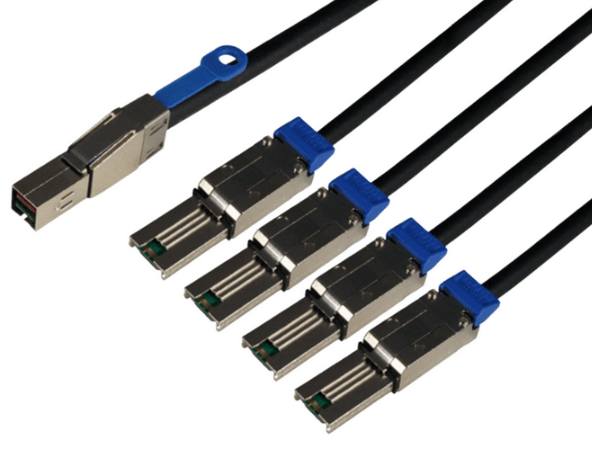
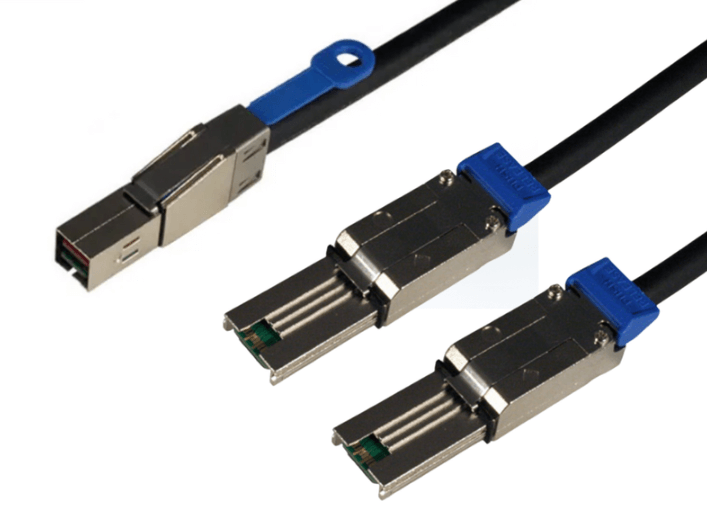
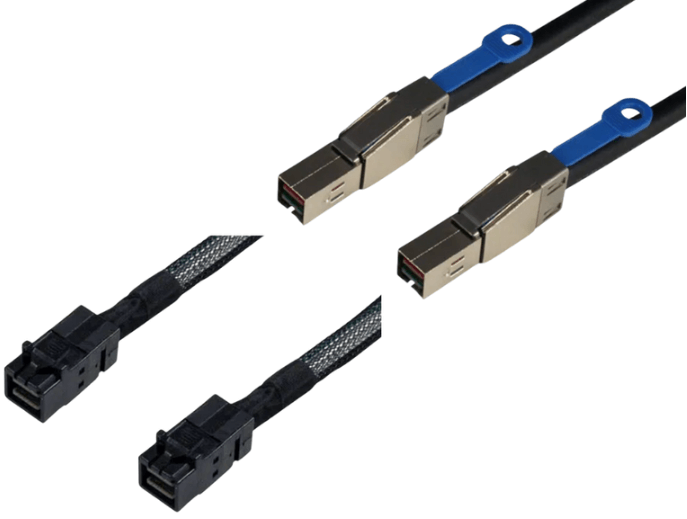
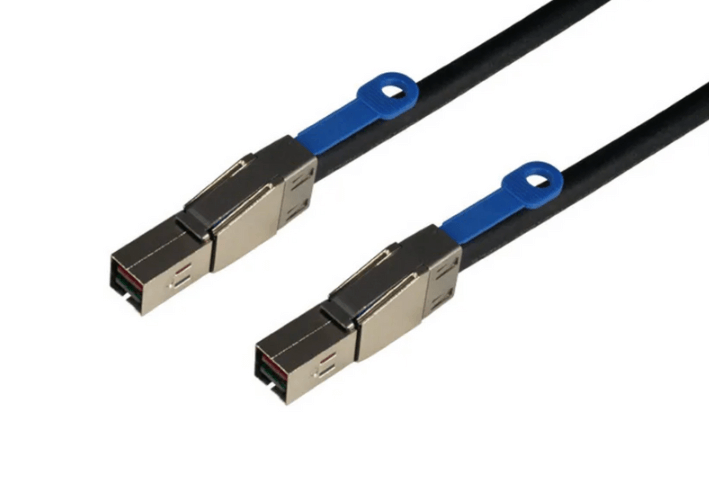
HD MiniSAS 24G uses a compact connector design with approximately 11 mm port to port spacing. This allows system designers to increase the number of high speed connections without expanding board size or chassis dimensions. Higher port density directly translates into greater drive scalability and more flexible system layouts.
Enabling scalable multi lane storage architectures
Next generation storage systems rely on wide links and flexible lane aggregation to balance performance and cost. HD MiniSAS 24G supports multi lane configurations that allow bandwidth to be allocated efficiently across large numbers of drives or expanders.
This capability is critical in dense JBODs, storage arrays, and software defined storage platforms where predictable performance across many endpoints is required. The interface enables scaling without redesigning the underlying interconnect topology.
Reliability and Management Improvements
HD MiniSAS 24G implementations often include EEPROM support, allowing systems to identify cable characteristics and validate compatibility during initialization. This improves diagnostics and reduces configuration errors during deployment and maintenance.
Improved connector retention and mechanical alignment also reduce the risk of intermittent connections, which is essential in environments where storage availability is critical.
Typical Deployment Scenarios
HD MiniSAS 24G is commonly used in the following applications:
-
SAS 4.0 storage controllers and host bus adapters
-
High density storage arrays and JBOD enclosures
-
Expander based SAS topologies
-
Enterprise and hyperscale data center storage platforms
In these environments, the interface solves both electrical and mechanical challenges associated with higher performance storage designs.
FAQ (Frequently Asked Questions)
Is HD MiniSAS 24G backward compatible with older SAS devices?
Compatibility depends on controller and expander support. Physical connectors may be similar, but link speed negotiation is governed by the host and device capabilities.
Does HD MiniSAS 24G only support internal connections?
It can be used for both internal and external SAS connections depending on the specific connector variant and cable assembly.
Why is 24G important for SAS based storage?
Higher per lane speeds allow systems to support faster drives and higher aggregate throughput without increasing lane counts.
Can HD MiniSAS 24G replace legacy MiniSAS in existing systems?
It is typically used in new designs. Retrofitting older platforms may be limited by controller and backplane compatibility.