SCSI Configurations For Reliable Storage System Connectivity
SCSI configurations define how storage devices, controllers, and peripherals are interconnected using parallel SCSI interfaces. These configurations are widely used in legacy servers, industrial systems, and specialized storage environments where consistent data transfer and hardware compatibility are required. By combining cables, adapters, and termination components, SCSI systems maintain stable communication across multiple connected devices.
Role Of SCSI Configurations In Storage Systems
SCSI architecture allows multiple devices to share a common bus, making configuration design critical for proper operation. Each component, including cables, connectors, adapters, and terminators, contributes to maintaining signal integrity and ensuring reliable data exchange.
Different connector types such as VHDCI, HD68, HD50, DB50, and DB25 are used depending on the system generation and device requirements. Configurations often involve matching these interfaces through appropriate cabling and adapter solutions to ensure consistent connectivity across the entire system.
Cable And Connector Variations
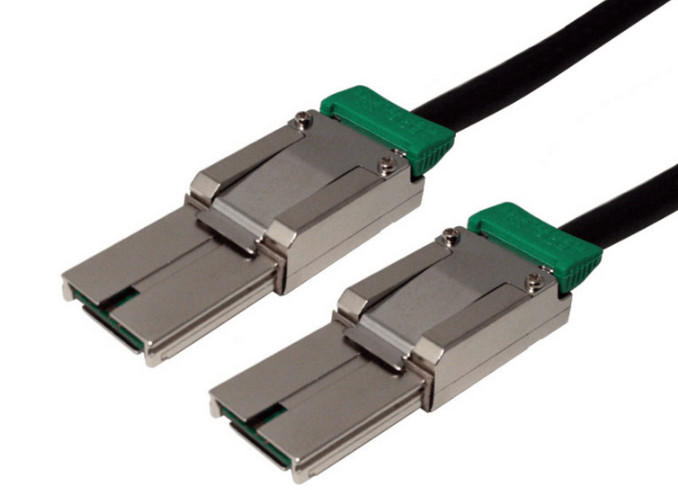
SCSI systems use a range of cable types to support both internal and external connections. High density connectors like VHDCI and HD68 are typically used in higher speed implementations, while older formats such as DB25 and HD50 are found in legacy equipment.
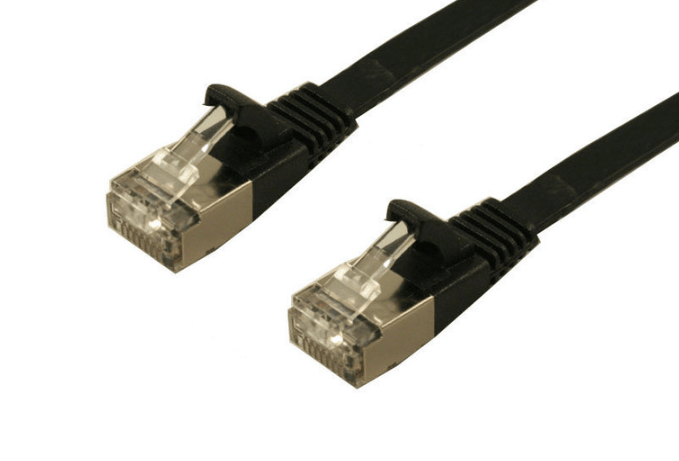
Cable selection affects signal quality, especially in longer runs or multi device chains. Shielded cables are commonly used to reduce electromagnetic interference, particularly in environments with dense electronic components. Proper connector matching is essential to avoid communication errors or physical incompatibility.
Termination And Signal Stability
Termination is a fundamental requirement in SCSI configurations. Because SCSI uses a shared bus topology, both ends of the bus must be properly terminated to prevent signal reflections and data corruption.
External and internal terminators are used depending on the layout of the system. Active terminators are preferred in higher speed configurations because they provide more stable voltage regulation compared to passive designs. Incorrect termination can result in intermittent failures or complete loss of communication between devices.
Adapter Integration In Mixed Environments
Adapters are used when different connector types or device formats must be integrated within the same SCSI chain. These components maintain pin to pin signal mapping while allowing physical compatibility between interfaces.
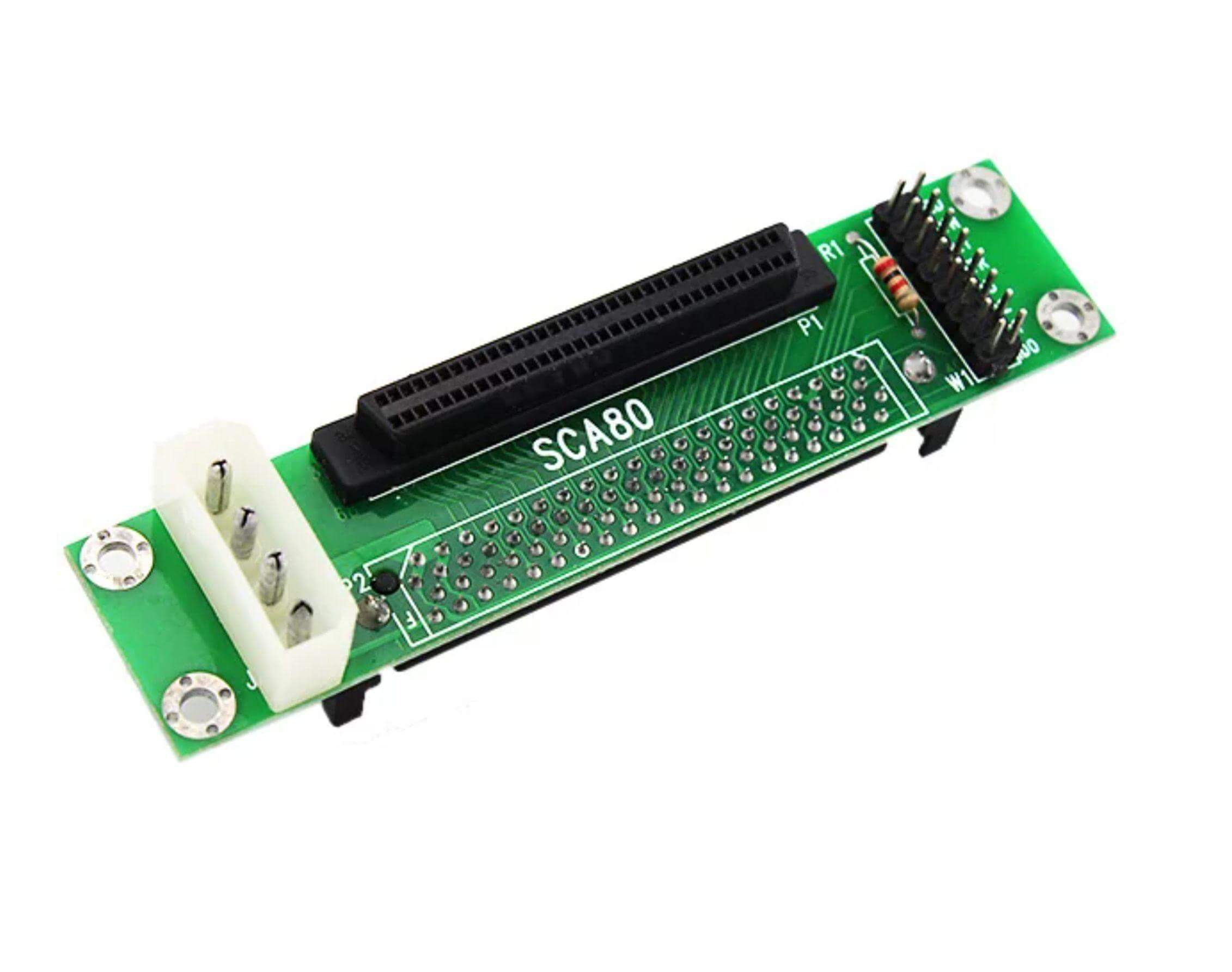
For example, internal adapters may convert SCA80 drive connections into standard ribbon cable interfaces, while external adapters can bridge VHDCI to HD68 connections. These solutions are essential when maintaining or upgrading systems that include a mix of older and newer hardware.
Performance And Compatibility Factors
SCSI performance depends on multiple variables including cable quality, bus length, number of connected devices, and the slowest device in the chain. Mixing wide and narrow devices can reduce overall bandwidth, as the system must operate at the lowest supported specification.
Electrical compatibility must also be considered. Single ended and low voltage differential signaling are not interchangeable without proper support. Careful planning ensures that all components operate within supported voltage and signaling ranges.
Common Use Cases
- Legacy server and workstation storage systems
- RAID arrays using parallel SCSI infrastructure
- Industrial and embedded systems with long lifecycle hardware
- Peripheral device connectivity in specialized equipment
- Data recovery environments using older drive technologies
Best Practices For SCSI Configuration
Maintain proper termination at both ends of the SCSI bus to ensure signal stability. Use high quality, shielded cables to reduce interference and maintain consistent performance. Avoid excessive cable lengths and unnecessary adapter stacking, as these can degrade signal integrity.
Verify compatibility between all devices before installation, including connector types and signaling standards. Organize cable routing to support airflow within the system and prevent mechanical strain on connectors.
FAQ (Frequently Asked Questions)
What Components Are Required In A SCSI Configuration?
A complete setup includes cables, connectors, adapters, terminators, and compatible devices connected to a shared bus.
Why Is Termination Important In SCSI Systems?
Termination prevents signal reflection and ensures stable communication across the SCSI bus.
Can Different SCSI Connector Types Be Used Together?
Yes, but adapters are required to maintain compatibility between different connector formats.
Does Mixing Devices Affect Performance?
Yes, the overall system speed is limited by the slowest device or interface in the configuration.