When Are QSFP28 DAC Cables Preferred For 100 Gb Network Links
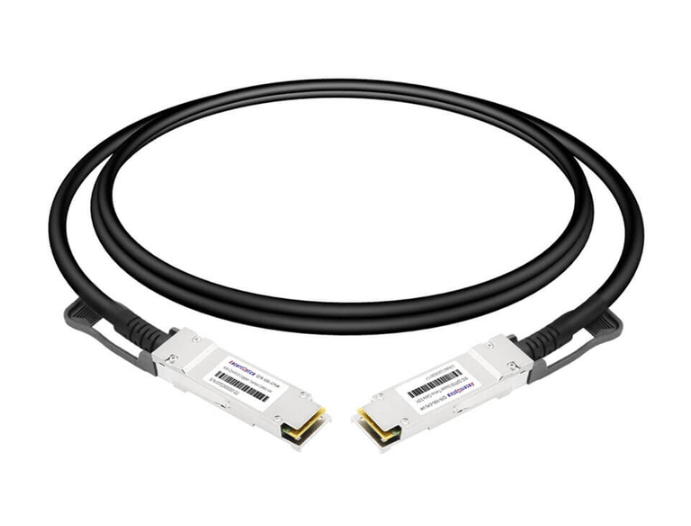
QSFP28 direct attach copper cables are a common physical layer choice for 100 Gb Ethernet links in modern data center and enterprise switching environments. They integrate the QSFP28 connector and copper transmission medium into a single fixed length assembly, designed for short reach, high bandwidth connectivity. QSFP28 DAC cables are preferred when network designs prioritize low latency, reduced power consumption, and simplified deployment over extended reach.
Physical and Architectural Characteristics
QSFP28 DAC cables differ from optical solutions by eliminating discrete transceivers and fiber jumpers. The electrical interface is continuous from port to port, which reduces component count and simplifies link design. This architecture is well suited for environments with predictable rack layouts and controlled cable paths.
Because the cable length is fixed and factory terminated, QSFP28 DAC assemblies offer consistent electrical performance without the variability introduced by separate optical modules and fiber connections.
Distance and Reach Limitations
QSFP28 DAC cables are optimized for short distance connectivity. They are typically used within the same rack or between adjacent racks where link lengths fall within supported copper limits. In these scenarios, copper signaling delivers reliable 100 Gb throughput without the complexity of optical transport.
When link distances exceed DAC specifications, or when routing paths become more complex, optical transceivers provide greater flexibility and reach. As a result, DAC cables are preferred only when distance requirements are well defined and limited.
Latency and Power Efficiency Advantages
One of the primary reasons QSFP28 DAC cables are chosen is their low latency behavior. Because there is no electrical to optical conversion, signal processing delay is minimized. This characteristic is important in environments such as storage fabrics, clustered compute systems, and latency sensitive workloads.
Power consumption is also lower compared to optical transceivers. Passive DAC cables consume no power at the port, while active DACs consume significantly less than optical modules. This contributes to improved thermal management in high density switch deployments.
Cost and Operational Simplicity
QSFP28 DAC cables generally offer a lower total cost than optical solutions for short reach links. The absence of separate transceivers reduces upfront hardware expense and simplifies inventory management.
Installation is straightforward, as DAC cables require no polarity checks, cleaning procedures, or optical testing. This reduces deployment time and minimizes the risk of handling related issues during installation or maintenance.
Common Deployment Scenarios
QSFP28 DAC cables are typically preferred in the following environments:
-
Top of rack switch uplinks
-
Leaf to spine connections within the same rack row
-
Switch to switch links in high density enclosures
-
Server to leaf switch connections requiring 100 Gb throughput
These scenarios benefit from predictable distances, controlled airflow, and simplified cabling layouts.
When Optical Transceivers are More Appropriate
Optical transceivers are better suited for longer distance links, cross row or cross room connectivity, and environments where frequent reconfiguration is expected. Fiber based solutions also provide better tolerance for complex routing paths and future expansion beyond current rack layouts.
In network designs where reach, flexibility, or scalability outweigh efficiency concerns, optical solutions remain the preferred choice.
Best Practices for QSFP28 DAC Deployment
When selecting QSFP28 DAC cables, network designers should verify supported cable lengths, switch port compatibility, and thermal characteristics. Proper cable routing and bend radius control help maintain signal integrity and airflow efficiency.
OEM compatible DAC cables should be validated against platform requirements to ensure reliable operation across different switch vendors and firmware versions.
FAQ (Frequently Asked Questions)
When are QSFP28 DAC cables preferred over optical transceivers?
They are preferred for short reach 100 Gb links where low latency, low power consumption, and simple deployment are priorities.
Do QSFP28 DAC cables support full 100 Gb performance?
Yes, they are designed to deliver full 100 Gb throughput within their supported length limits.
Are QSFP28 DAC cables suitable for dense rack environments?
Yes, their compact form factor and reduced thermal output make them well suited for high density racks.
Can QSFP28 DAC cables be used across different switch platforms?
Many DAC cables are available in OEM compatible configurations that support interoperability across multiple vendors.