Architecture and Deployment of QSFP+ to Mini SAS x4 Cabling for External Storage Interconnects
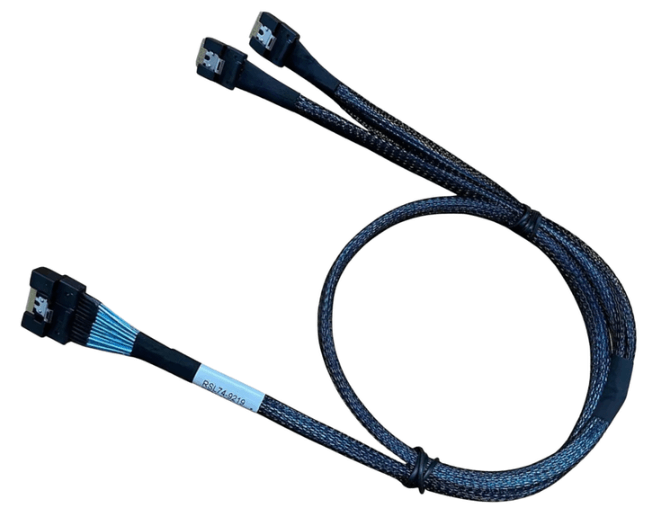
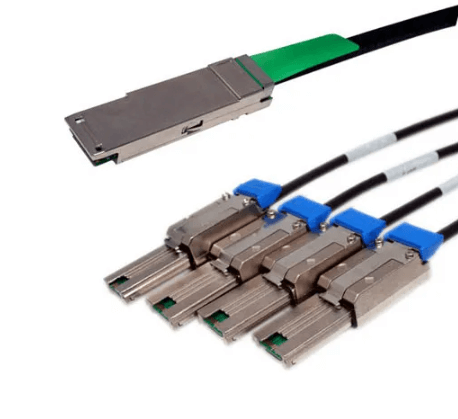
External SAS storage environments often require high lane density connections between host bus adapters and disk enclosures. QSFP+ to Mini SAS x4 copper assemblies provide a structured method for distributing multiple SAS channels from a single compact interface. This cabling approach supports aggregated bandwidth, efficient port usage, and predictable short reach signaling within enterprise racks and data center rows.
Interface Architecture and Lane Mapping
Electrical Behavior and Signal Integrity
QSFP+ to Mini SAS x4 assemblies are passive copper interconnects intended for short distance use. Maintaining controlled impedance, pair symmetry, and shielding continuity is critical at SAS signaling rates. Because the cable does not provide signal conditioning, overall link performance depends on connector quality, cable length, and port compliance with the SAS specification.
Short reach operation minimizes insertion loss and crosstalk exposure. Proper grounding through the connector shells contributes to electromagnetic compatibility in dense rack environments where numerous copper links operate in proximity.
Since the assembly relies entirely on the electrical characteristics of the conductors and connectors, careful attention to seating and mechanical alignment directly influences reliability.
Role in External Storage Topologies
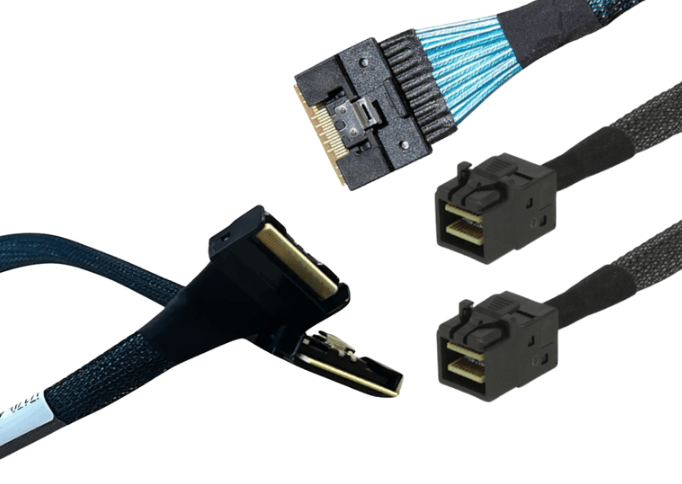
In rack-mounted storage deployments, QSFP+ to Mini SAS x4 cabling is commonly used to attach servers or storage controllers to JBOD shelves. Each Mini SAS connection can interface with a separate expander port, supporting wide port aggregation or redundant path configurations depending on enclosure design.
By concentrating multiple SAS channels into a single QSFP+ interface at the host, this approach reduces front panel port consumption. It also simplifies cable management compared to using multiple discrete Mini SAS cables directly from the controller.
The result is improved density without introducing additional switching layers or active conversion hardware.
Compatibility and Configuration Considerations
Successful deployment depends on explicit support for QSFP+ based SAS fan out within the host adapter firmware and the enclosure backplane. These assemblies are not interchangeable with Ethernet breakout cables, even though the external connector form factor may appear similar.
Each Mini SAS leg corresponds to a specific lane group. Clear labeling and documentation of port mapping help prevent incomplete path connectivity or device discovery issues. Verifying firmware compatibility before installation reduces troubleshooting complexity in production environments.
Common Deployment Environments
-
External JBOD enclosures connected to rack servers
-
Clustered compute nodes sharing SAS-based storage arrays
-
Legacy platforms integrating QSFP+ based SAS fan out
-
Validation labs requiring flexible multi-channel storage access
-
Enterprise backup or archival systems with dense drive shelves
Best Practice Guidelines
Maintain bend radius limits to protect conductor geometry and impedance stability. Avoid excessive strain on the QSFP+ connector, which consolidates multiple lanes into a single mechanical interface. Confirm full insertion and proper latching on all Mini SAS connectors. Document port assignments during installation to simplify future maintenance or enclosure expansion.
FAQ (Frequently Asked Questions)
What function does a QSFP+ to Mini SAS x4 cable serve in storage environments?
It distributes multiple SAS channels from one QSFP+ interface to four external Mini SAS wide ports for connecting storage enclosures.
Does the cable convert Ethernet signaling to SAS?
No. It provides direct electrical lane mapping and requires compatible SAS capable hardware on both ends.
Are these assemblies suitable for long distance connections?
They are intended for short reach interconnects within the same rack or between adjacent equipment.
What happens if the Mini SAS connectors are attached in the wrong order?
Improper mapping can lead to missing paths or incomplete enclosure visibility, depending on the controller configuration.