Integration Considerations for HD68 to DB50 External SCSI Adapter Cables
HD68 to DB50 external SCSI adapter cables are used to connect wide 68-pin SCSI host interfaces to narrow 50-pin SCSI devices. These cables are commonly deployed in mixed SCSI environments where modern controllers must communicate with legacy peripherals such as tape drives, scanners, or early storage arrays. Proper integration requires attention to bus width behavior, termination configuration, and overall signal integrity within the parallel SCSI architecture.
Connector Formats and Mechanical Design
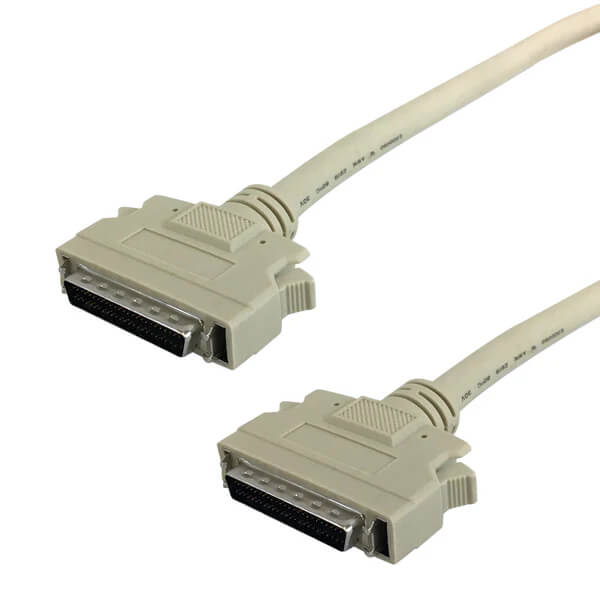
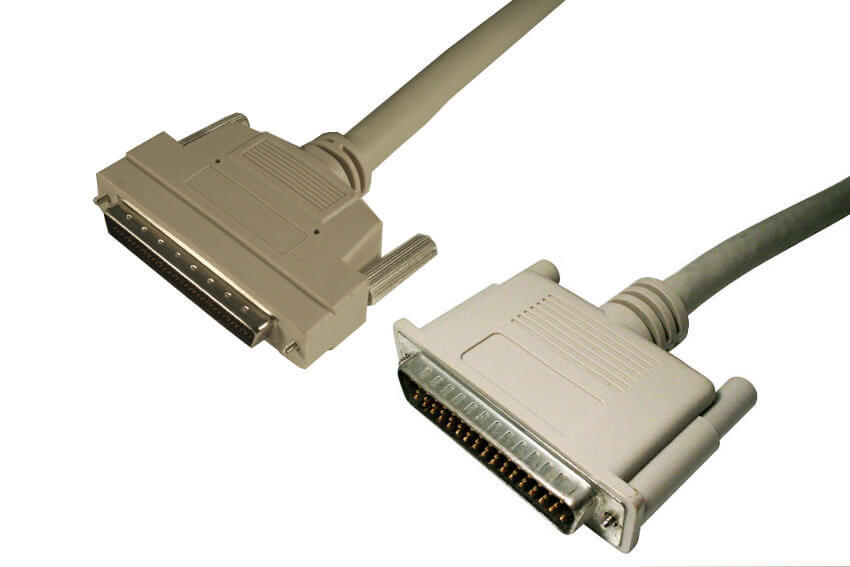
The HD68 connector is a high density 68-pin interface typically associated with wide SCSI implementations such as Ultra SCSI, Ultra2, and later wide parallel SCSI standards. It provides a compact connector layout with two rows of contacts and is usually secured using jack screw fasteners to prevent accidental disconnection.
The DB50 connector, on the other hand, is a 50-pin interface used with narrow SCSI devices. Narrow SCSI operates on an 8-bit data path and was widely used in early storage and peripheral systems.
HD68 to DB50 cables bridge these two connector formats through internal wiring that maps the necessary signal lines from the 68-pin interface to the 50-pin narrow SCSI configuration. The remaining unused lines from the wide interface are typically handled internally within the cable or through controller configuration.
Bus Width Behavior in Mixed SCSI Environments
When a wide SCSI controller connects to a narrow device using an HD68 to DB50 adapter cable, the bus must operate in a compatible mode that supports the narrow device. In many implementations, the controller automatically negotiates down to an 8-bit data path when communicating with the narrower device.
Because parallel SCSI uses a shared bus architecture, the presence of narrow devices can influence the behavior of the entire bus segment. Careful device placement and controller configuration may be required to maintain stable operation.
Administrators should verify that the host controller supports mixed wide and narrow device operation before integrating adapter cables into the topology.
Termination Requirements and Signal Integrity
Termination plays a critical role in parallel SCSI reliability. The SCSI bus must always be terminated at both physical ends of the bus to absorb signal reflections and maintain clean electrical transitions.
When HD68 to DB50 cables are used, it is important to confirm how termination is handled on both the wide and narrow sides of the connection. Some adapter cables include internal termination or line management features, while others rely on device level termination.
Improper termination can cause intermittent device detection, data errors, or communication instability across the bus.
Typical Deployment Scenarios
HD68 to DB50 adapter cables are commonly used in environments where legacy SCSI equipment remains operational. Typical use cases include:
-
Connecting wide SCSI host adapters to narrow tape drives
-
Integrating legacy scanners or imaging systems with newer controllers
-
Maintaining compatibility with older external storage enclosures
-
Laboratory instrumentation systems using narrow SCSI interfaces
-
Industrial control systems with legacy peripheral connectivity
These deployments often persist because specialized equipment may remain in service for many years.
Installation and Routing Considerations
When installing HD68 to DB50 cables, proper cable management helps maintain reliable signal behavior. Avoid sharp bends near the connectors, as this can place mechanical stress on internal conductors.
Secure jack screws to ensure stable electrical contact and prevent connector loosening due to vibration. Additionally, routing SCSI cables away from power distribution wiring helps minimize electromagnetic interference.
Finally, verify that the total SCSI bus length, including both internal and external cable segments, remains within the limits defined by the specific SCSI standard in use.
FAQ (Frequently Asked Questions)
What does an HD68 to DB50 SCSI cable do?
It allows a wide 68-pin SCSI controller to connect to a narrow 50-pin SCSI device by mapping the required signal lines between the two interfaces.
Can wide and narrow SCSI devices operate on the same bus?
Yes, many SCSI controllers support mixed device environments, although communication with narrow devices occurs over an 8-bit data path.
Do HD68 to DB50 cables require special termination?
Termination must still be present at both ends of the SCSI bus. Depending on the configuration, termination may be provided by devices or by specialized adapter hardware.
Where are HD68 to DB50 adapter cables typically used today?
They are commonly used for maintaining legacy equipment such as tape drives, imaging systems, laboratory instruments, and industrial control hardware.