How Do MTP/MPO Fiber Cables Enable High Bandwidth Optical Connectivity?
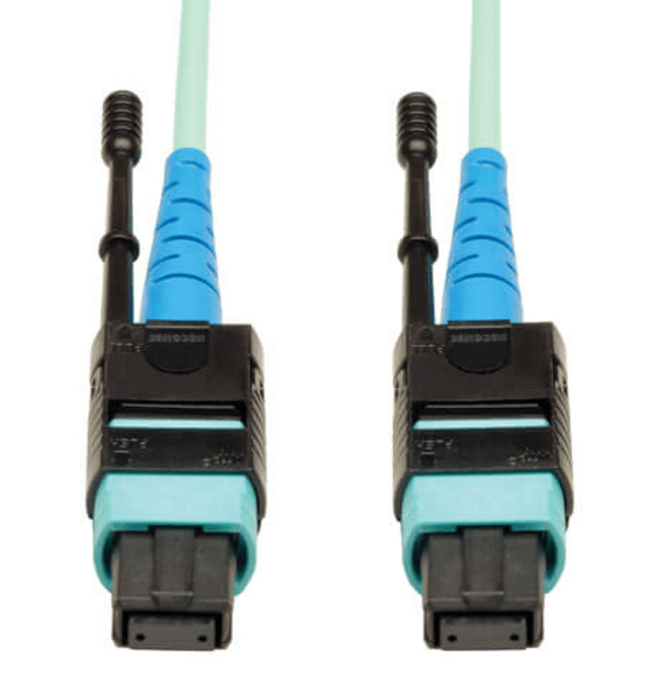
MTP and MPO fiber cables are designed to support parallel optical transmission in environments where bandwidth density and structured fiber management are critical. By combining multiple optical fibers into a single compact connector, these assemblies enable high capacity links between switches, servers, and patching infrastructure. They are widely used in modern data centers to support scalable architectures that require aggregated throughput without increasing physical cabling complexity.
Multi Fiber Parallel Transmission
The core advantage of MTP and MPO connectivity is the ability to carry multiple optical channels through a single connector interface. Instead of relying on duplex fiber pairs, parallel optics distribute data across multiple fibers simultaneously. This approach allows higher aggregate bandwidth while keeping connector count and routing space under control, which is essential for high port density switch platforms.
Connector Design And Alignment Precision
MTP and MPO connectors rely on precise ferrule alignment to maintain consistent optical performance across all fibers. High quality assemblies use accurately molded ferrules and tight manufacturing tolerances to ensure uniform fiber positioning. Proper alignment minimizes insertion loss and reflection, both of which directly affect achievable bandwidth and link stability in high speed optical systems.
Optical Performance And Signal Integrity
Maintaining signal integrity across multiple fibers requires careful control of loss and reflection. MTP and MPO cables are engineered with low loss fiber, polished connector end faces, and controlled geometry to support parallel transmission without excessive channel variation. This consistency allows all lanes within the link to operate at full rate, which is necessary for high bandwidth applications.
Support For High Speed Interfaces
MTP and MPO fiber cables are commonly used with interfaces such as QSFP+ and other parallel optical transceivers. These interfaces are designed to transmit and receive data across multiple fibers at once. By matching the physical cable structure to the optical lane architecture, MTP and MPO assemblies provide an efficient path for high speed data movement within and between racks.
Trunk And Breakout Architectures
High bandwidth fiber networks often rely on trunk and breakout configurations. Trunk cables carry multiple fibers between centralized termination points, reducing clutter and simplifying long runs. Breakout cables convert a single MTP or MPO connector into multiple duplex connections, allowing aggregated bandwidth at the core while distributing individual links at the edge. This flexibility supports scalable and modular network design.
Density And Cable Management Benefits
Because MTP and MPO connectors consolidate many fibers into a small footprint, they significantly increase port density. Fewer connectors and smaller cable bundles improve airflow and reduce congestion in racks and overhead pathways. Improved cable management helps maintain thermal efficiency and simplifies future expansion or reconfiguration.
Installation And Design Considerations
Successful deployment requires careful attention to polarity, keying, and connector cleanliness. Incorrect polarity can prevent links from coming up, while contamination can increase loss across multiple fibers at once. Bend radius control is also important to preserve fiber performance, especially in dense routing environments.
FAQ (Frequently Asked Questions)
Why are MTP and MPO cables preferred for high bandwidth links?
They support parallel optical transmission, which allows multiple data lanes to operate simultaneously within a single connector.
Do MTP and MPO cables reduce the number of required ports?
They reduce connector and cable count by aggregating multiple fibers into one interface, which increases overall port density.
Are MTP and MPO cables limited to data center use?
They are most common in data centers, but they are also used in enterprise backbones and high capacity optical networks.
Is special handling required for MTP and MPO connectors?
Yes, proper polarity management and connector cleanliness are essential to maintain optical performance.