When Should HD MiniSAS Be Chosen Over SlimSAS Or MCIO
HD MiniSAS remains a relevant and sometimes preferable choice even as SlimSAS and MCIO gain adoption in newer platforms. While newer connectors offer higher density and better scaling for PCIe Gen 5 and beyond, HD MiniSAS provides advantages in compatibility, durability, cost control, and deployment simplicity. The right choice depends on system goals, performance requirements, and the lifecycle stage of the infrastructure.
When You are Maintaining or Expanding Existing Infrastructure
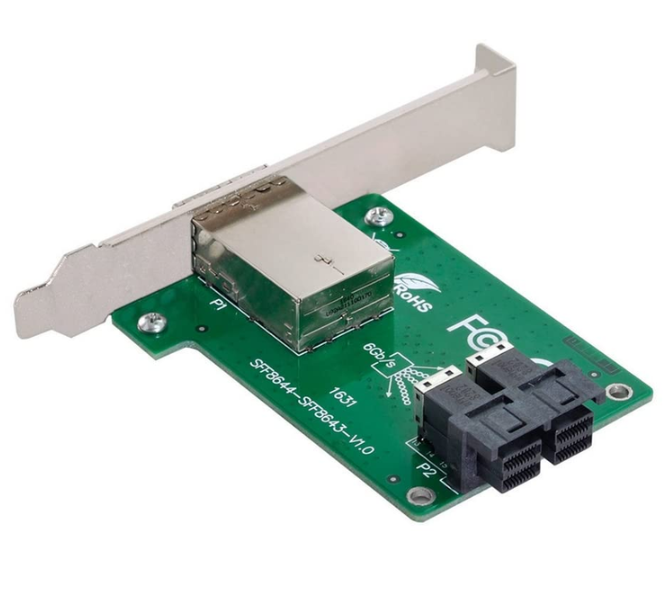
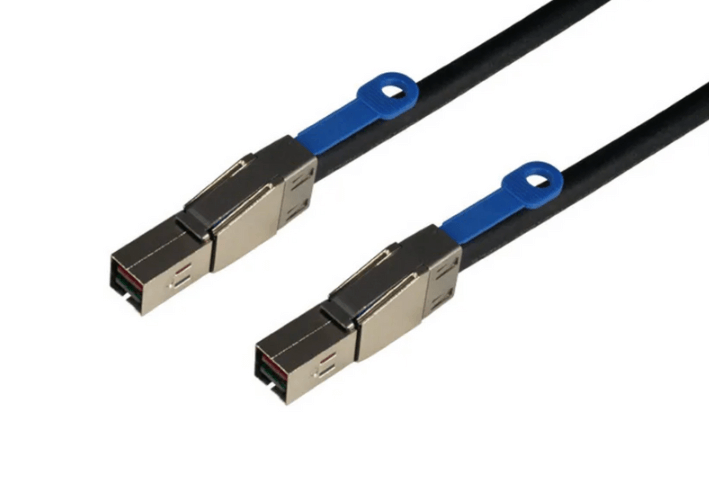
One of the strongest reasons to choose HD MiniSAS is compatibility with installed hardware. Many enterprise servers, JBODs, RAID cards, and backplanes are already built around internal SFF-8643 and external SFF-8644 ports.
Replacing these platforms solely to adopt SlimSAS or MCIO rarely makes economic sense. In expansion or refresh scenarios, staying with HD MiniSAS avoids unnecessary board changes, adapter complexity, and validation work.
When PCIe Gen 5 Performance is Not Required
HD MiniSAS supports up to four lanes of high speed signaling and performs reliably at PCIe Gen 4 and SAS 3 or SAS 4 speeds. For many workloads, this level of performance is more than sufficient.
Applications such as RAID based storage, bulk data repositories, backup systems, and archival platforms do not benefit meaningfully from PCIe Gen 5 bandwidth. In these cases, HD MiniSAS delivers stable performance without the tighter signal integrity constraints of newer standards.
When Mechanical Strength and Field Durability Matter
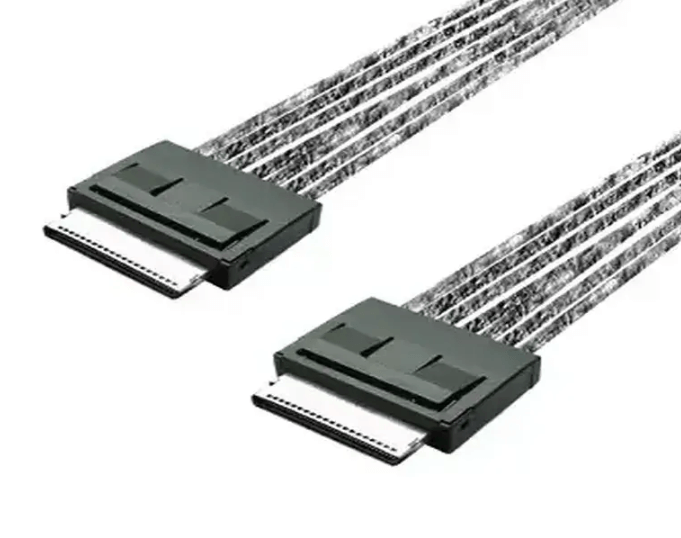
HD MiniSAS connectors are physically larger and mechanically robust compared to SlimSAS and MCIO. They feature strong latching mechanisms and durable housings designed for repeated handling.
In environments with vibration, frequent servicing, or cable reconfiguration, this robustness can be a real advantage. Systems deployed in industrial settings, edge locations, or shared lab environments often favor mechanical reliability over connector density.
When Broad Cable Availability and Flexibility are Important
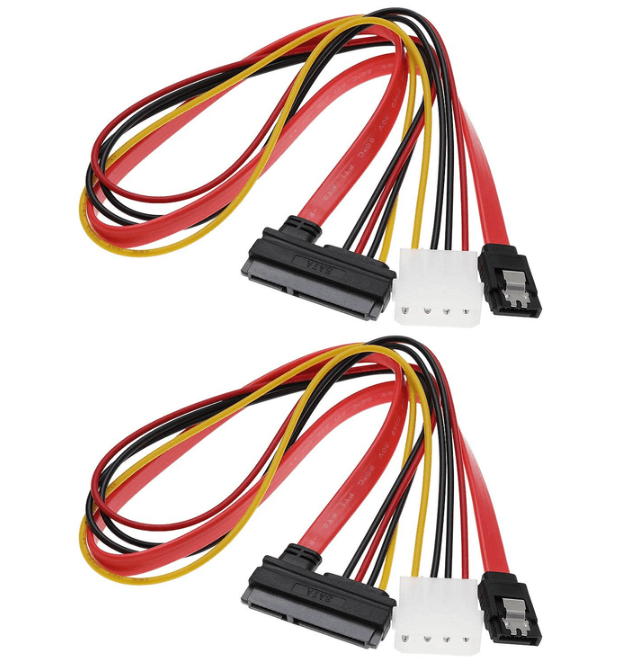
HD MiniSAS has been widely deployed for years, resulting in a mature and extensive cable ecosystem. Breakouts, extensions, internal-to-external transitions, and legacy adaptations are readily available.
This makes HD MiniSAS easier to source in a wide range of lengths and configurations. When timelines are tight or custom cabling is not practical, the availability of proven assemblies reduces procurement risk.
When Cost Efficiency is a Priority
Because HD MiniSAS is a mature standard, cables and connectors are generally less expensive than SlimSAS or MCIO equivalents. The manufacturing processes are well established, and supply chains are stable.
For large deployments where per unit cost matters and performance requirements are already met, HD MiniSAS can significantly reduce total system cost without compromising reliability.
When The System Architecture is SAS Centric
HD MiniSAS is a natural fit for SAS based storage architectures. It integrates cleanly with expanders, dual ported drives, and enterprise SAS backplanes.
While SlimSAS and MCIO can support SAS in certain designs, they are often selected primarily for PCIe centric architectures. In systems built around SAS controllers and drives, HD MiniSAS aligns more directly with the intended topology.
When Airflow and Density are not Limiting Factors
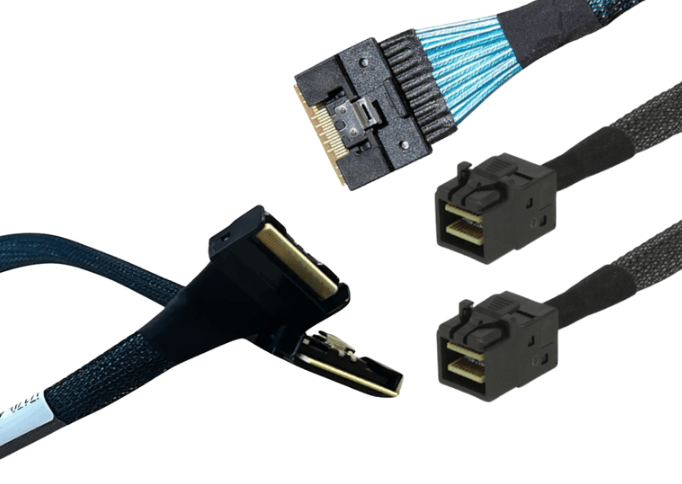
SlimSAS and MCIO shine in very dense systems where every millimeter of board space and airflow path matters. In larger chassis or lower density designs, the footprint advantage of newer connectors may not provide a meaningful benefit.
If the system has adequate space and cooling headroom, HD MiniSAS does not impose a practical disadvantage.
When HD MiniSAS is not The Right Choice
HD MiniSAS becomes less attractive in new designs targeting PCIe Gen 5 or higher, extreme port density, or highly consolidated PCIe fabrics. In those scenarios, SlimSAS or MCIO provide better long term scalability and signal integrity margin.
The key is matching the connector to the actual system requirements rather than defaulting to the newest option.
Typical Scenarios Favoring HD MiniSAS
HD MiniSAS is often the best choice in:
-
Expansions of existing enterprise storage systems
-
JBOD and SAS expander based platforms
-
RAID focused architectures
-
Environments requiring rugged connectors
-
Cost sensitive large scale deployments
In these cases, it remains a practical and technically sound solution.
FAQ (Frequently Asked Questions)
Is HD MiniSAS obsolete?
No. It is mature, widely supported, and still actively used in many enterprise systems.
Does HD MiniSAS support PCIe?
Yes, up to PCIe Gen 4, depending on the platform.
Can HD MiniSAS and SlimSAS be mixed in one system?
Only with appropriate adapters or interposer designs, and compatibility must be validated.
Should new designs avoid HD MiniSAS entirely?
Not necessarily. It depends on performance targets, density requirements, and expected system lifespan.