When Should HD MiniSAS PCIe 4.0 Be Used Instead Of SAS Based Cabling?
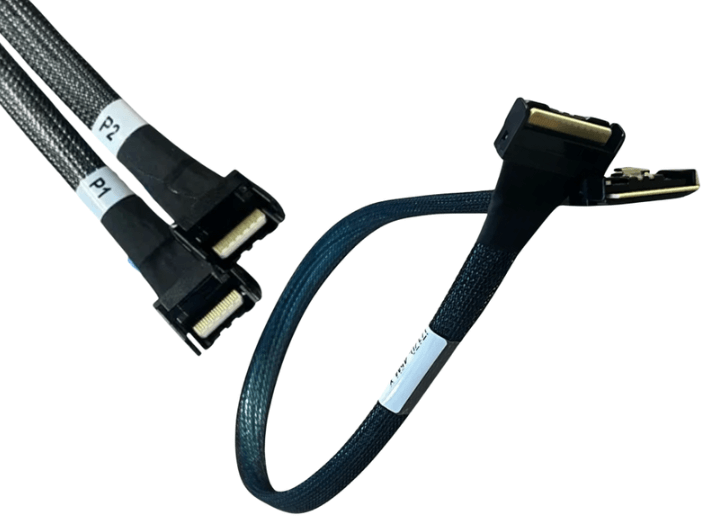
HD MiniSAS PCIe 4.0 cabling is used when a system requires direct PCIe signaling rather than traditional SAS communication. As storage and accelerator architectures shift toward NVMe and PCIe native fabrics, SAS based cabling can become a functional and performance limitation. HD MiniSAS PCIe 4.0 addresses this gap by enabling high speed, low latency PCIe Gen 4 links within dense internal system layouts.
Architectural Differences Between PCIe and SAS Cabling
SAS cabling is designed around a storage centric protocol that includes features such as expanders, arbitration, and command translation. While effective for many storage environments, SAS introduces protocol overhead and latency that are not present in PCIe based designs.
HD MiniSAS PCIe 4.0 cables are purpose built for native PCIe signaling. They carry PCIe lanes directly between hosts, switches, backplanes, and NVMe devices without protocol conversion. This makes them better suited for architectures that prioritize low latency, high bandwidth, and direct device access.
NVMe and PCIe Native Storage Designs
HD MiniSAS PCIe 4.0 should be used when deploying NVMe SSDs that connect directly over PCIe rather than through SAS controllers. NVMe relies on PCIe for parallel command queues and low latency access paths that SAS cannot replicate.
In NVMe based systems, using SAS cabling would require protocol bridges or controllers that negate many of NVMe’s performance advantages. PCIe native cabling allows NVMe devices to operate as intended, with maximum throughput and minimal overhead.
High Bandwidth and Low Latency Requirements
PCIe Gen 4 operates at 16 GT per second per lane, delivering significantly higher bandwidth than SAS interfaces. Applications such as high performance storage, AI data pipelines, and real time analytics benefit directly from this increased throughput.
HD MiniSAS PCIe 4.0 cabling is appropriate when workloads are sensitive to latency or when aggregate bandwidth requirements exceed what SAS based architectures can provide efficiently.
Dense Internal Connectivity and Port Scaling
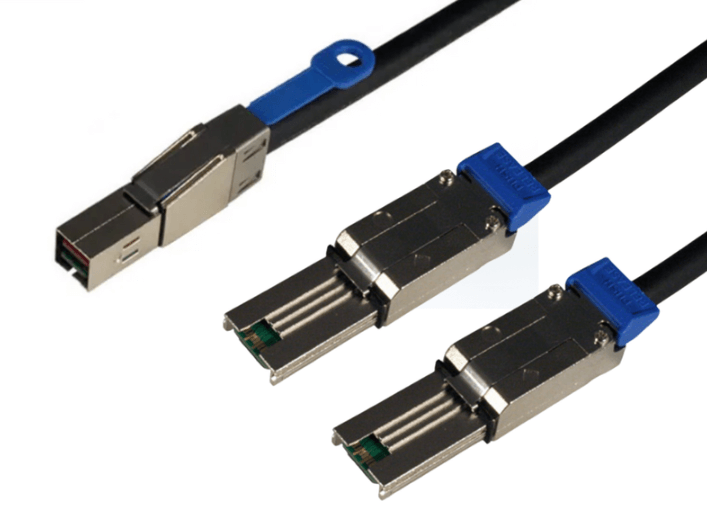
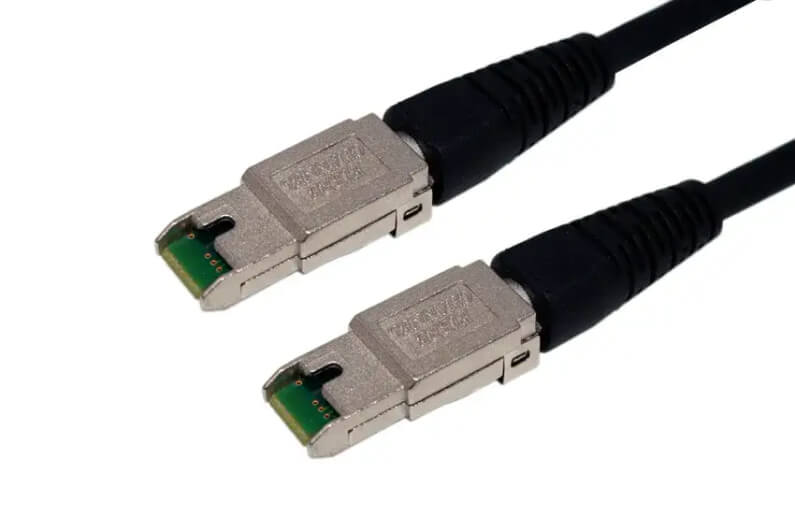
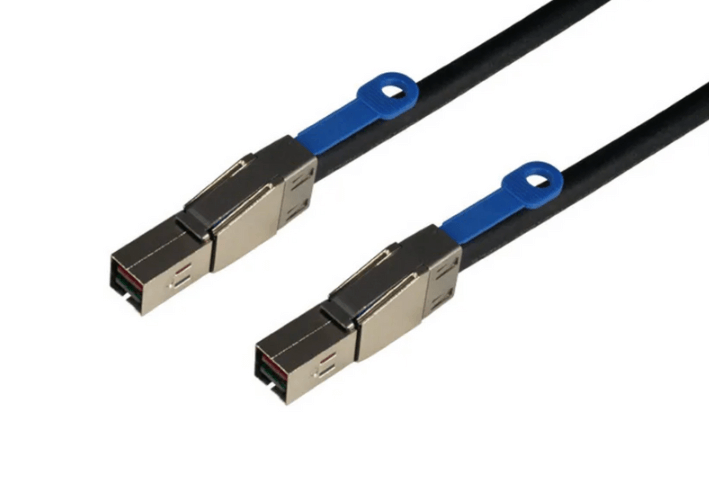
Modern servers and storage platforms often require a high number of internal PCIe connections within limited physical space. HD MiniSAS connectors offer compact port spacing and multi lane support that aligns well with dense PCB layouts and modular designs.
When system density and internal routing complexity are major constraints, HD MiniSAS PCIe 4.0 provides a scalable alternative to larger edge connectors or legacy cabling formats.
PCIe Switching and Composable Infrastructure
PCIe switches are increasingly used to build composable systems where compute, storage, and accelerators are dynamically allocated. These architectures depend on PCIe native links rather than SAS topologies.
HD MiniSAS PCIe 4.0 cabling is well suited for switch based PCIe fabrics, enabling flexible lane aggregation, predictable signal integrity, and clean internal routing between endpoints.
When SAS Based Cabling May Still be Appropriate
SAS cabling remains suitable for environments that rely on SAS expanders, legacy storage controllers, or mixed media storage where PCIe native access is not required. It is also commonly used in systems that prioritize compatibility with existing SAS infrastructure.
However, as performance demands increase and NVMe adoption expands, SAS based cabling becomes less optimal for new designs focused on PCIe native operation.
Typical Scenarios Favoring HD MiniSAS PCIe 4.0
HD MiniSAS PCIe 4.0 is commonly selected in the following situations:
-
NVMe SSD backplanes and storage arrays
-
PCIe switch based architectures
-
GPU and accelerator interconnects
-
High performance computing platforms
-
Composable and disaggregated server designs
In these cases, SAS cabling would introduce unnecessary constraints or architectural complexity.
FAQ (Frequently Asked Questions)
Can HD MiniSAS PCIe 4.0 cables be used for SAS devices?
No. They are designed for PCIe signaling and are not protocol compatible with SAS devices.
Do these cables replace MiniSAS SAS cables physically?
While connectors may appear similar, electrical characteristics and supported protocols differ and must not be mixed.
Is PCIe 4.0 required to use HD MiniSAS PCIe cables?
They can be used at lower PCIe generations, but are typically selected to support Gen 4 performance.
Are HD MiniSAS PCIe 4.0 cables hot swappable?
They are intended for internal connections and are generally not designed for hot swap operation.