How To Choose Between Copper And Active Optical Cables For High Speed Links
Choosing between copper cables and active optical cables for high speed links depends on distance, bandwidth requirements, physical constraints, and long term scalability. Both technologies are widely used in modern data centers and server environments, but they solve different engineering problems. Understanding how electrical and optical transmission behave at high data rates allows you to select the option that delivers reliable performance without unnecessary cost or complexity.
How Copper and Active Optical Cables Differ Fundamentally
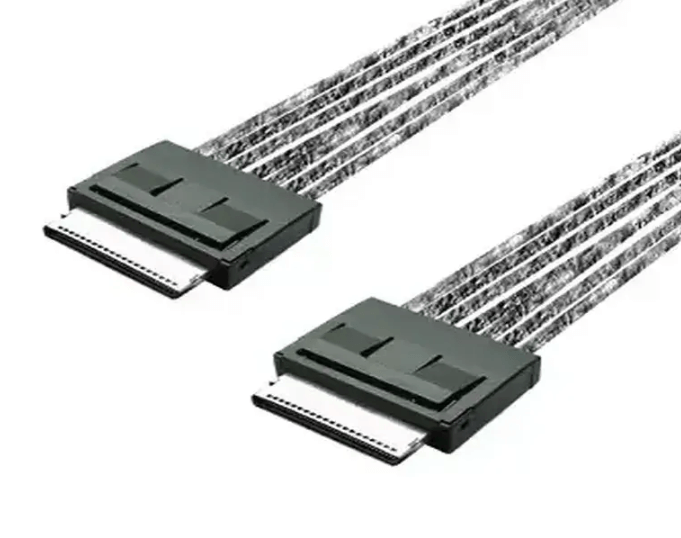
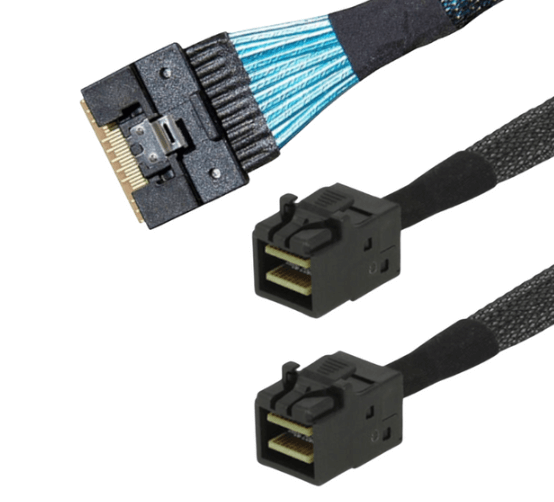
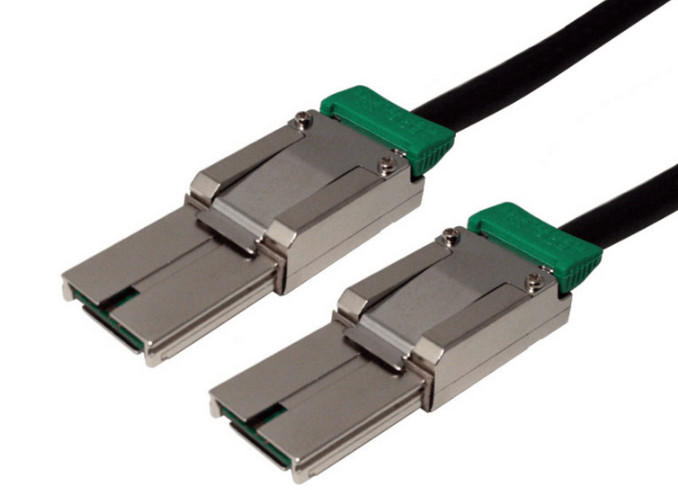
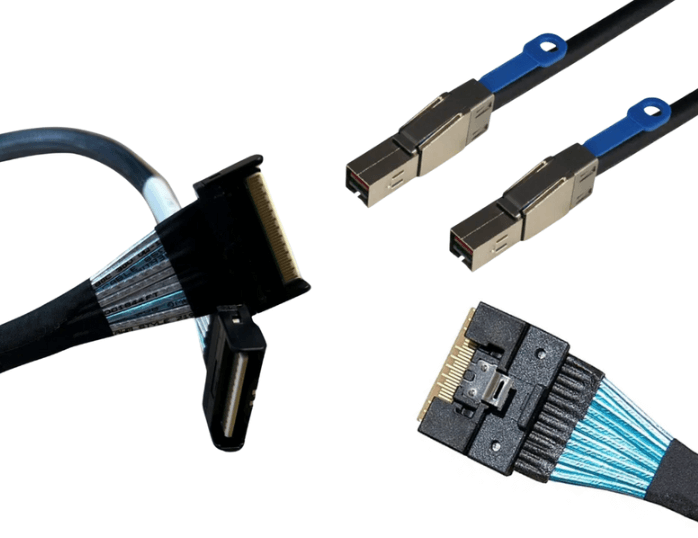
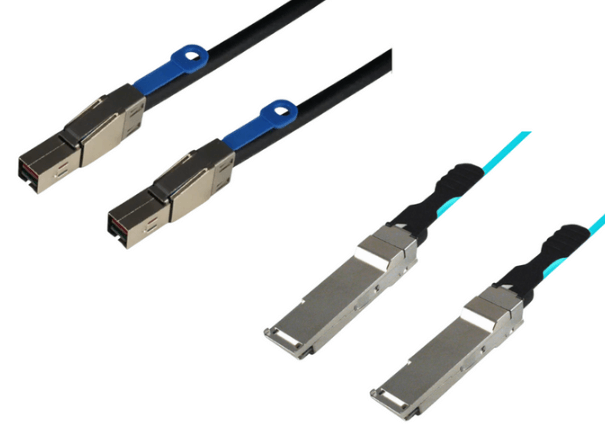
Copper cables transmit data as electrical signals over metal conductors. This includes passive and active Direct Attach Copper assemblies as well as internal high speed copper cables used for SAS and PCIe. Performance is limited by electrical loss, crosstalk, and susceptibility to electromagnetic interference.
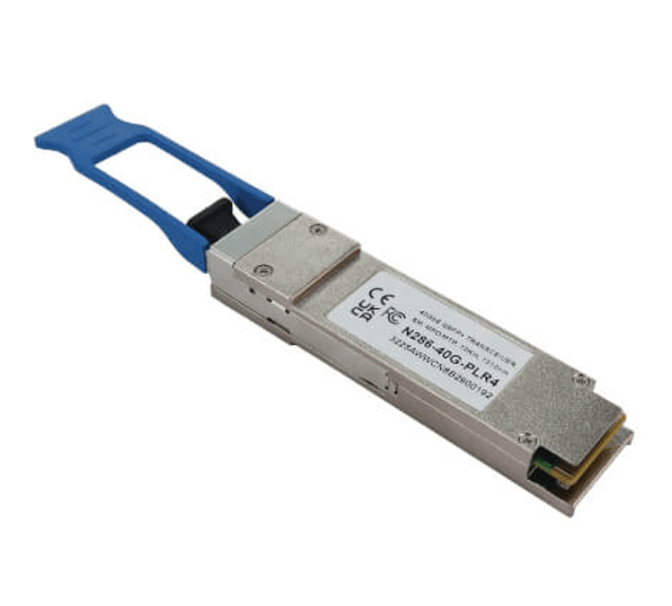
Active optical cables convert electrical signals into optical signals within integrated transceivers at each end of the cable. Data travels as light over fiber and is converted back to electrical form at the destination. This approach largely eliminates attenuation and interference over distance.
Distance as the Primary Decision Factor
Distance is often the clearest divider between copper and optical solutions.
Copper cables perform very well over short distances. For rack level connections, internal cabling, or adjacent cabinet links, copper provides reliable performance with minimal complexity. As distance increases, signal loss and noise make copper less practical.
Active optical cables maintain signal integrity over much longer distances. They are commonly used when links exceed the practical limits of copper, especially at higher data rates. For connections that must span multiple racks or rows, optical solutions are often the only viable option.
Bandwidth and Signaling Speed Considerations
As signaling speeds increase, channel loss budgets shrink. Copper becomes more sensitive to length, connector transitions, and routing quality at higher data rates.
At moderate speeds and short lengths, copper can support high throughput efficiently. At very high speeds or when full bandwidth must be maintained over longer runs, active optical cables provide more consistent performance.
The choice should account not only for current speeds but also for planned upgrades. A link that works today with copper may not scale cleanly to higher generations.
Power Consumption and Thermal Impact
Copper cables can be passive or lightly active, which keeps power consumption low. This is advantageous in dense environments where port power and thermal budgets are limited.
Active optical cables require power at both ends to operate their embedded transceivers. While power draw is generally modest, it adds to overall system consumption and heat generation at the port level.
In large deployments, cumulative power impact can influence design decisions.
Physical Size, Weight, and Cable Management
Copper cables are thicker, heavier, and stiffer than optical fiber. In dense racks, large bundles of copper can obstruct airflow and complicate routing.
Active optical cables are lighter and thinner, which improves cable management and airflow. This can be a significant advantage in high density switch environments or overhead tray routing.
Mechanical durability should also be considered. Copper is generally more tolerant of handling and repeated movement, while optical cables require more careful routing and strain control.
Electromagnetic Interference Environment
Copper cables are shielded but still susceptible to electromagnetic interference in electrically noisy environments. Proper separation from power cabling and careful routing are required to maintain signal quality.
Active optical cables are immune to electromagnetic interference because they transmit light rather than electrical signals. This makes them ideal for environments with high EMI or where cable routing cannot avoid noise sources.
Cost and Deployment Tradeoffs
Copper cables are typically lower cost per link and simpler to deploy. They do not require optical components or compatibility validation beyond basic electrical support.
Active optical cables cost more per assembly due to integrated transceivers and fiber construction. However, they can reduce infrastructure complexity by eliminating the need for separate optical modules and patch cables.
Total cost should be evaluated at the system level, including installation time, airflow impact, and future upgrade needs.
Typical Scenarios Favoring Copper
Copper cables are usually the better choice when:
-
Link distances are short
-
Cost sensitivity is high
-
Power budgets are tight
-
Connections are internal or rack local
-
Mechanical robustness is important
These conditions describe many internal server and top of rack deployments.
Typical Scenarios Favoring Active Optical Cables
Active optical cables are usually the better choice when:
-
Longer reach is required
-
Full bandwidth must be maintained over distance
-
Cable weight and airflow matter
-
EMI immunity is critical
-
Systems are designed for very high data rates
These scenarios are common in spine leaf architectures and large scale data centers.
Planning for Future Upgrades
Future proofing should be part of the decision process. If a link is likely to require higher speeds or longer reach in the near term, optical solutions may avoid a second cabling refresh.
Conversely, short fixed links that are unlikely to change may be best served by copper due to simplicity and cost efficiency.
FAQ (Frequently Asked Questions)
Can copper and active optical cables be mixed in the same network?
Yes. Many data centers use copper for short links and optical cables for longer connections.
Do active optical cables replace traditional fiber plus transceiver setups?
In many cases, yes. They integrate the optics into the cable assembly.
Is copper always lower latency than optical?
Latency differences are typically negligible compared to protocol and system processing delays.
Are active optical cables harder to service?
They require more careful handling, but they reduce the number of separate components in the link.