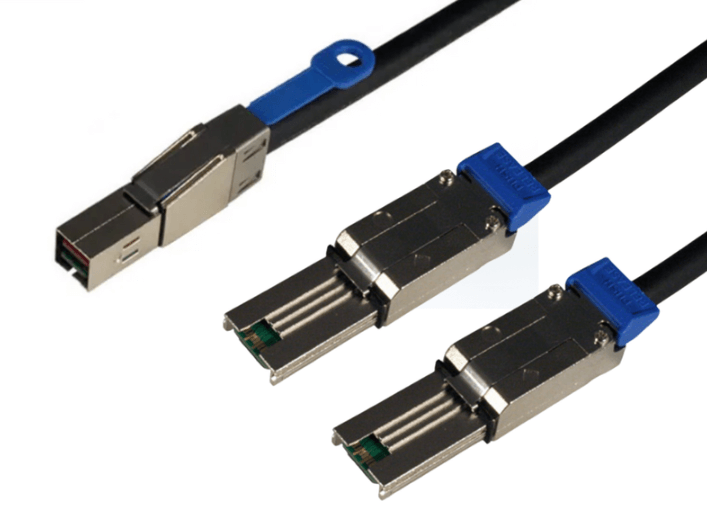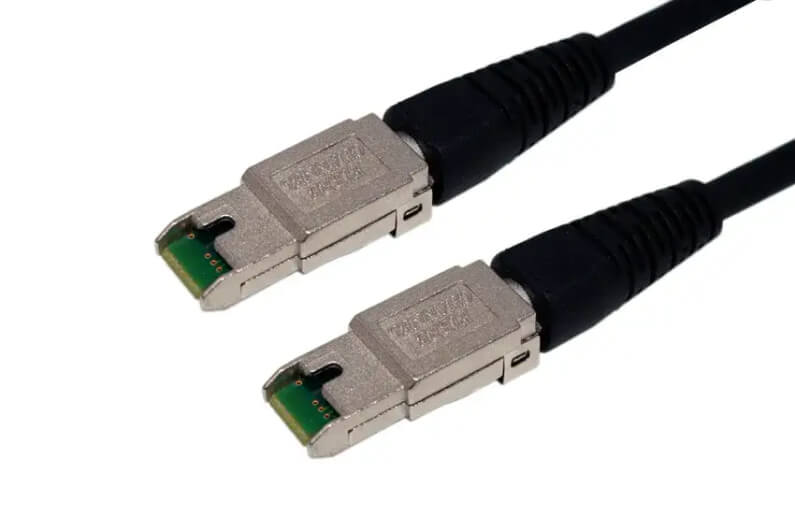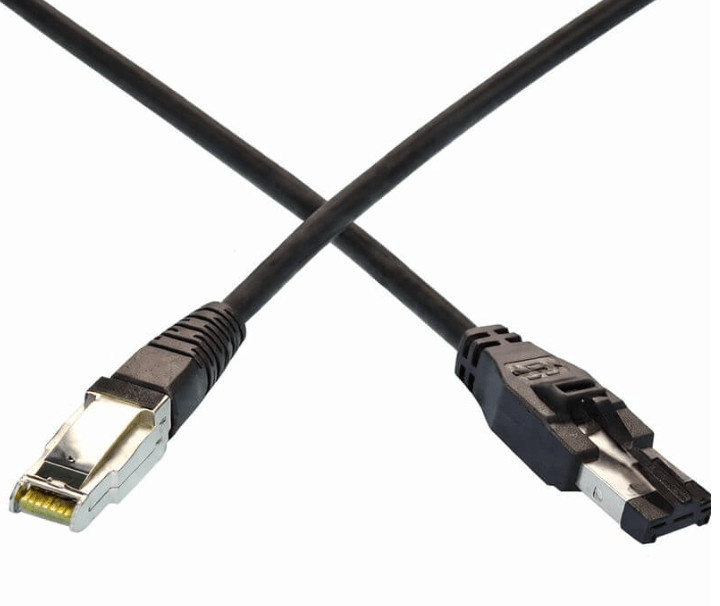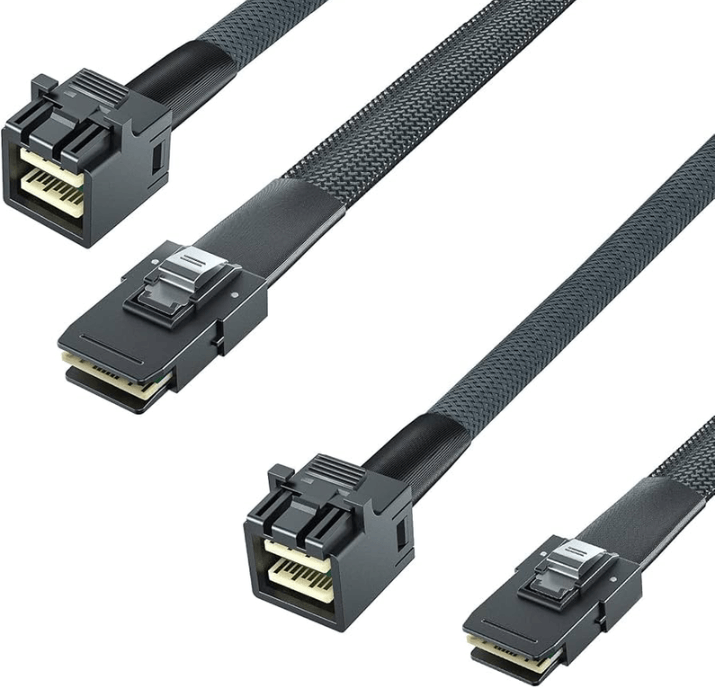
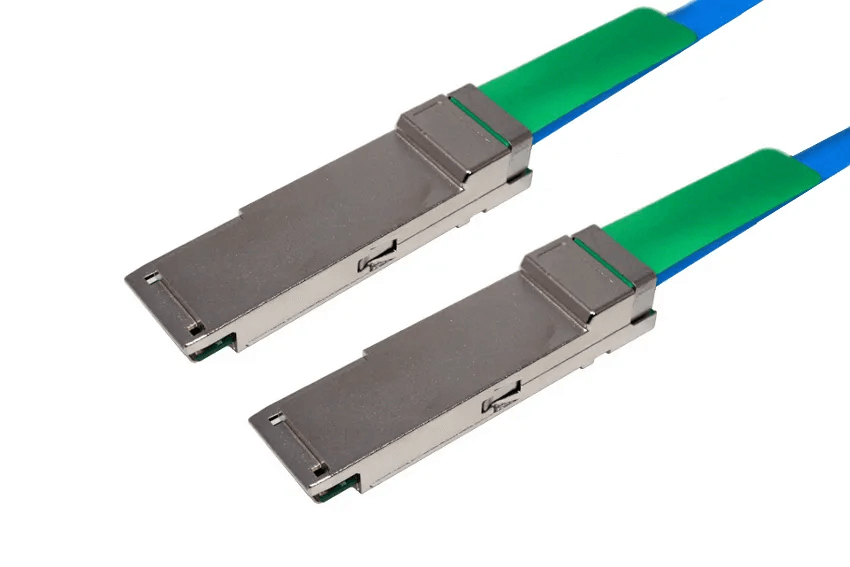
QSFP+ DAC Cables for 40Gb InfiniBand SDR DDR QDR Connectivity
QSFP+ direct attach copper cables are factory terminated twinax assemblies designed for short reach 40Gb interconnects. In InfiniBand environments supporting SDR, DDR, and QDR signaling, these cables provide low latency and power efficient connectivity between switches, servers, and storage systems. LSZH jacketing is often specified where fire safety and environmental compliance are required.
QSFP+ Direct Attach Copper Architecture
QSFP+ DAC cables integrate four high speed differential lanes in each direction to deliver an aggregate 40Gb data rate. In InfiniBand deployments, the physical layer supports SDR, DDR, and QDR signaling modes while maintaining compatibility at the port level.
Unlike optical solutions, DAC assemblies are manufactured as a single calibrated unit combining connectors and cable. This reduces variability in insertion loss, ensuring consistent electrical performance. For short distances within racks or between adjacent racks, passive copper provides predictable behavior with minimal latency.
Signal Integrity and Electrical Performance
Maintaining signal quality across multiple differential pairs is essential at 40Gb throughput. QSFP+ DAC cables use controlled impedance twinax conductors to manage return loss, insertion loss, and crosstalk.
Key electrical characteristics include:
-
Controlled impedance across all differential pairs
-
Shielding to reduce electromagnetic interference
-
Stable pair geometry to limit skew and signal distortion
-
Compliance with host defined channel loss budgets
Passive DAC cables rely on host side equalization and link training. For this reason, cable length must remain within supported limits to avoid signal degradation and reduced link margin.
LSZH Jacket Characteristics and Compliance
Low smoke zero halogen jackets are used in environments where reduced smoke emission and elimination of halogenated gases are required. These materials are commonly specified in data centers, laboratories, and regulated facilities.
LSZH jacketing does not impact electrical signaling but affects mechanical properties such as flexibility and routing behavior. Proper cable management ensures that airflow is maintained and mechanical stress on QSFP+ ports is minimized.
Deployment in InfiniBand Environments
QSFP+ DAC cables are widely used in InfiniBand networks where short distances, high bandwidth, and consistent latency are required. These environments include high performance computing clusters and storage fabrics.
Typical deployment scenarios include:
-
Switch to switch interconnects within a rack row
-
Server to top-of-rack switch connections
-
Storage system aggregation layers
-
High density compute clusters
-
Test and validation environments
These use cases benefit from the low latency and predictable performance of passive copper interconnects.
Installation and Design Considerations
Cable selection should match the physical layout of the rack to avoid excess slack and unnecessary bending. Maintaining proper bend radius helps preserve shielding integrity and signal quality.
Structured cable management improves airflow and simplifies maintenance. Compatibility should also be verified, as some systems require vendor specific coding for QSFP+ modules and cables.
Frequently Asked Questions
What distance is supported by QSFP+ DAC cables at 40Gb?
They are typically used for short reach connections within a rack or between adjacent racks, depending on system capabilities.
Can QSFP+ DAC cables be used for both InfiniBand and Ethernet?
Yes, if the host equipment supports both protocols at the physical and firmware level.
Does LSZH jacketing affect cable performance?
No. Electrical performance is determined by conductor design and shielding, not jacket material.
When should optical cables be used instead of DACs?
Optical solutions are preferred for longer distances or when reduced cable bulk is required.