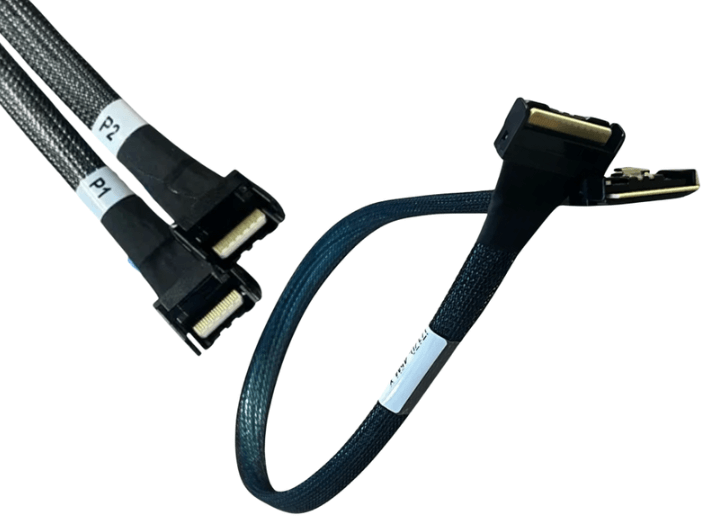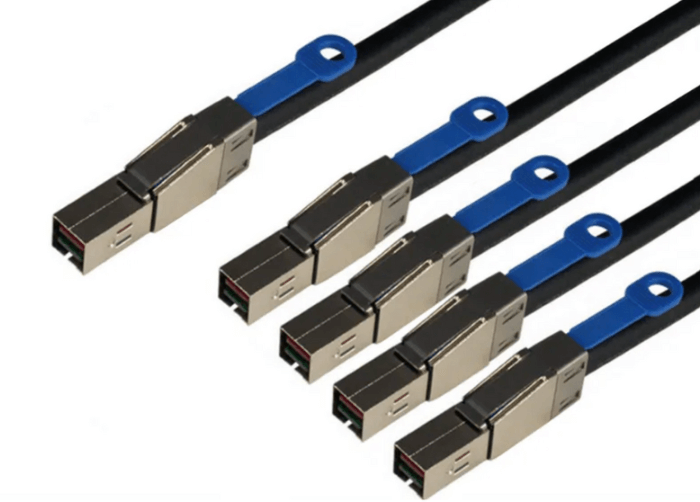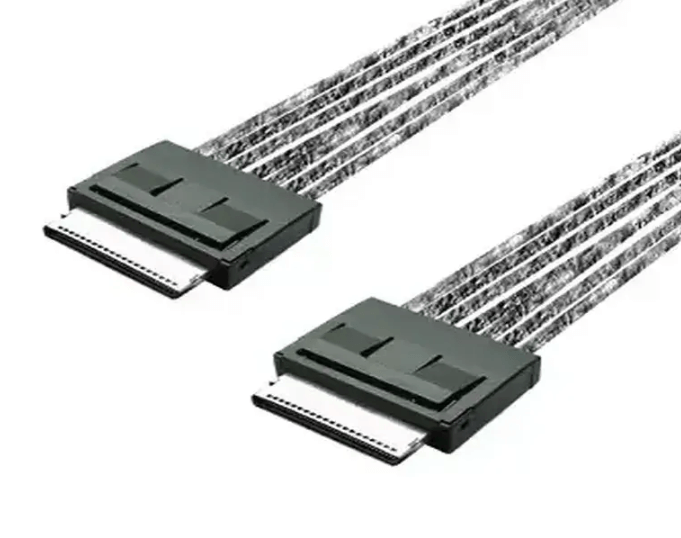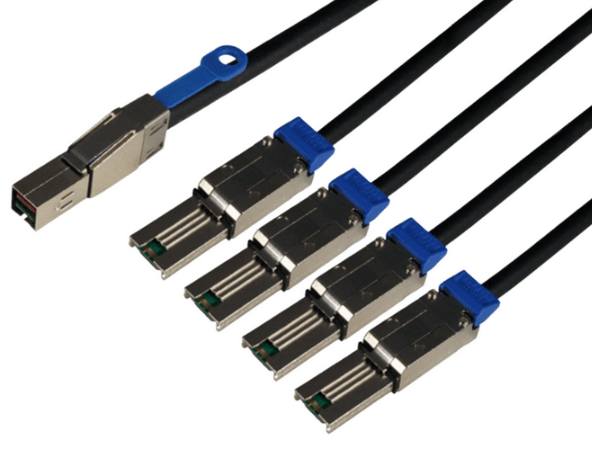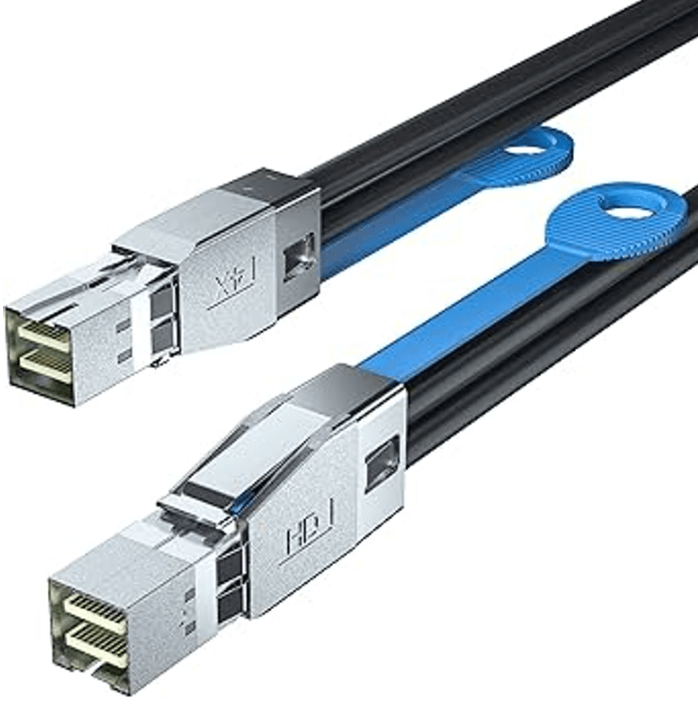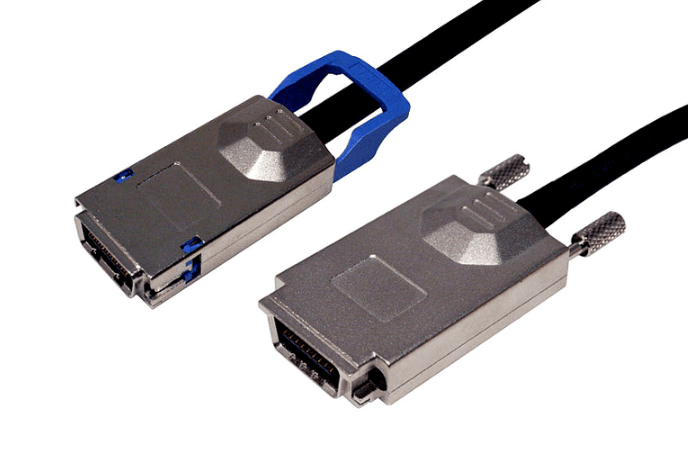
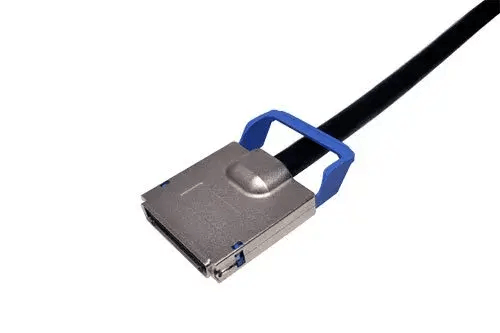
12X to 12X InfiniBand Ejector Cables
12X to 12X InfiniBand ejector cables are high lane count copper interconnect assemblies designed for short range, high bandwidth links within clustered servers and fabric switches. These cables were commonly deployed in DDR InfiniBand environments where port density, mechanical stability, and predictable signal performance were critical. The integrated ejector mechanism supports reliable connector engagement in tightly packed rack layouts.
Architecture of 12X InfiniBand Interfaces
The 12X InfiniBand interface aggregates multiple differential pairs into a single high density connector, enabling substantial bandwidth over copper media. By consolidating lanes, the 12X format reduces the number of physical cables required between nodes and switches. This approach simplifies topology in cluster fabrics and improves airflow management compared to multiple lower lane count links.
In DDR InfiniBand deployments, maintaining consistent electrical characteristics across all lanes is essential. The connector system must support uniform impedance and low insertion loss across the entire assembly to preserve link stability at specified signaling rates.
Mechanical Retention in Dense Rack Layouts
High density server racks introduce physical constraints that affect cable installation and service operations. Closely spaced ports limit direct hand access and increase the risk of disturbing adjacent connections during maintenance.
Ejector based connectors address this constraint by using lever arms that apply controlled mechanical force during insertion and removal. The mechanism distributes pressure evenly across the mating interface, ensuring full contact engagement without relying on cable pulling force. During removal, the ejectors disengage the connector evenly, reducing strain on the port housing and surrounding assemblies.
Impact on Signal Integrity
Stable electrical contact is fundamental to InfiniBand link reliability. Any misalignment or partial seating of the connector can create impedance discontinuities that increase reflections and crosstalk.
The ejector mechanism indirectly supports signal integrity by:
-
Promoting consistent connector alignment
-
Maintaining uniform contact pressure
-
Reducing micro movement at the interface
-
Minimizing wear over repeated mating cycles
These factors contribute to predictable link performance, especially in environments where cables are periodically reconfigured.
Interoperability and Platform Support
12X to 12X InfiniBand ejector cables were widely implemented across host channel adapters, edge switches, and core fabric components. Standardized mechanical dimensions ensured compatibility across multi vendor ecosystems. This consistency allowed large scale deployments to maintain uniform installation practices across heterogeneous hardware platforms.
Although newer InfiniBand generations use different connector formats, 12X assemblies remain relevant in long lifecycle systems and legacy high performance computing clusters.
Typical Deployment Environments
Common use cases include:
-
High performance computing clusters
-
Switch to switch backbone connections
-
Host channel adapter to fabric links
-
Laboratory and validation systems requiring frequent reconfiguration
-
Dense rack scale data center infrastructures
These environments benefit from both the aggregated bandwidth of the 12X interface and the mechanical control provided by ejector retention.
Installation and Operational Considerations
When deploying 12X ejector cables:
-
Ensure ejectors are fully actuated to seat the connector evenly
-
Avoid lateral stress from tight cable routing paths
-
Use the ejector levers during removal rather than pulling the cable body
-
Inspect connectors periodically for debris or mechanical obstruction
Maintaining proper routing and minimizing sustained mechanical load helps preserve connector longevity and link stability.
FAQ (Frequently Asked Questions)
What is the primary function of ejectors on 12X InfiniBand cables?
They provide controlled insertion and extraction force, ensuring even connector seating and reducing mechanical stress during servicing.
Do ejector mechanisms change the electrical characteristics of the cable?
They do not alter the electrical design directly, but by maintaining proper seating they help preserve consistent impedance and contact integrity.
Are 12X ejector cables interchangeable with non ejector versions?
Electrical compatibility may exist, but mechanical retention behavior differs and chassis design may favor one style over the other.
Are 12X to 12X InfiniBand ejector cables still relevant in modern data centers?
They are primarily used in legacy or long term support environments where 12X InfiniBand infrastructure remains operational.