HD68 External Terminators in Ultra320 SCSI Bus Stability
HD68 external terminators are critical components in Ultra320 SCSI systems, ensuring proper electrical termination at the end of a parallel SCSI bus. In external storage chains connecting servers, RAID arrays, and expansion enclosures, correct termination prevents signal reflections and maintains predictable bus behavior. Without proper termination, even correctly connected hardware can experience instability and degraded performance.
Electrical Role of Bus Termination in Ultra320 SCSI
Ultra320 SCSI operates over a parallel architecture that transmits multiple data lines simultaneously. At higher transfer rates, the integrity of each signal path becomes increasingly sensitive to impedance mismatches. When a bus is not properly terminated at its physical endpoints, signals can reflect back along the cable, interfering with valid data transitions.
An HD68 external terminator is installed at the final connector of the external SCSI chain. It provides controlled impedance and absorbs residual signals, preventing reflections that would otherwise disrupt timing and data integrity.
Differences Between Internal and External Termination
Internal SCSI buses are confined within a chassis and typically use fixed backplane or integrated termination. External SCSI chains extend beyond the server enclosure and are more susceptible to cable length variation and environmental interference.
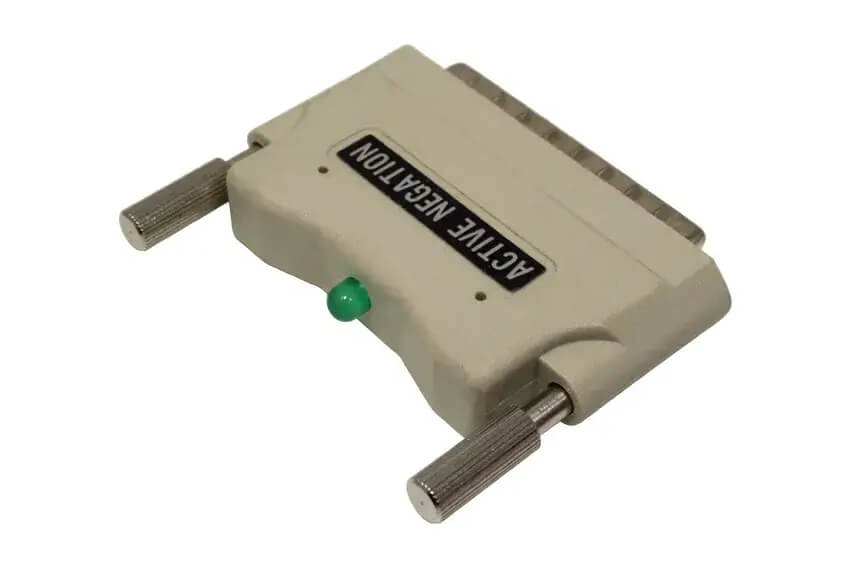
HD68 external terminators are designed with shielded housings and secure retention mechanisms to maintain consistent electrical contact in exposed environments. Screw locking hardware ensures the terminator remains firmly attached, preventing intermittent connection issues that could alter bus impedance.
Multimode Support and Automatic Detection
Many HD68 external terminators are designed to support multiple SCSI signaling modes. Automatic detection circuitry allows the terminator to adjust to Ultra320, Ultra160, Ultra2, or single ended configurations as required by the connected bus.
This capability simplifies deployment in mixed generation environments where controllers and enclosures may operate at different SCSI standards. By matching the signaling type automatically, the risk of improper termination selection is reduced.
Impact on Ultra320 Transfer Reliability
Ultra320 SCSI increases throughput while relying on the same fundamental parallel signaling structure used by earlier standards. As speed increases, tolerance for signal distortion decreases.
External terminators rated for Ultra320 are engineered with tighter impedance control and filtering characteristics. Using a terminator that does not meet the electrical requirements of the bus can result in elevated error rates, timeouts, or unstable device recognition.
Installation and Configuration Practices
The external terminator must be placed at the true physical end of the SCSI chain. Intermediate devices within the chain should not be terminated unless specifically required by configuration guidelines.
Connector screws should be tightened evenly to maintain proper grounding and shielding continuity. Total cable length should remain within specification limits to prevent excessive attenuation and reflection. Some terminators include status indicators that confirm termination power is present.
Typical Deployment Environments
-
Ultra320 and Ultra160 external SCSI chains
-
RAID arrays with external HD68 ports
-
Multi enclosure SCSI storage stacks
-
Legacy backup systems using parallel SCSI
-
Long lifecycle enterprise storage infrastructures
FAQ (Frequently Asked Questions)
What is the purpose of an HD68 external terminator?
It provides controlled impedance at the end of an external SCSI bus to prevent signal reflections.
Is termination mandatory for Ultra320 SCSI?
Yes. Proper termination at both ends of the bus is required for stable operation.
Can one HD68 terminator support different SCSI speeds?
Many models automatically adjust to multiple SCSI standards, including Ultra320 and earlier modes.
Where should the external terminator be installed?
It should be installed on the last connector at the physical end of the external SCSI chain.