What Role Do SFP And QSFP+ Transceivers Play In Enterprise And SAN Networks?
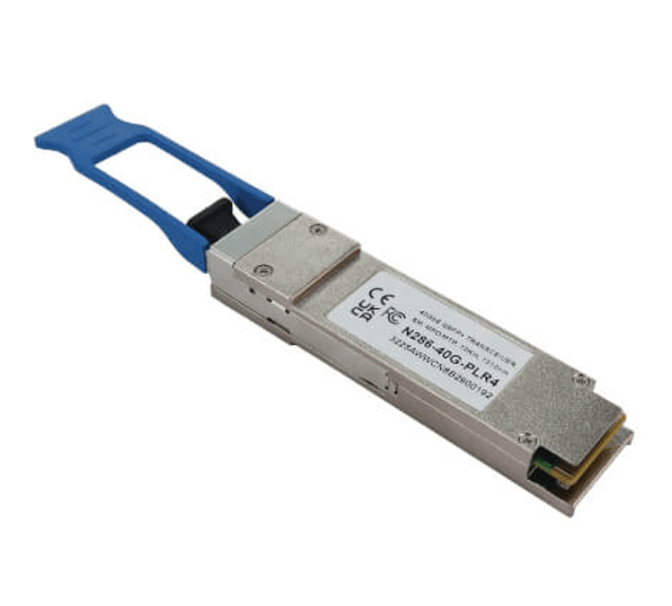
SFP and QSFP+ transceivers are foundational components in enterprise and storage area network architectures. They provide the physical interface that converts electrical signals from switches, servers, and storage systems into optical or copper transmission suitable for high speed links. By separating the port hardware from the media type, transceivers enable flexible, scalable connectivity across data centers and SAN environments.
Media and Distance Flexibility
One of the primary roles of SFP and QSFP+ transceivers is to decouple network ports from specific cabling types and reach limitations. A single switch platform can support short reach copper connections, multimode fiber links, or long reach single mode optics simply by changing the installed transceiver. This flexibility allows network designers to tailor each link to its physical distance and performance requirements without replacing core hardware.
Support for Multiple Network Protocols
SFP and QSFP+ transceivers are used across a wide range of protocols common in enterprise and SAN environments. These include Ethernet, Fibre Channel, InfiniBand, and certain storage interconnects. By supporting multiple transport standards within the same mechanical form factor, transceivers allow compute, storage, and management traffic to coexist on shared switching infrastructure while preserving protocol specific performance characteristics.
Bandwidth Scaling and Port Density
QSFP+ transceivers play a key role in delivering higher aggregate bandwidth per port. By supporting multi lane signaling, a single QSFP+ port can carry significantly more data than legacy interfaces. This improves port density on switches and reduces the number of physical connections required for aggregation and backbone links. In SAN environments, this helps support increasing storage traffic without expanding switch footprints.
Reliability and Signal Integrity
High quality transceivers are engineered to maintain stable signal performance under continuous load. Optical transceivers provide immunity to electromagnetic interference and consistent signal quality over longer distances. Copper based variants such as DACs or AOCs offer predictable performance for short reach links inside racks or between adjacent equipment. Built in diagnostics allow operators to monitor temperature, optical power, and error conditions to maintain link health.
Hot Swap and Operational Efficiency
The hot swappable nature of SFP and QSFP+ transceivers simplifies deployment and maintenance. Modules can be installed or replaced without powering down switches or servers, reducing downtime in production environments. This capability is especially valuable in SAN networks where continuous availability is critical for storage access and application uptime.
Common Enterprise and SAN Use Cases
SFP and QSFP+ transceivers are widely used in:
-
Data center access, aggregation, and core switching
-
Fibre Channel SAN fabrics
-
Storage replication and backup networks
-
High performance compute and cluster interconnects
Each of these use cases benefits from modular media selection and predictable link behavior.
Compatibility and Standardization
Standardized form factors and electrical interfaces allow transceivers to be deployed across a broad ecosystem of hardware. While vendor qualification policies vary, the underlying standards help ensure consistent mechanical fit and electrical signaling. This standardization supports multi vendor interoperability and simplifies network expansion planning.
Installation and Design Considerations
Proper transceiver selection requires attention to link distance, wavelength, fiber type, and supported data rate. Clean handling and connector hygiene are essential to maintain optical performance. In SAN environments, ensuring protocol compatibility and matching transceiver capabilities to switch port configurations helps avoid link negotiation issues.
FAQ (Frequently Asked Questions)
What is the primary function of an SFP or QSFP+ transceiver?
It converts electrical signals from network hardware into optical or copper transmission suitable for high speed links.
Are SFP and QSFP+ transceivers used only for Ethernet?
No, they are also used for Fibre Channel, InfiniBand, and other enterprise and storage protocols.
Why are QSFP+ transceivers important in SAN networks?
They support higher bandwidth and multi lane signaling, which is useful for aggregation and high traffic storage fabrics.
Can transceivers be replaced without shutting down equipment?
Yes, they are designed to be hot swappable in supported platforms.