Why Does SATA Connectivity Remain Important In Today’s Storage Systems?
SATA connectivity continues to play a significant role in modern storage systems by providing a stable, widely supported interface for hard drives, solid state drives, and optical devices. Despite the growth of higher speed technologies, SATA remains deeply integrated into desktops, servers, and storage enclosures where predictable behavior, broad compatibility, and cost efficiency are required. Its longevity is tied to its simplicity and dependable electrical characteristics.
Proven Interface Maturity And Compatibility
One of the key reasons SATA remains important is its long established ecosystem. SATA controllers, chipsets, drives, and cables are universally supported across operating systems and hardware platforms. Backward compatibility between SATA generations allows newer controllers to work seamlessly with older drives, which simplifies upgrades and reduces integration risk in mixed hardware environments.
Role In Capacity Focused Storage
Many storage workloads prioritize capacity and reliability over raw performance. SATA hard drives and SATA based SSDs continue to be well suited for bulk storage, backups, archives, and secondary data tiers. In these applications, SATA provides sufficient bandwidth while enabling higher drive counts at a lower overall system cost compared to newer high speed interfaces.
Electrical Stability And Signal Integrity
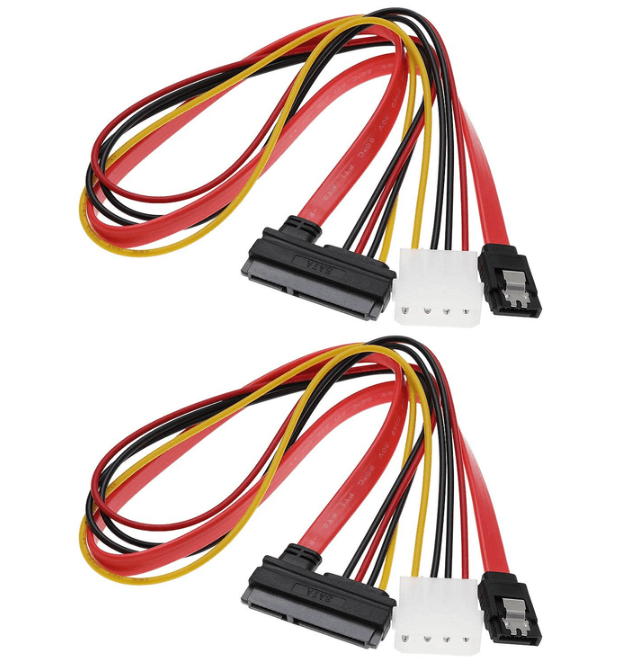
SATA cables are designed for short internal routing distances and point to point connections. Controlled impedance and optional shielding help maintain signal integrity within system chassis. Latching connector designs further improve reliability by preventing accidental disconnection during service or vibration, which is especially valuable in servers and multi drive enclosures.
Integration With SAS Infrastructure
SATA connectivity remains relevant in enterprise environments due to its interoperability with SAS controllers. SAS host adapters can communicate with SATA drives, allowing SATA media to be deployed alongside SAS drives within the same enclosure. This flexibility supports tiered storage designs and extends the usable life of existing infrastructure.
Deployment Across System Types
SATA cabling is still widely deployed in:
-
Desktop and workstation storage configurations
-
Server internal drive bays
-
JBOD and storage expansion chassis
-
Archive and nearline storage platforms
Its ease of installation and standardized form factor simplify both initial builds and ongoing maintenance.
Installation And Reliability Considerations
Proper cable routing and connector seating are important for long term SATA reliability. Excessive bending or cable tension can affect connector retention and signal quality. Power delivery must also be verified, particularly when using adapters or older power supplies, to ensure stable drive operation under load.
SATA Versus Emerging Storage Interfaces
While NVMe and PCIe based storage offer significantly higher performance, they are not always necessary or economical for every workload. SATA fills an important role by supporting scalable, cost effective storage where latency and throughput demands are moderate. This complementary relationship allows system designers to match interface selection to application requirements.
FAQ (Frequently Asked Questions)
Why is SATA still used when faster interfaces exist?
Because many workloads do not require extreme performance and benefit more from capacity, compatibility, and lower cost.
Is SATA suitable for enterprise storage systems?
Yes, especially for capacity tiers, archival storage, and mixed SAS and SATA environments.
Does SATA limit system performance?
It can for performance intensive workloads, but it remains adequate for many common storage use cases.
Will SATA disappear in the near future?
It is likely to remain in use for years due to its broad adoption and continued demand for capacity oriented storage.