Why Are OCuLink 8x To 8x Cables Critical For PCIe 5.0 Expansion Systems?
As PCIe 5.0 platforms push significantly higher bandwidth across CPUs, accelerators, and storage subsystems, internal interconnect quality becomes a determining factor in overall system reliability. OCuLink 8x to 8x cables provide a direct, full width PCIe connection between host and device, allowing expansion systems to operate at native link speeds without lane reduction or signal compromise. Their role is to preserve PCIe fabric integrity inside dense, high performance platforms.
Full Width PCIe Lane Continuity
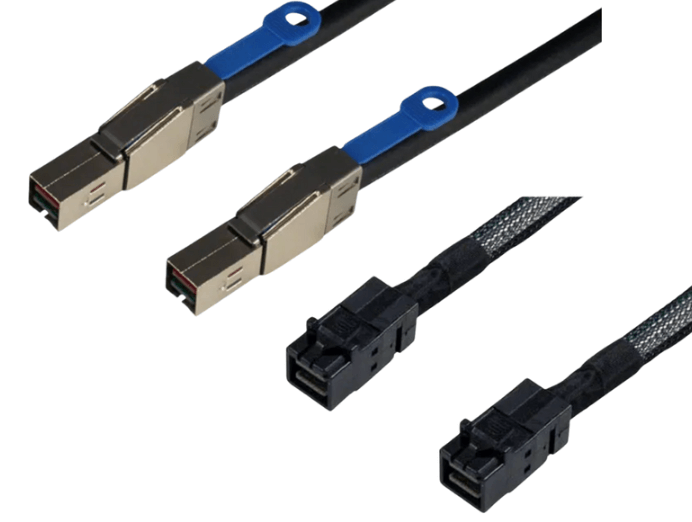
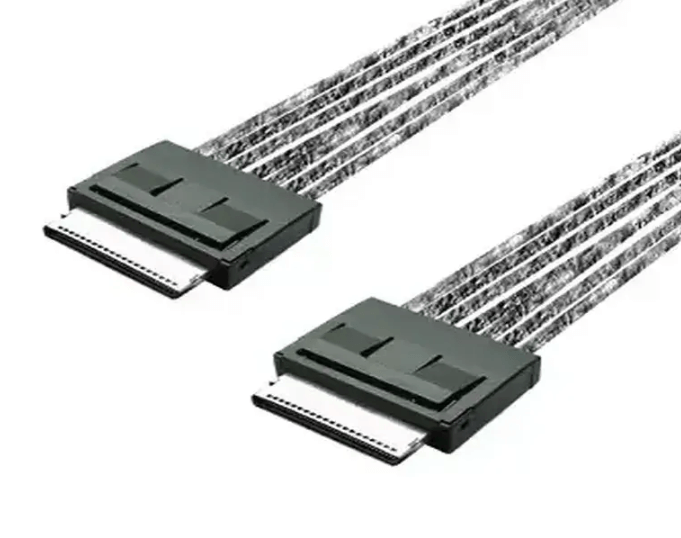
An OCuLink 8x to 8x cable carries eight PCIe lanes end to end as a single logical link. Unlike breakout or bifurcated designs, there is no lane splitting or remapping. Devices enumerate as a native x8 endpoint, which simplifies platform configuration and ensures maximum throughput is available to bandwidth intensive components such as GPUs, accelerators, and high performance storage backplanes.
PCIe 5.0 Bandwidth Demands
PCIe 5.0 doubles per lane throughput compared to PCIe 4.0, increasing sensitivity to loss, crosstalk, and impedance variation. At these speeds, internal cabling becomes part of the signal path rather than a passive accessory. OCuLink 8x to 8x cables are engineered to meet these higher electrical requirements, allowing expansion systems to sustain full data rates without triggering link retraining or speed negotiation fallback.
Signal Integrity Engineering
Maintaining stable PCIe 5.0 operation requires precise electrical control. OCuLink 8x cables are designed with matched differential pairs, controlled impedance, and low loss materials to minimize reflections and attenuation. Tight pair to pair skew tolerance helps ensure all eight lanes arrive within timing margins, which is critical for maintaining link stability under sustained load.
Mechanical And Routing Advantages
Expansion systems and modern servers often have limited internal space, making cable routing a design constraint. OCuLink cables support compact, point to point routing between host adapters and devices. Selecting appropriate cable lengths reduces excess slack, improves airflow, and minimizes mechanical stress on connectors, contributing to long term system reliability and easier service access.
Expansion System Use Cases
OCuLink 8x to 8x cables are most effective in scenarios where full bandwidth must be preserved across a single device connection. Common applications include:
-
GPU expansion chassis
-
PCIe accelerator platforms
-
NVMe storage systems with x8 backplanes
-
High performance compute nodes
These environments benefit from predictable enumeration, sustained throughput, and reduced configuration complexity.
Comparison With Lane Breakout Alternatives
Lane breakout solutions can increase device count but introduce additional routing complexity and potential bandwidth contention. In contrast, OCuLink 8x to 8x cables prioritize performance per device. This makes them better suited for workloads that require consistent high bandwidth rather than maximum port density.
Installation And Design Considerations
Proper connector seating and strain relief are essential for reliable operation. Cable routing should avoid tight bends and excessive tension that could affect conductor geometry. Platform designers should verify that host and device ports both support native x8 OCuLink connections to ensure correct link negotiation at PCIe 5.0 speeds.
FAQ (Frequently Asked Questions)
What is an OCuLink 8x to 8x cable used for?
It provides a direct eight lane PCIe connection between a host system and an expansion device.
Why is full width x8 connectivity important for PCIe 5.0?
It allows devices to access maximum available bandwidth without lane reduction or aggregation overhead.
Do OCuLink 8x cables require special firmware configuration?
In most cases, no, because the device enumerates as a standard x8 PCIe endpoint.
Which devices benefit most from OCuLink 8x connections?
GPUs, PCIe accelerators, NVMe backplanes, and other high throughput expansion components.