Why Is Internal HD MiniSAS Connectivity Important In Server And RAID Systems
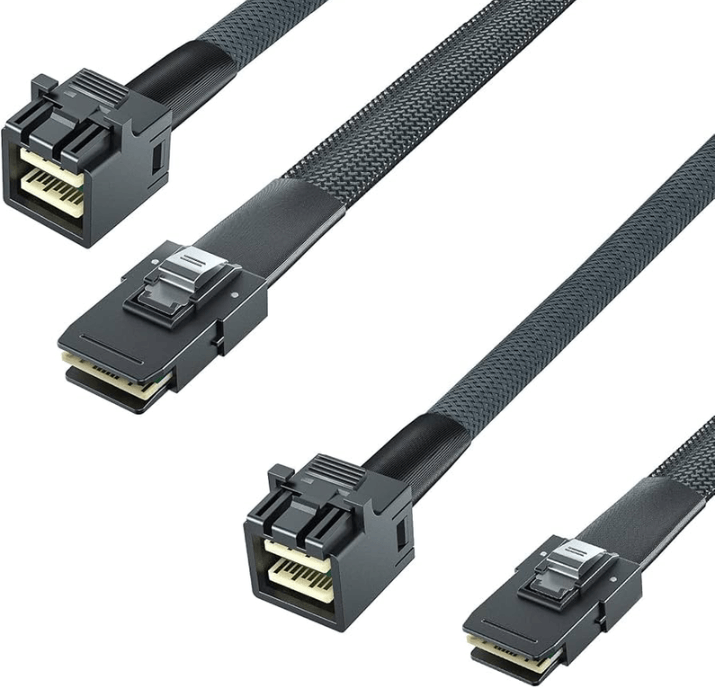
Internal HD MiniSAS connectivity is a core building block in modern server and RAID system design. Using the SFF-8643 connector and SAS 3.0 signaling, these internal cables provide compact, high-bandwidth links between controllers, backplanes, and storage devices. They are critical in environments where density, reliability, and predictable throughput are required to support enterprise and mission-critical workloads.
Enabling High-Density Internal Storage Architectures
As servers and storage platforms have grown denser, older SAS interfaces became limiting due to connector size and cable bulk. Internal HD MiniSAS was introduced to address these challenges.
Key advantages include:
-
Compact connector design that allows more ports per controller
-
Multi-lane data transmission within limited chassis space
-
Cleaner internal layouts compared to legacy SAS cabling
These benefits make internal HD MiniSAS a standard choice in high-density server and RAID designs.
Delivering Consistent SAS 3.0 Performance
Internal HD MiniSAS cables support SAS 3.0 signaling at up to 12 Gb per second per lane. With four lanes per connector, they provide predictable aggregate bandwidth that meets the needs of enterprise storage workloads.
Signal integrity is maintained through:
-
Controlled impedance across all lanes
-
Effective shielding to reduce electromagnetic interference
-
Precision manufacturing that minimizes crosstalk
This consistency is essential for RAID arrays and shared storage systems that rely on sustained performance and low error rates.
Supporting RAID Controller to Backplane Connectivity
One of the most important roles of internal HD MiniSAS cabling is connecting RAID controllers to storage backplanes.
In these applications, HD MiniSAS cables:
-
Carry multiple SAS lanes reliably between controller and drives
-
Support high-availability and fault-tolerant RAID configurations
-
Enable structured, serviceable internal routing
Stable controller-to-backplane links are fundamental to RAID integrity and data protection.
Improving Airflow and Serviceability with Compact Routing
Internal HD MiniSAS cables help improve airflow and serviceability inside server chassis.
Their smaller profile allows:
-
Reduced obstruction of cooling paths
-
Easier access to components during maintenance
-
More organized internal cable management
Right-angle connector options further enhance routing flexibility in shallow or low-profile chassis designs.
Deployment Across Enterprise Servers and Storage Platforms
Internal HD MiniSAS connectivity is widely deployed in:
-
Enterprise rack-mounted servers
-
RAID arrays
-
JBOD enclosures
-
Storage-dense data center systems
Its broad adoption reflects a balance of performance, reliability, and ecosystem maturity that enterprise environments depend on.
Installation and Design Best Practices
Proper installation is essential to maintain performance and long-term reliability.
Best practices include:
-
Selecting appropriate cable lengths to avoid excess slack
-
Respecting minimum bend radius limits
-
Providing strain relief at connector points
-
Ensuring connectors are fully seated and secured
Using certified assemblies reduces the risk of intermittent faults in demanding operational environments.
Continued Relevance in Modern Storage Systems
While newer interface standards continue to emerge, internal HD MiniSAS remains highly relevant. SAS-based architectures continue to offer predictable performance, long lifecycle support, and wide compatibility across vendors.
For server and RAID systems that prioritize stability and validated designs, internal HD MiniSAS remains a dependable and well-understood solution.
FAQ (Frequently Asked Questions)
What is an internal HD MiniSAS SFF-8643 cable used for?
It is used to connect RAID controllers, backplanes, and storage devices inside servers and JBOD systems.
What speeds does internal HD MiniSAS support?
SFF-8643 HD MiniSAS supports SAS 3.0 signaling up to 12 Gb per second per lane.
Why are right-angle connectors commonly used?
They improve routing flexibility, airflow, and bend radius control in compact server chassis.
Where is internal HD MiniSAS most commonly deployed?
It is widely used in enterprise servers, RAID arrays, storage enclosures, and data center platforms.