What Is SlimSAS 8i And Why Is It Used In High Density Server Designs?
SlimSAS 8i is a high density internal cabling interface designed to deliver multi lane PCIe or SAS connectivity within space constrained server and storage platforms. As modern systems require more bandwidth per chassis without increasing physical size, traditional internal connectors become limiting. SlimSAS 8i addresses this challenge by combining high lane counts, protocol flexibility, and a compact mechanical design optimized for dense server layouts.
What SlimSAS 8i is at a Technical Level
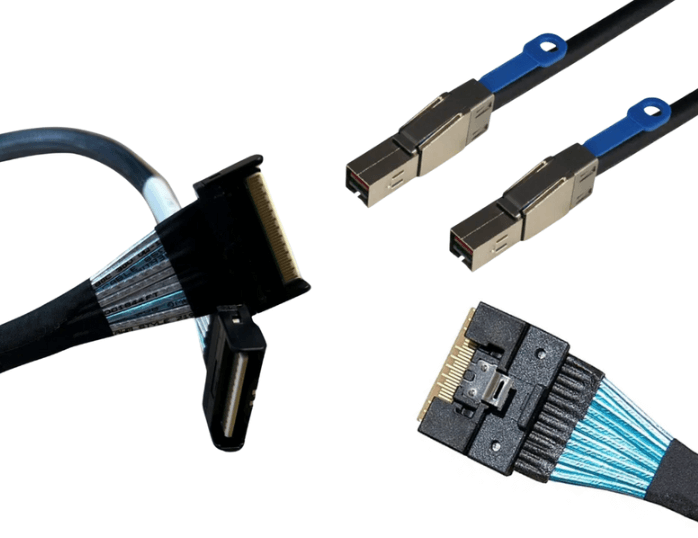
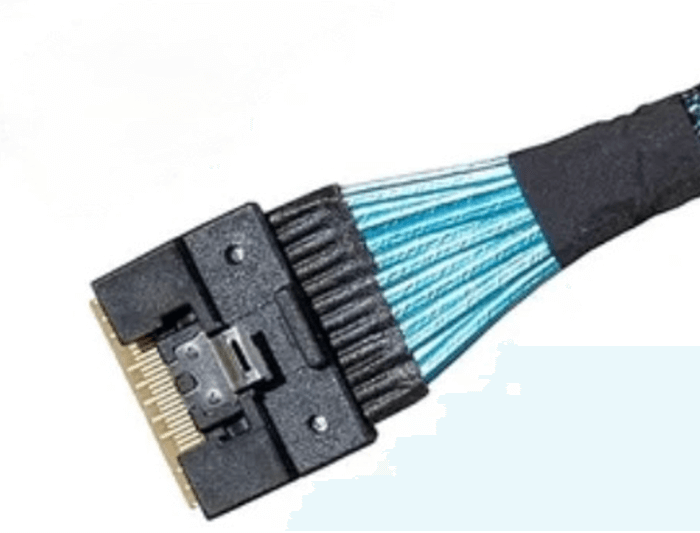
SlimSAS 8i is based on the SFF 8654 specification and supports up to eight high speed differential lanes within a single connector. These lanes can be configured to carry PCIe, SAS, or SATA signals depending on the host controller and attached devices.
The interface is designed for short reach internal connections, typically linking host adapters or PCIe switches to backplanes, drive cages, or directly attached devices. By consolidating multiple lanes into a small connector footprint, SlimSAS 8i enables higher aggregate bandwidth without increasing board edge real estate.
Why High Density Server Designs Require SlimSAS 8i
High density servers must balance performance, thermal management, and physical constraints. As NVMe and PCIe based storage becomes more common, systems require more direct lane connectivity to CPUs and switches. Larger legacy connectors and wide cable assemblies make routing difficult and restrict airflow.
SlimSAS 8i reduces connector size and cable bulk while maintaining electrical performance. This allows designers to place more ports on a single board, shorten internal routing paths, and maintain cleaner airflow channels within the chassis.
Bandwidth and Protocol Flexibility
With eight lanes available per connector, SlimSAS 8i supports wide links that scale effectively with modern storage and compute demands. When used with PCIe Gen 4 or newer controllers, these lanes provide high aggregate throughput suitable for NVMe SSDs, PCIe switches, and accelerator devices.
The ability to carry both PCIe and SAS signals makes SlimSAS 8i particularly valuable in hybrid platforms. System architects can support multiple storage technologies using a common physical interface, simplifying design and reducing component variation.
Signal Integrity in Compact Layouts
As data rates increase, maintaining signal integrity becomes more difficult in dense environments. SlimSAS 8i connectors and cable assemblies are designed with controlled impedance, tight pair spacing, and effective shielding to minimize crosstalk and reflections.
These characteristics allow reliable operation at higher speeds even when connectors are placed close together on the PCB. This is essential in high density designs where spacing between ports is limited by mechanical constraints.
Cable Routing and Mechanical Advantages
SlimSAS 8i cables are thinner and more flexible than many legacy multi lane assemblies. This simplifies routing in tight spaces and reduces mechanical stress on connectors and solder joints.
Improved cable management also supports better serviceability. Technicians can more easily trace, replace, or reconfigure internal connections without disturbing adjacent components, which is important in enterprise and data center environments.
Common Use Cases in High Density Systems
SlimSAS 8i is commonly deployed in the following scenarios:
-
NVMe backplanes and storage enclosures
-
PCIe switch based server architectures
-
Dense compute nodes with local NVMe storage
-
Hybrid SAS and PCIe storage platforms
-
Enterprise servers and workstations with limited internal space
In each case, the interface enables higher performance within a constrained physical envelope.
Design Considerations and Limitations
SlimSAS 8i is intended for internal connections and is not designed for long distance or external cabling. Cable length, bend radius, and connector orientation must be selected carefully to maintain signal integrity.
Compatibility depends on controller support and lane mapping. Designers must ensure that host adapters, backplanes, and devices are electrically and logically aligned for the intended protocol and lane configuration.
FAQ (Frequently Asked Questions)
Does SlimSAS 8i support both PCIe and SAS at the same time?
The connector can carry either protocol, but simultaneous mixed signaling depends on system design and controller capabilities.
Is SlimSAS 8i compatible with older SlimSAS connectors?
Compatibility varies by implementation. Lane count and keying must match the intended configuration.
How does SlimSAS 8i compare to HD MiniSAS?
SlimSAS 8i offers similar bandwidth in a smaller connector footprint, making it better suited for dense internal layouts.
Can SlimSAS 8i be used for hot swap drives?
Hot swap capability depends on the backplane, controller, and system design rather than the cable itself.