Why Are MCIO Cables Important For High Density PCIe And NVMe Designs?
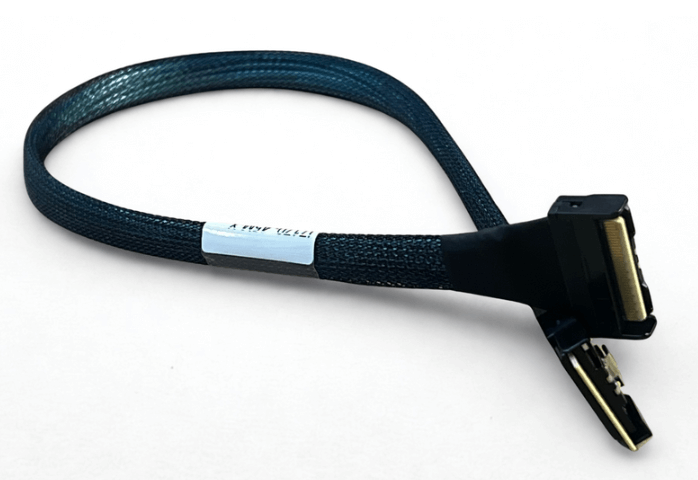
MCIO cables have become a critical interconnect technology as PCIe and NVMe architectures push toward higher lane counts, faster data rates, and tighter mechanical constraints. In modern servers and storage platforms, designers must deliver multi lane bandwidth while minimizing connector footprint, routing complexity, and signal loss. MCIO cabling addresses these challenges by enabling dense, high speed internal connections optimized for next generation PCIe based systems.
The Scaling Challenges of PCIe and NVMe
Each new PCIe generation increases data rates per lane while tightening signal integrity margins. At the same time, NVMe storage architectures demand direct, low latency connections between CPUs, switches, and solid state drives. Traditional internal cabling and edge connectors struggle to scale under these conditions due to size, insertion loss, and crosstalk limitations.
As systems move to PCIe Gen 4, Gen 5, and beyond, maintaining clean signal paths across multiple lanes becomes increasingly difficult without specialized interconnect solutions designed for high frequency operation.
MCIO Architecture and Form Factor Advantages
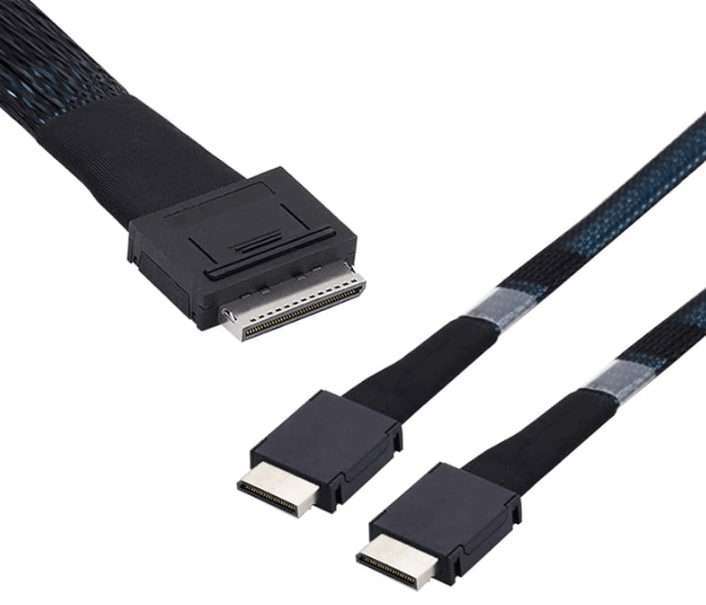
MCIO, defined under the SFF TA 1016 specification, was engineered specifically to support high speed multi lane PCIe links in compact environments. The connector design allows multiple differential pairs to be routed through a very small footprint while maintaining controlled impedance and consistent lane spacing.
This compact form factor enables higher port density on motherboards, backplanes, and add in cards. It also allows designers to place connectors closer together without compromising electrical performance, which is essential in dense NVMe storage and accelerator platforms.
Signal Integrity at High Data Rates
At high PCIe speeds, even small discontinuities can introduce reflections, skew, or excessive insertion loss. MCIO cable assemblies are designed with tight manufacturing tolerances, optimized shielding, and low loss materials to preserve signal integrity across all lanes.
By maintaining consistent impedance and minimizing crosstalk, MCIO cables support reliable operation at full PCIe Gen 4, Gen 5, and emerging Gen 6 speeds. This is particularly important in NVMe environments where error rates and latency directly affect system throughput.
Flexible Lane Aggregation and Breakout
High density systems often require flexible lane allocation. MCIO supports configurations such as x4 and x8 links, as well as breakout topologies where a single host connection fans out to multiple endpoints.
This flexibility allows system architects to balance bandwidth across NVMe drives, PCIe switches, GPUs, and accelerators without redesigning the entire interconnect topology. MCIO cabling makes it possible to adapt lane usage to changing performance requirements while keeping physical layouts compact.
Mechanical and Thermal Benefits
Compared to bulkier legacy cabling, MCIO assemblies use smaller connectors and thinner cable profiles. This reduces congestion inside the chassis, improves airflow, and lowers mechanical stress on connectors and PCBs.
Better airflow is especially important in high density NVMe systems where thermal budgets are tight and component temperatures directly affect performance and reliability.
Compatibility with Modern Server Architectures
MCIO cables are increasingly used in platforms that integrate PCIe switches, composable storage, and accelerator fabrics. Their support for short reach, high speed internal links aligns well with modern modular server designs and disaggregated architectures.
As vendors continue to move away from large edge connectors toward cable based PCIe interconnects, MCIO provides a standardized, scalable solution that fits current and future design requirements.
FAQ (Frequently Asked Questions)
Are MCIO cables only used for NVMe storage?
No. They are also used for PCIe switches, GPUs, accelerators, and other internal high speed connections.
Do MCIO cables support PCIe Gen 5 and newer standards?
Yes. MCIO was designed to support Gen 4 and Gen 5 speeds and is positioned for Gen 6 implementations.
Can MCIO cables replace older internal PCIe cabling formats?
In many high density designs, yes. MCIO offers higher bandwidth in a smaller footprint.
Are MCIO cables hot swappable?
They are typically intended for internal connections and are not designed for hot swap operation.